teearten
A better brew
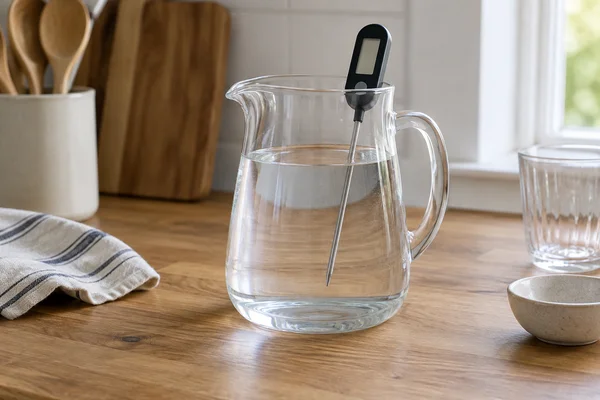
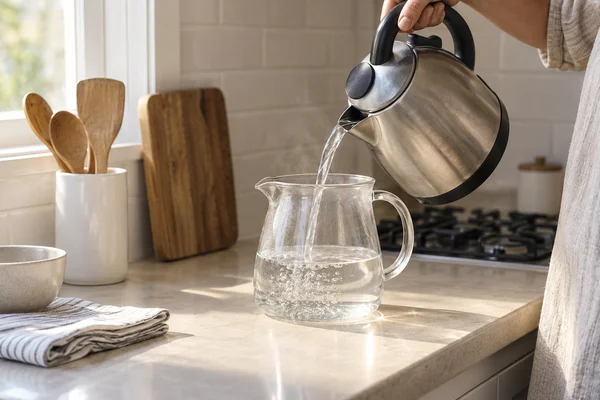
Cooling water without guessing a universal wait
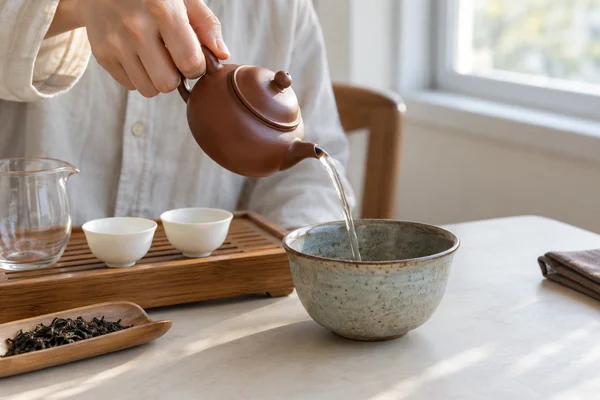
There is no waiting time that cools every kettle to the same temperature. Make the cooling routine repeatable, and measure when precision matters.
Small adjustments to water, leaf and time that you can actually taste.
There is no waiting time that cools every kettle to the same temperature. Make the cooling routine repeatable, and measure when precision matters.
A probe touching the pot wall can tell you about the wall rather than the water. Position and timing make a temperature reading useful.
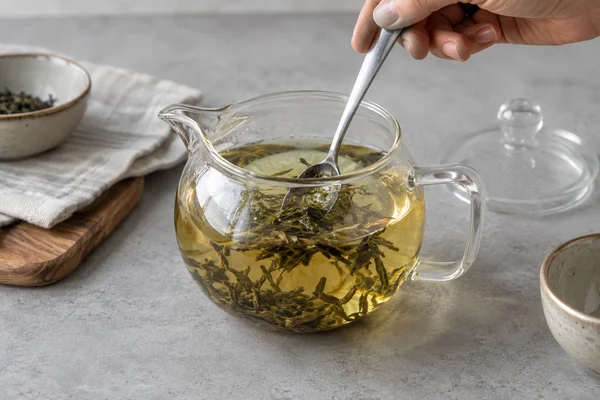
Stirring changes how water moves around the leaves. A gentle, repeatable action is easier to assess than constant agitation.
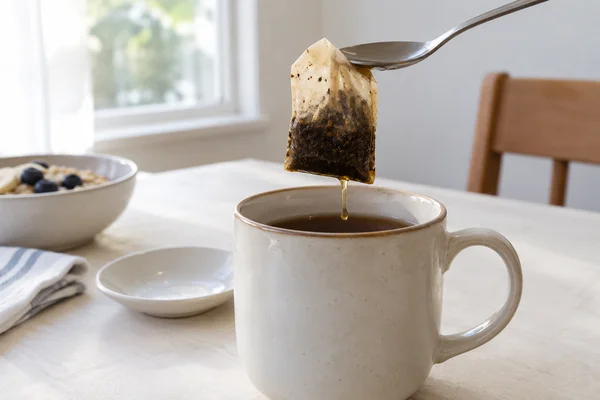
Pressing a tea bag releases the liquid it holds. Whether you prefer the result is a tasting question, but forceful squeezing makes consistency harder.
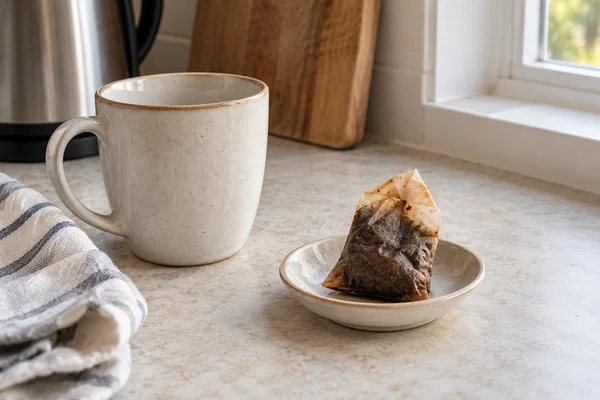
A small dish beside the mug makes it easy to finish the infusion on time and keeps a wet bag away from books, desks and fingers.
The second brew starts with wet, opened leaves. Its timing may need to change, and its flavour does not have to copy the first cup.
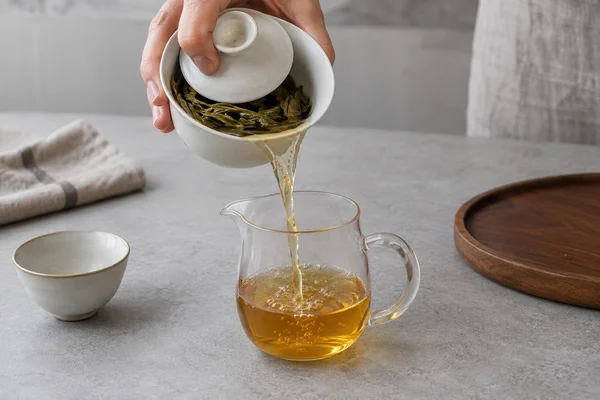
Leaving a little tea around the leaves changes the next round. A complete, controlled pour gives short infusions a clearer stopping point.
A brief rinse appears in some brewing traditions, but it cannot certify tea as clean, safe or caffeine-free.
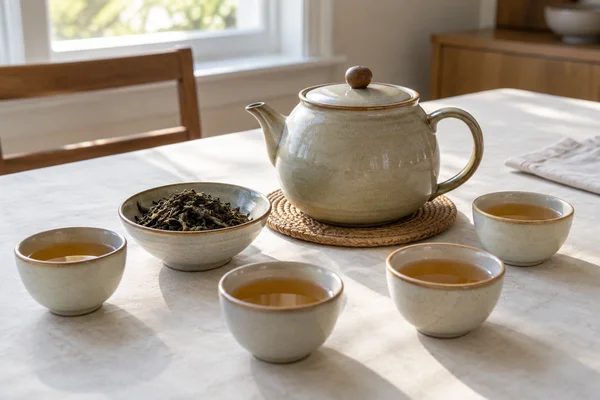
Short infusions are easier to learn with a small vessel, a manageable amount of tea and somewhere to pour the whole brew.
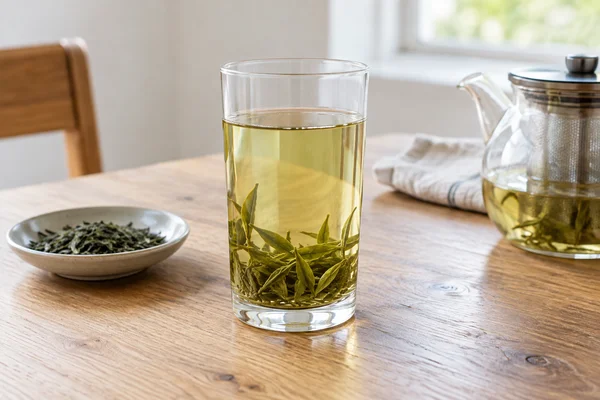
Loose leaves can brew directly in a suitable glass. This informal method needs a modest portion and a comfortable way to drink around the leaves.
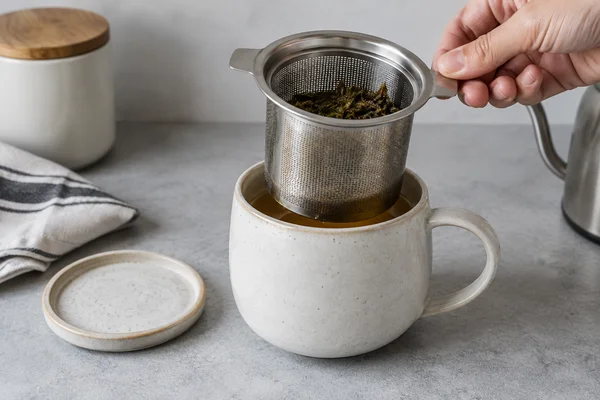
A mug with a roomy removable basket offers a straightforward way to brew loose tea and stop it at the strength you prefer.
Scale the leaves to the water first, then check how the larger pot changes filling, heat retention and pouring.