Drain leaves between short infusions
Leaving a little tea around the leaves changes the next round. A complete, controlled pour gives short infusions a clearer stopping point.
A pause should really be a pause
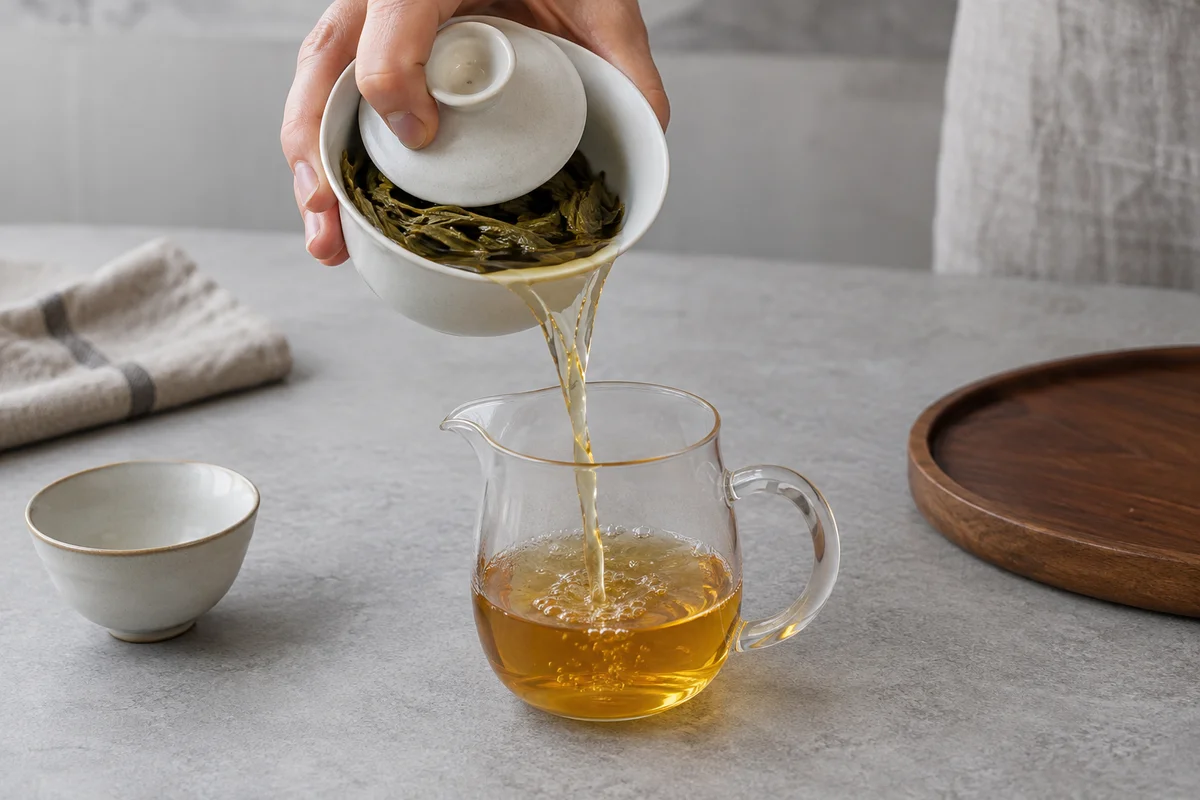
Short infusions work best when you can distinguish the time the leaves spend in water from the interval between brews. If a small pool remains in the pot, that separation becomes blurred. The retained liquid stays in contact with the leaves and joins the next cup when fresh water is added. You may then wonder why the second round is unexpectedly strong despite a carefully timed brief steep.
Drain the vessel into a suitable pitcher or cup at the end of the infusion. A steady controlled tilt is more useful than a dramatic shake. Keep the lid secure using the maker's intended grip and avoid tipping hot water towards your fingers. Practice with cool water if the pot's shape is unfamiliar. Complete drainage should not require handling that feels unstable or rushed.
Look for a mechanical reason
If liquid seems trapped, check the vessel after it has cooled. Fine leaves may be blocking the filter, or the lid's position may be interfering with the flow. Do not insert fingers or tools into a hot spout to clear it during the pour. A different leaf size, a larger filter area or another pot may solve the problem more simply than trying to force this combination to work.
For a mug basket, lift it onto a clean draining dish. Keep the basket above any collected liquid if you want the leaves to remain drained between immediate rounds. A deep saucer that fills until it reaches the mesh puts the leaves back into a small infusion. Empty the dish carefully once the liquid is safe to handle, rather than returning those drips to the finished cup without thinking.
Keep the session short and clean
Draining helps control flavour; it does not sterilise wet leaves or make them suitable for indefinite storage. Plan successive brews within the same session, using clean equipment and fresh suitable water. Discard the leaves when you are finished rather than keeping them warm and damp for a later day. If a pot drains well but your later tea is still unpleasant, consider timing and dose next. Drainage is one useful part of the routine, not an explanation for every change in the cup.