Does your teapot need warming?
A cold pot takes some of the heat intended for the leaves. A brief warm-up can make a familiar recipe more repeatable, especially with a heavy pot.
The pot is part of the temperature
You set the kettle, measure the leaves and watch the clock, yet the tea still seems different from yesterday. Before changing the tea, consider the empty pot. Water loses heat as soon as it enters a cooler vessel. A substantial ceramic pot taken from a cold cupboard can therefore change the conditions in which the leaves brew.
Prewarming is a way to make that starting point more consistent. It is especially useful when a small quantity of water meets a relatively heavy pot. It does not mean that every tea should be brewed hotter, or that a cup made without this step is wrong. The aim is to get closer to the brewing conditions you intended.
Warm, empty, then brew
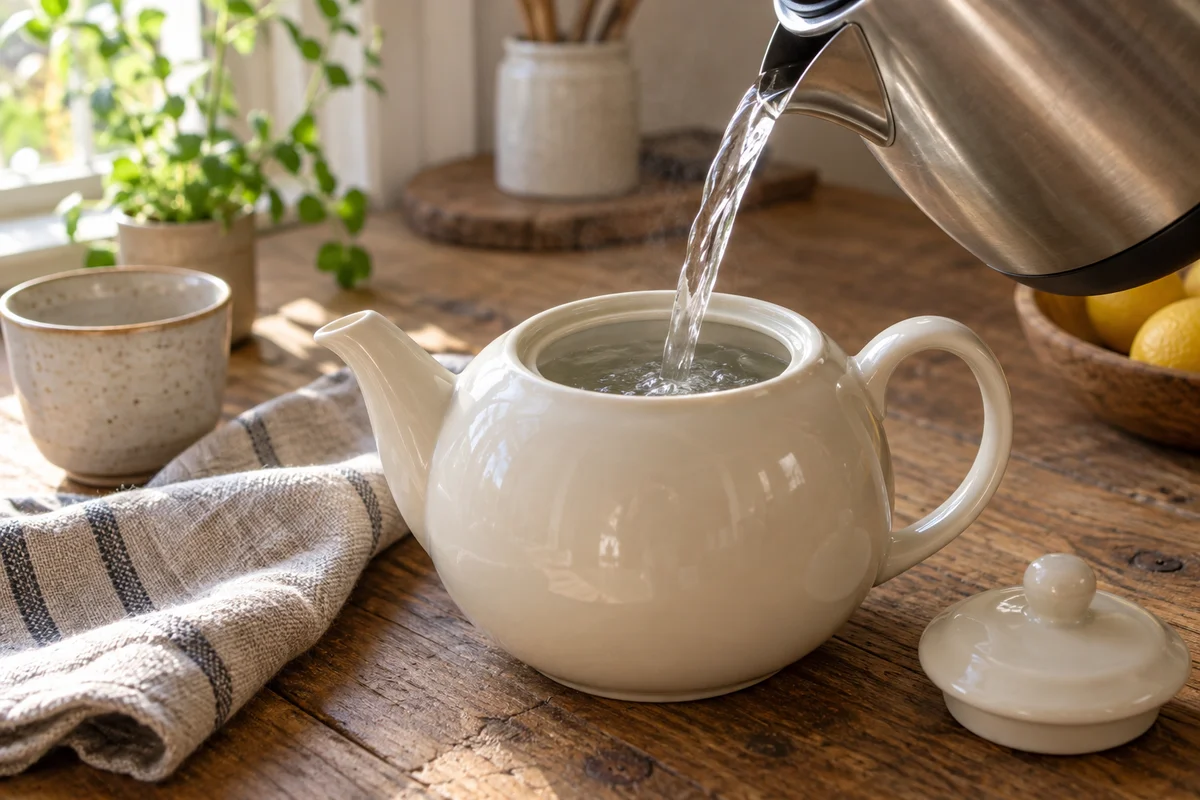
First check that the vessel is suitable for hot liquids and follow its care instructions. Do not expose a very cold, damaged or heat-sensitive pot to a sudden temperature change. For an ordinary suitable teapot at room temperature, add some hot water, let it warm the interior briefly, then empty it carefully. Keep your grip on the handle and avoid letting a loose lid slide towards the sink.
Add the measured leaves after discarding the warming water. Leaving that water behind changes the amount and temperature of the infusion, making comparisons harder. Refill with water appropriate to the particular tea and start your usual timing. Warming the pot is separate from rinsing the leaves; the dry tea has not been involved in this first step.
Notice the difference rather than assuming one
If you want to know whether it matters in your kitchen, make two small brews using the same pot on separate occasions. Keep the leaf weight, water amount and timing the same, and warm the pot for only one of them. Note whether the tea has more body, becomes too forceful, or simply stays warm longer. A temperature-controlled kettle cannot prevent heat loss after the water leaves its spout.
You may decide that the extra step helps with your winter breakfast pot but contributes little to a thin mug in a warm room. That is a useful result. A good brewing routine earns its place by making the cup easier to repeat, not by adding a ceremony you do not enjoy.