Scaling a favourite cup up to a pot
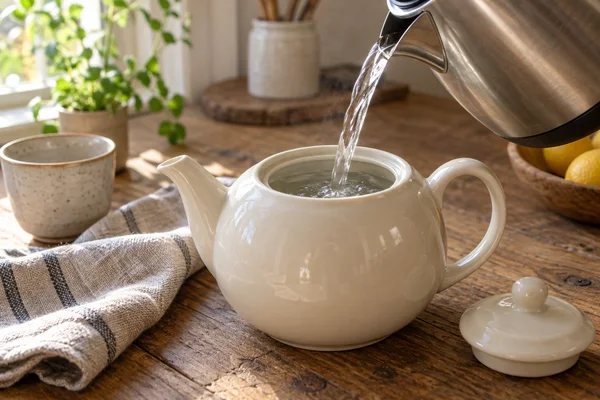
Scale the leaves to the water first, then check how the larger pot changes filling, heat retention and pouring.
Use the water volume, not the number of guests
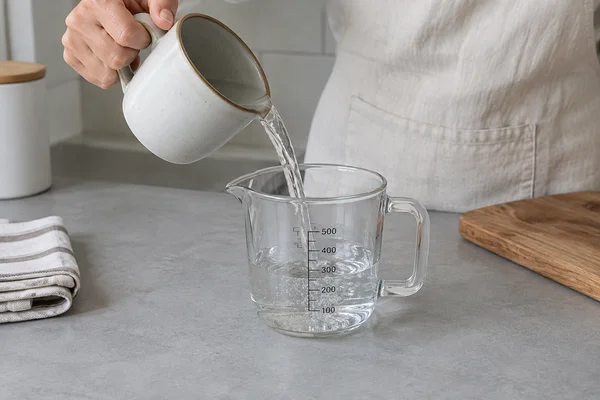
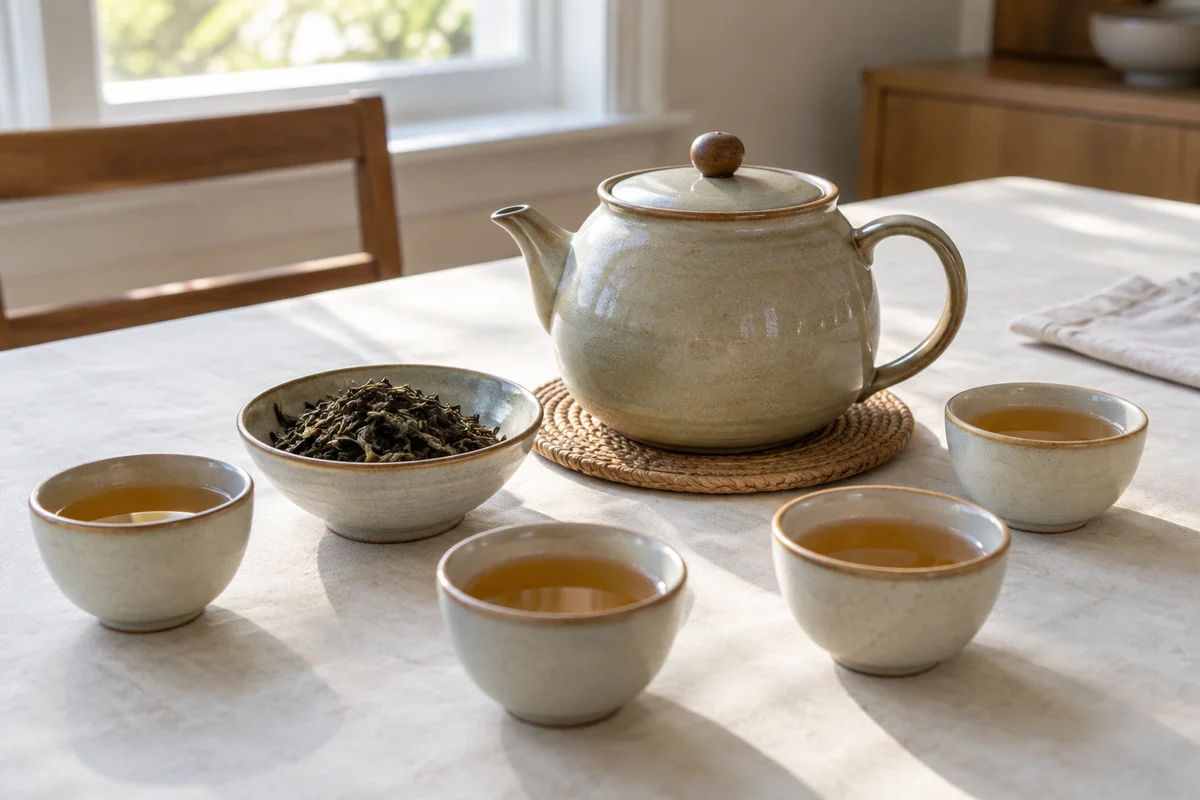
Four people do not necessarily need four identical portions of tea. Some use small cups, others large mugs, and the pot may be refilled later. Decide how much water the first pot should contain and measure its comfortable working capacity. Use the recipe you already enjoy as a starting ratio. If 3 grams suit 250 millilitres in your routine, 12 grams for a litre is a clear first trial, not a guarantee for every tea.
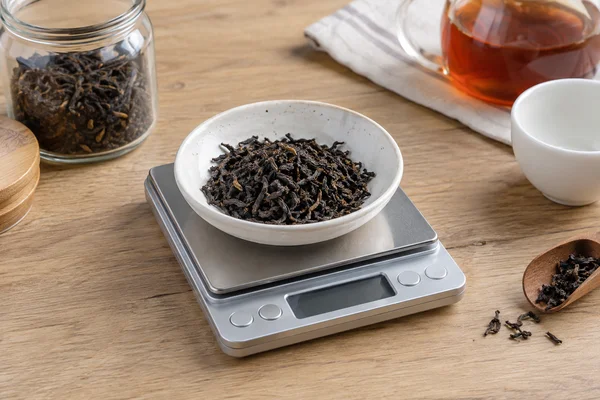
Weigh the larger portion rather than multiplying an uneven heaped spoon. Give the leaves enough space to expand in the pot or basket. A filter that worked for one mug can become crowded when asked to hold four times as much tea. If the basket is too small, change the filter arrangement or brew two smaller batches instead of packing the leaves down tightly.
Do not multiply the steeping time
Increasing the water and leaf amounts together does not mean a four-cup pot should steep four times as long. Begin with the original contact time and observe the result. The larger vessel may retain heat differently and will usually take longer to fill and empty. Have cups or a serving jug ready so that the intended finish does not turn into several extra minutes while you arrange the table.
If the leaves remain in the pot while people serve themselves slowly, the last cup can be much stronger than the first. Remove the basket when the brew is ready, or decant the whole infusion into a suitable clean serving vessel. A pot that holds the leaves away from the spout still allows extraction; a built-in strainer is not the same as removing the leaves.
Leave room for a second pot
It is often more pleasant to make a sensible first quantity and offer another fresh brew than to keep an enormous pot standing for a long time. Tell guests whether the tea is ready to pour and where to put any removable filter. For ordinary herbal and fruit blends, follow the boiling-water and minimum-time directions even when scaling the volume. Afterwards, note whether your larger trial needed a small dose adjustment. Keep that as a separate recipe from the single mug rather than assuming the two vessels behave identically.