Cooling water without guessing a universal wait
There is no waiting time that cools every kettle to the same temperature. Make the cooling routine repeatable, and measure when precision matters.
Why two minutes is not a temperature
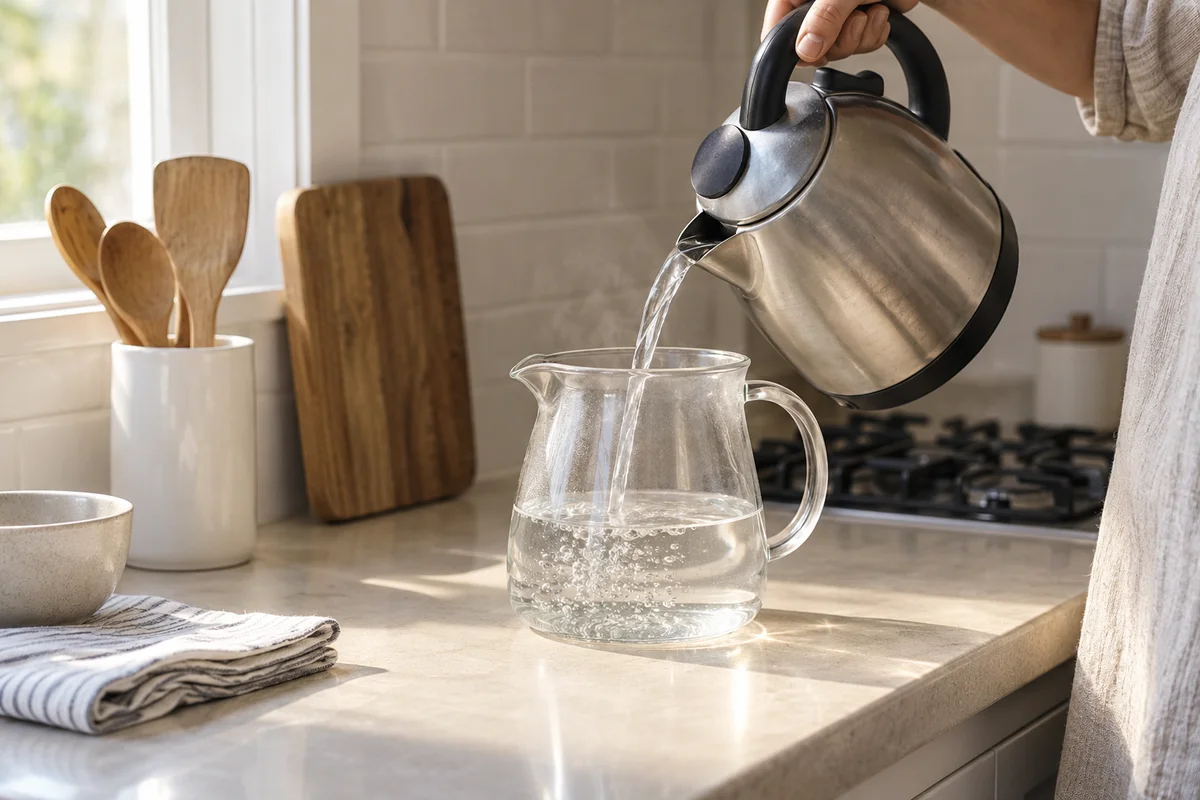
Advice to let boiling water stand for two minutes sounds convenient, but the result depends on how much water you boiled, the kettle's construction, whether its lid is open and the temperature of the room. A nearly full insulated kettle does not cool like a small amount of water in a wide jug. The same wait can therefore produce different starting conditions for the tea.
If your tea comes with a temperature recommendation and you have no thermometer, begin with a consistent routine rather than pretending the wait is exact. Boil a similar amount of water each time and use the same vessel. Note whether you leave it in the kettle or transfer it to another container. Those details make the next adjustment more informative if the first cup is too sharp or too light.
Transferring water changes the process
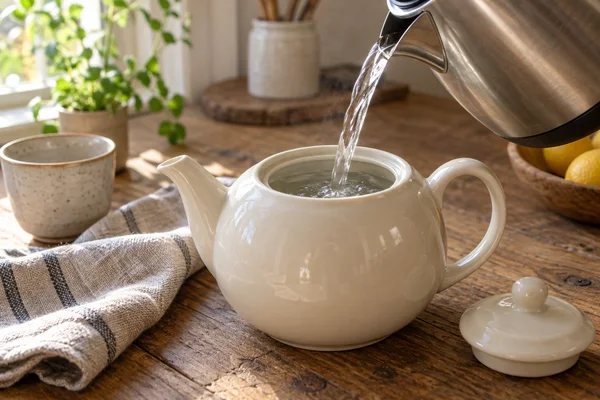
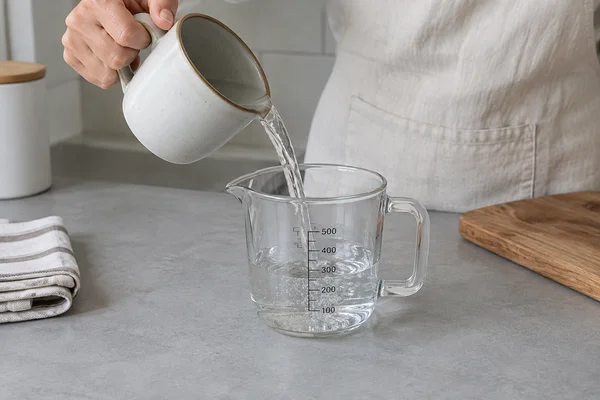
Pouring into a suitable room-temperature vessel can cool water more quickly because the vessel absorbs heat and exposes more surface. Use heat-resistant equipment intended for hot liquids and place it on a stable surface. Do not transfer boiling water into an ordinary drinking glass or a container straight from the refrigerator. Adding more hot-water handling steps is only worthwhile if you can do them comfortably and safely.
Avoid judging exact temperature from tiny bubbles or the appearance of steam. These signs can be influenced by the vessel and viewing conditions. They may become familiar clues in your own routine, but they are not a substitute for a measurement when you need to know the actual number. A suitable thermometer or temperature-select kettle is the more direct tool for that task.
Let the cup guide ordinary adjustments
For leaf teas that allow a cooler preparation, taste the first attempt and change the cooling stage modestly on the next one. Keep the dose and steeping time steady while you learn what the change does. Do not apply this cooling approach to ordinary herbal or fruit infusions whose instructions require boiling water. Prepare those as directed and allow the finished drink to cool to a comfortable sipping temperature after the required infusion, rather than weakening the initial heating step.