What squeezing a tea bag changes
Pressing a tea bag releases the liquid it holds. Whether you prefer the result is a tasting question, but forceful squeezing makes consistency harder.
What comes out of the bag
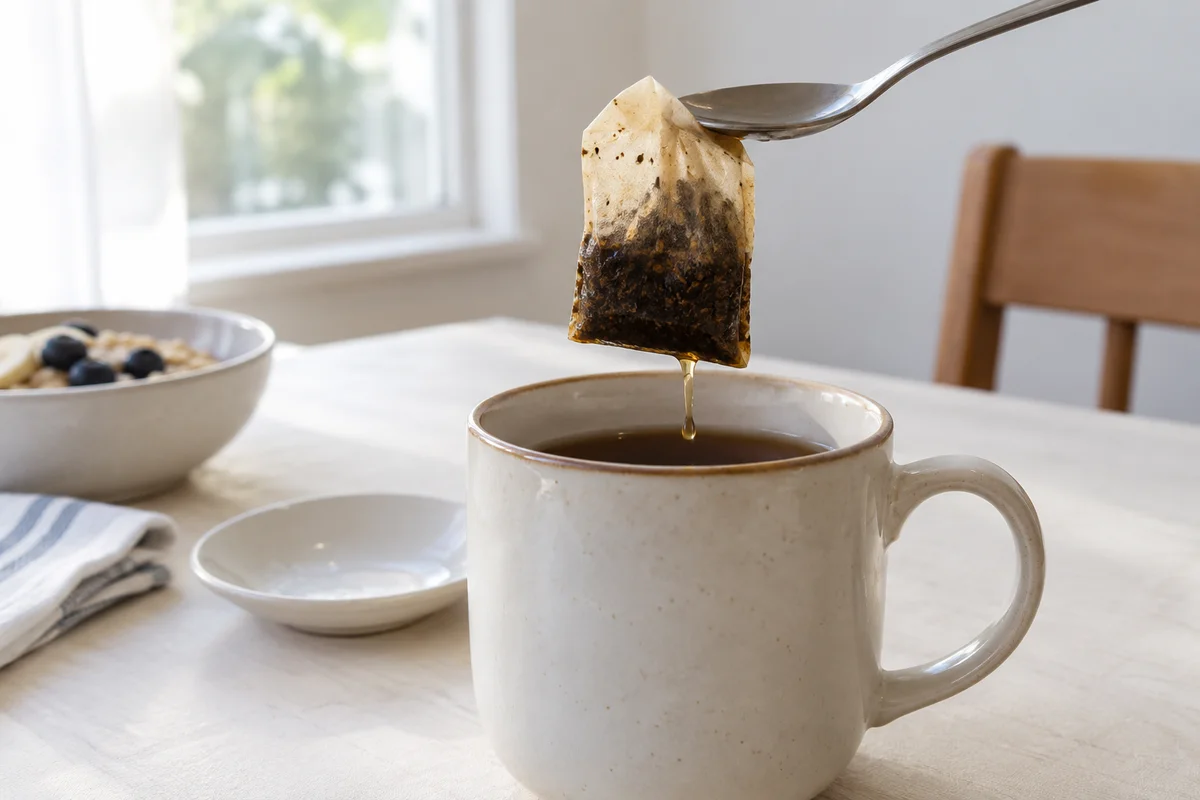
A wet tea bag holds liquid among its leaves and within the filter material. Pressing it against a spoon or the side of the mug sends some of that liquid into the cup. The result may taste different from a bag simply lifted and allowed to drip. It is unnecessary to explain the difference with a claim that squeezing creates a new substance or suddenly makes tea dangerous.
The effect depends on the tea, the length of the infusion and how hard you press. A gentle final drain is not the same as repeatedly wringing a bag against the cup. If you want to know which you prefer, brew two otherwise comparable cups and change only the final handling. Taste after both have cooled enough to drink comfortably, without automatically adding extra sugar to one.
Keep the bag and your hands intact
Do not squeeze a hot bag between your fingers. The liquid trapped inside can still be very hot. Use a spoon or lift by the string if it is designed for that purpose, then rest the bag on a suitable dish. Pressing hard can tear thin filter paper, releasing fine particles that are inconvenient to remove. A torn bag is often a practical mess rather than a sign that the leaves were unsuitable.
If the packet gives a particular instruction about removing the bag, use that as your starting routine. Finish at the stated time instead of leaving the bag in while debating how to drain it. A small drip dish beside the mug makes the last step easy and keeps tea off the worktop. You can allow excess liquid to drain there without squeezing every possible drop back into the drink.
Choose repeatability over a rule
For an everyday cup, the best answer may simply be a gentle lift each time. If you enjoy a light press, use a similar movement rather than varying the force from one brew to the next. Adjust the dose or steeping time deliberately when the tea needs a larger change. Squeezing is a poor substitute for a recipe: it is difficult to measure, happens at the end, and can hide the reason a cup became stronger than you expected.