Matcha is a suspended leaf, not a clear infusion
The powder stays in the bowl. That single difference explains much of matcha's texture and appearance.
There is no leaf to lift out
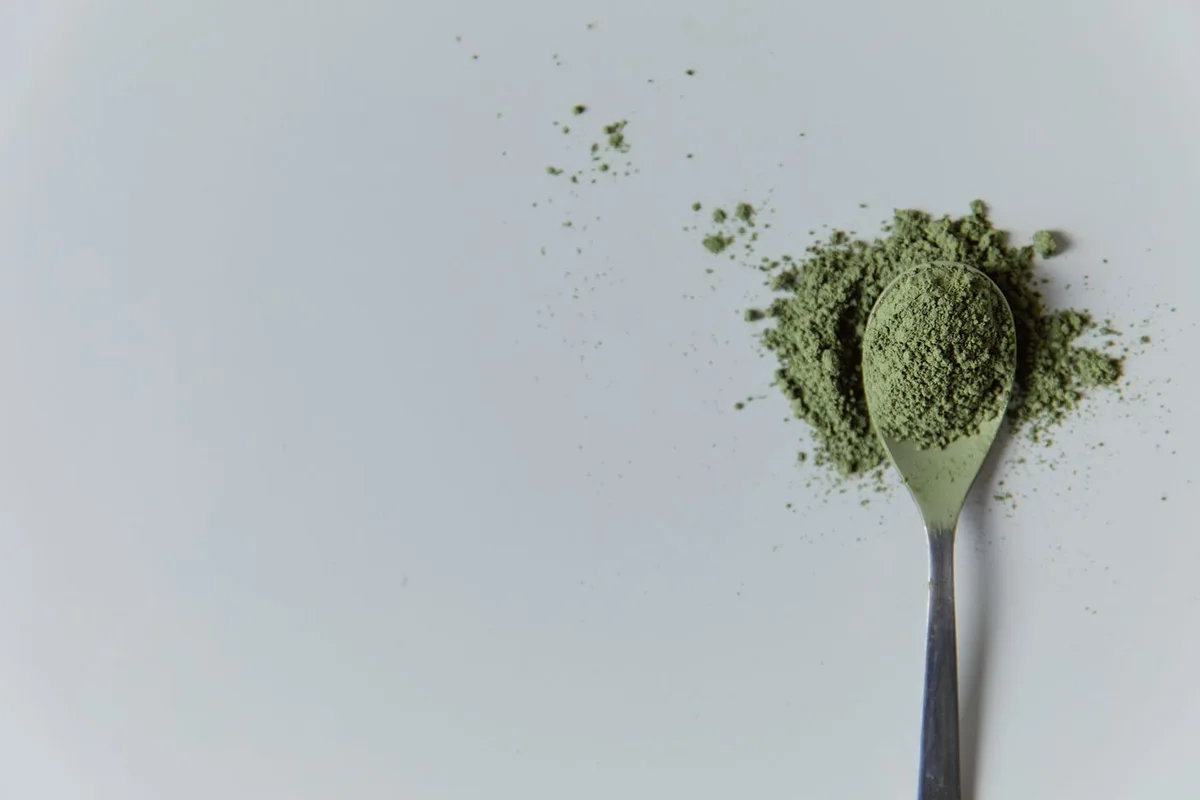
With ordinary loose tea, water extracts part of the leaf and you remove the leaves before drinking. Matcha works differently. Finely ground tea is dispersed through the water, so the leaf particles remain in the bowl. The drink is therefore opaque and can settle if it stands. Expecting it to behave like a clear infusion leads to unnecessary disappointment: a little sediment is not proof that the powder has failed to dissolve, because complete dissolution was never the process.
The powder has a history
Matcha is made from tencha, a shaded tea that is steamed and dried without the rolling used for sencha. The material is refined before being ground. It is not simply any green tea put through a kitchen blender. That background helps explain why a jar labelled powdered green tea is not automatically interchangeable with matcha, and why the texture of a homemade powder can be quite different. The milling is part of the product, not just a convenient serving format.
Colour is only one clue
A vivid green appearance is attractive, but photographs, lighting and screens can exaggerate it. Taste, aroma and texture deserve equal attention. A plain bowl may offer savouriness, sweetness, green fragrance and some bitterness. A latte changes the balance again because milk and any sweetener soften or cover parts of that character. Neither use is inherently wrong. The useful question is whether the powder performs well in the drink you actually intend to make, rather than in a photograph.
Start with the simplest bowl
For a first tasting, follow the maker's instructions and use a small amount of water appropriate to that method. Sifting can help separate clumps before whisking, but foam is not a universal quality score. Drink while the suspension is evenly mixed, and stir or whisk again if it settles. Notice whether the texture feels fine and comfortable or distractingly gritty. If you later add milk, compare what remains of the tea's character. This makes it easier to choose a matcha for your own kitchen without relying on vague prestige words.