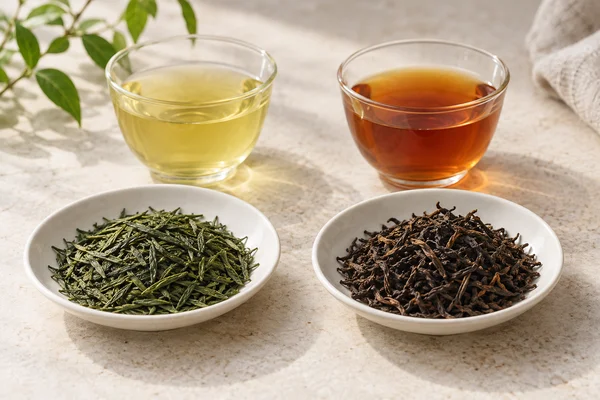
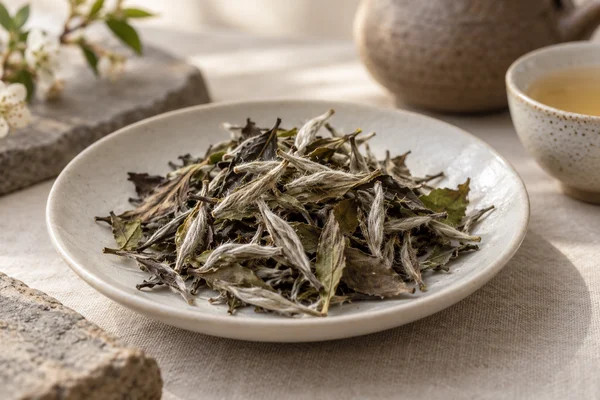
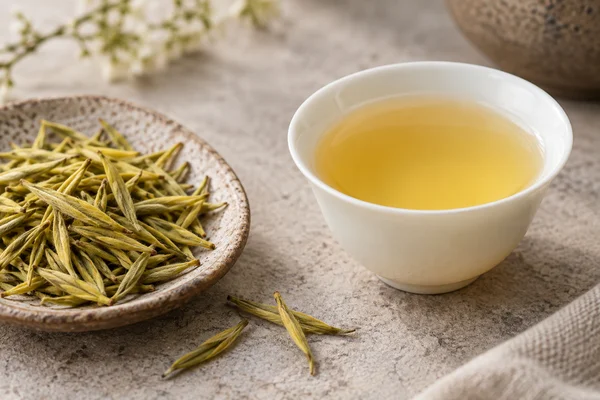
Oolong has its own range of flavours
Lightly floral and deeply roasted teas can both be oolong. Oxidation alone does not explain everything in the cup.
More than a halfway point
Calling oolong a tea between green and black is a useful first signpost, but a poor complete description. Oolong makers allow some oxidation and then arrest it with heat. Within that broad idea, the handling of the leaf, its shape and subsequent roasting can vary considerably. A bright, lightly oxidised cup is not an unfinished black tea. A dark roasted one is not necessarily almost black tea either. Each has been made towards a particular style.
Two separate questions
Ask about oxidation and roasting separately. Oxidation changes the leaf through enzymatic reactions; roasting applies heat and develops a different set of aromatic impressions. A seller's phrase such as light roast does not automatically tell you the oxidation level. Likewise, a green-looking rolled leaf may have undergone careful finishing heat even if it lacks an obvious toasted flavour. Exact percentages can sound reassuring, but they are less useful to a beginner than a clear description of the finished tea.
Start with a contrast
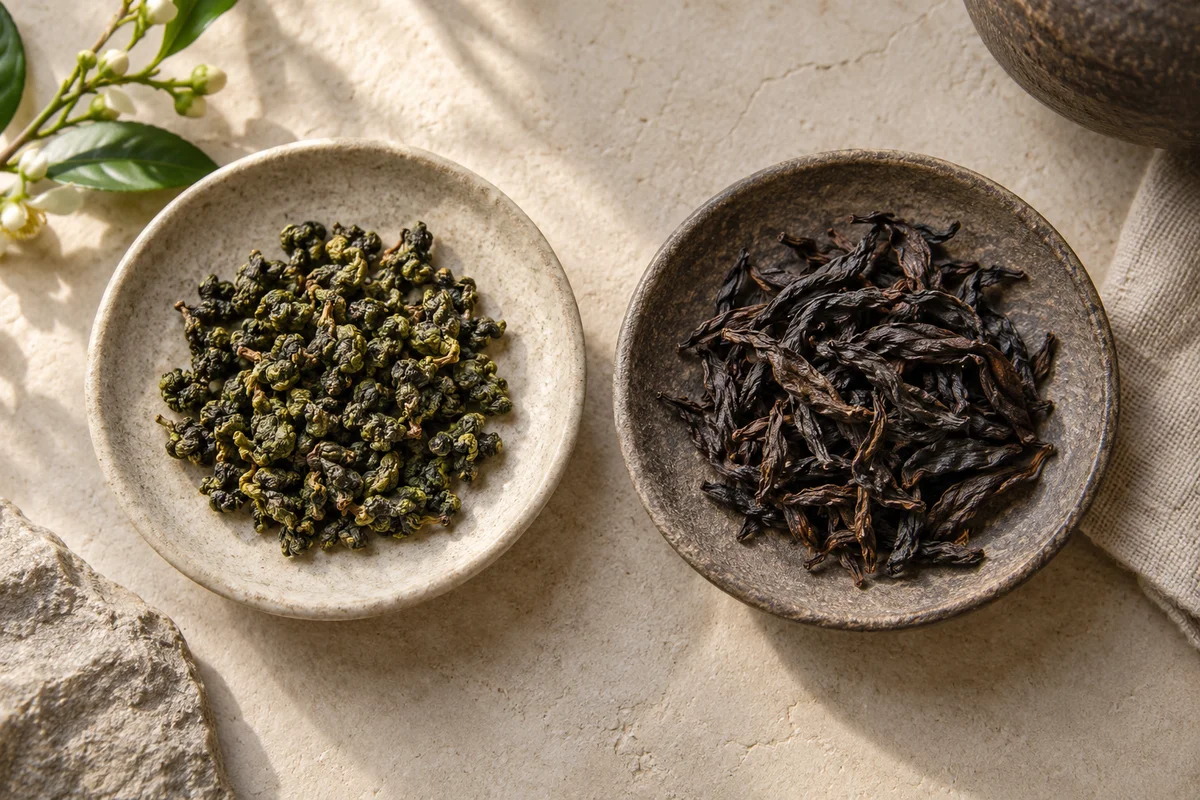
For a first exploration, choose one lightly roasted floral oolong and one more obviously roasted example. Do not try to represent an entire country with either. Smell the dry leaves, then the warm wet leaves, and finally the cup. In one you might notice flowers or fresh fruit; in the other, toast, nuts or darker fruit. If the second smells roasted, look for what appears underneath that aroma rather than describing every sensation as smoke. Roasting and smoking are not interchangeable.
Let the shape explain the pace
Rolled oolongs can open from small dense pellets into surprisingly large leaves. Long twisted styles begin with more of their surface exposed. This helps explain why two equal-looking spoonfuls need not weigh the same or behave alike in water. Follow the instructions for your particular tea instead of applying a universal oolong recipe. If you make successive infusions, notice how the balance changes as the leaf opens. A changing cup is interesting, but there is no duty to keep brewing after it stops being enjoyable.