What makes yellow tea a separate category
Yellow tea is defined by a processing choice, not simply by a yellow infusion or an unfamiliar name.
A colour is not enough
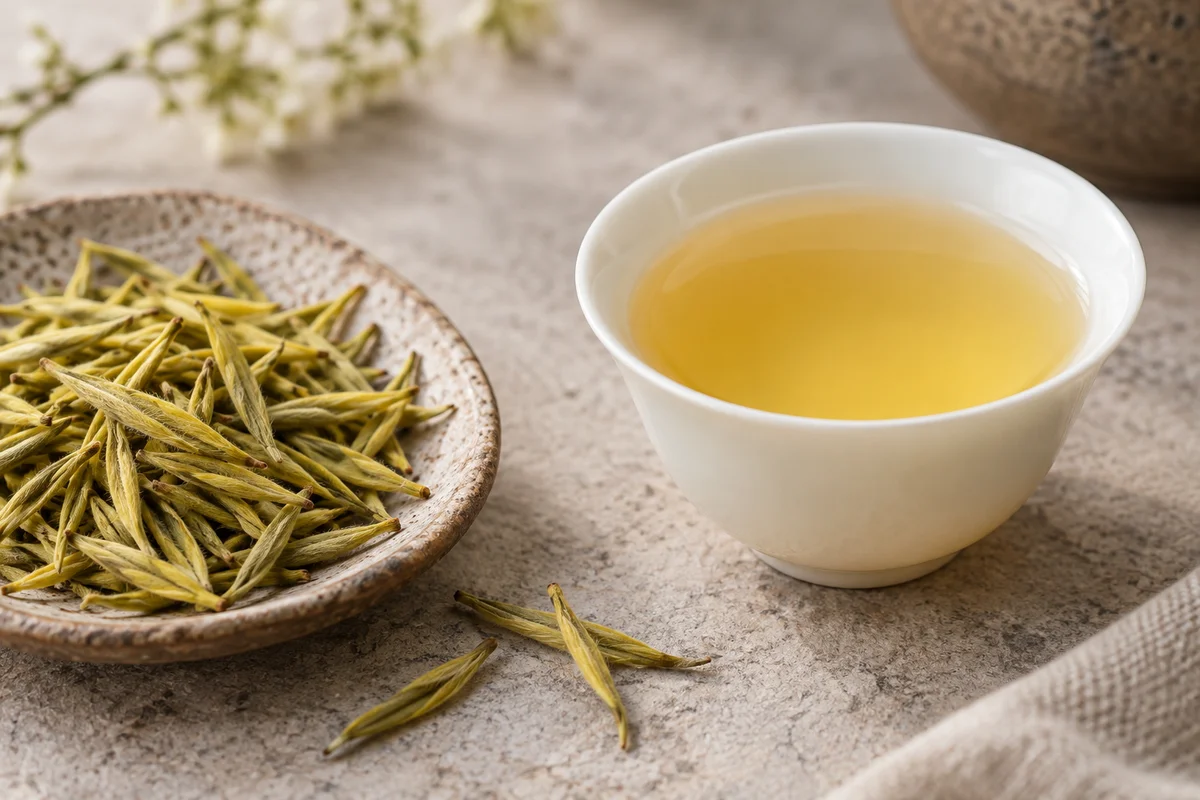
Plenty of green and white teas make yellow liquor. That does not turn them into yellow tea. The category refers to a particular processing approach, traditionally associated with China, in which a controlled warm, moist resting or yellowing stage follows the early heating of the leaves. Producers manage this stage alongside drying. The result can be less sharply green in character than a comparable green tea, although it would be misleading to promise the same flavour from every yellow tea.
Why the unfamiliar name matters
Names such as Jun Shan Yin Zhen and Meng Ding Huang Ya identify different traditional styles. The words on a packet can describe a place, a leaf shape or the use of buds. They are useful starting points for a question to the seller: what is this particular tea, and how was it processed? A description that only says rare yellow tea leaves out much of the information that would help you understand what is in the bag.
Look for a quiet distinction
The difference from green tea may be subtle rather than spectacular. A pale cup can have a rounded grain-like impression, a delicate sweetness or a softer vegetal edge. Those possibilities are not a checklist of flavours that must appear. Taste the tea before reading a long set of advertised notes, then see which descriptions fit your own impression. If all you notice is a pleasant, gentle cup, that is still a perfectly adequate observation; rarity does not oblige a drink to be dramatic.
Give a small sample a fair chance
A modest sample is a better introduction than a large purchase based on reputation. Use the supplier's instructions and keep the first cup plain. If comparing with green tea, select a fairly restrained example rather than a heavily scented or roasted one that will dominate the comparison. Notice the cooled cup as well as the hot one. Neither colour nor softness proves authenticity, and a home tasting cannot verify a production history. Good information about the maker and the specific lot is therefore part of the experience, not an optional extra.