Green and black tea start with the same plant
The difference develops after picking. Follow what happens to the leaf, then compare the cups without treating colour as a measure of strength.
One plant, different decisions
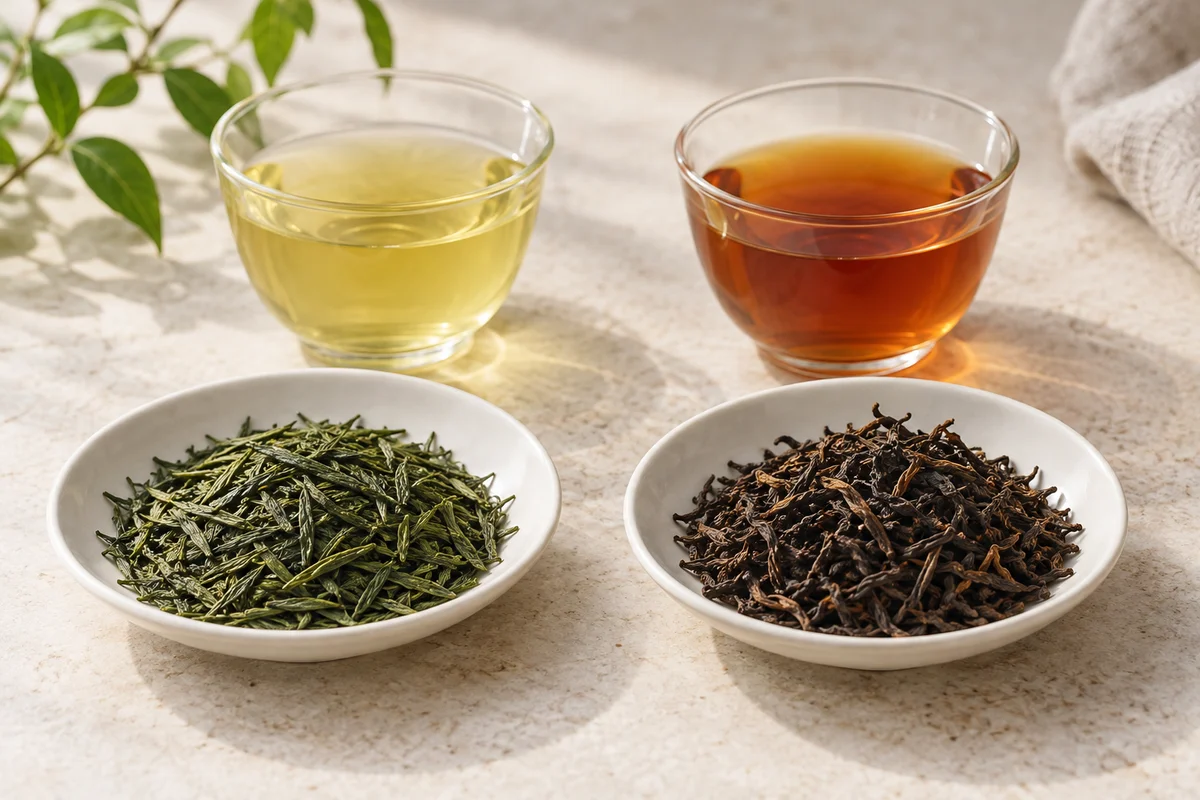
A green tea and a black tea can seem unrelated when they sit beside each other. One may smell of steamed vegetables; the other of malt or dried fruit. Both come from Camellia sinensis. The useful distinction is what the maker does with the harvested leaf, rather than a green plant growing in one field and a black plant growing in another.
Tea leaves contain enzymes and compounds that react when their structure is disturbed and they meet oxygen. For green tea, heating early in production limits this enzymatic oxidation. Steaming and pan heating are two ways of doing that. Black tea makers allow much more oxidation before the final drying stage. These choices help create different colours and aromas, though the growing conditions and the particular plant still matter.
Neither category has a single taste
Green tea is not a promise of a grassy flavour. A steamed Japanese sencha can lean towards fresh vegetables, while a pan-heated Chinese green tea may suggest nuts or toast. Black tea is just as varied: a sturdy breakfast blend and a light, fragrant Darjeeling belong to the same broad family but make very different company for a slice of cake.
That is why one disappointing cup tells you little about an entire category. If a green tea tastes aggressively bitter, its preparation may be part of the problem. If a black tea feels too heavy, try a different leaf style before deciding that every black tea will taste that way. The name narrows the field; it does not finish the description.
Make a useful comparison
Choose two plain teas without added flavouring, and prepare each according to its own packet instructions. Giving both the same very hot water and long steep may look fair but can obscure what the green tea has to offer. Use pale cups so that the liquor is easy to see, and taste without milk or sugar for the first comparison.
First notice the smell above the cup. Then take a small sip and separate flavour from texture: is it floral, nutty or malty, and does the mouth feel smooth or dry afterwards? Let the cups cool slightly and try again. Avoid ranking their caffeine from colour or bitterness; those are not reliable measurements. A few ordinary words about what you actually taste are more useful than forcing either tea into a reputation.