Tencha before it becomes matcha
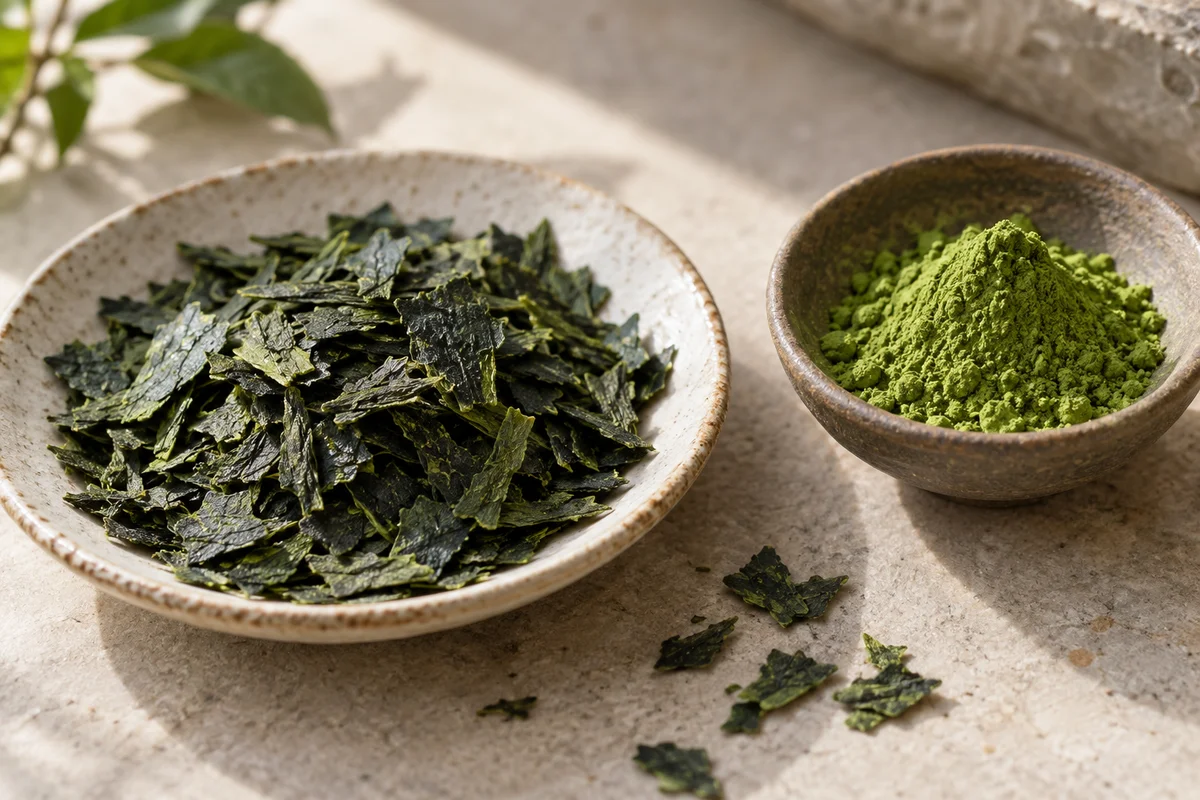
Before matcha becomes powder, it exists as a light, flaky leaf called tencha. Its shape reveals a different process from sencha.
The missing stage in a familiar drink
Matcha usually arrives in a tin as powder, so it is easy to forget that there was a recognisable leaf before it. Tencha is that material. The plants are shaded before harvest, and the leaves are steamed and dried without being rolled into the needles familiar from sencha. The resulting leaf has a light, flaky appearance. Seeing it makes matcha's production more understandable than the vague idea that any green leaf can simply be powdered.
Refining comes before milling
The dried material is processed further to remove stems, veins and other unwanted pieces before the selected leaf tissue is milled. Producers can also blend different lots to achieve a desired finished character. That means the powder in a tin may represent several careful decisions rather than one isolated harvest poured straight into a grinder. A consistent named matcha can be the result of skilled selection, not evidence that every field always produces the same flavour.
Tencha is not loose matcha
Some producers sell tencha as a leaf product, and it can be interesting to encounter it that way. But infusing intact flakes and drinking finely suspended powder are different experiences. In the first case, you remove the material after extraction; in the second, the particles remain in the drink. Do not expect the same body or opaque green appearance from both. The relationship is a shared raw material and processing history, not an identical recipe in two packages.
If you buy tencha to taste, follow the producer's instructions for that leaf. A method designed for whisking matcha cannot be transferred directly to a pot full of flakes. The amount that looks like a teaspoon may also weigh very differently from a teaspoon of powder.
A clearer way to read a label
Knowing the word tencha helps when comparing descriptions of powdered teas. Matcha and generic powdered green tea are not automatically interchangeable terms. Look for a straightforward account of the source leaf and intended use, rather than letting a fine texture or vivid photograph answer every question. You do not need to mill tea at home to appreciate this distinction. Understanding the stage before the powder is enough to make the familiar bowl a little less mysterious.