Let a tasting sip cool first
The first sip should be comfortable enough to judge. A small tasting portion can cool without leaving the whole brew on the leaves.
Finish brewing before waiting to taste
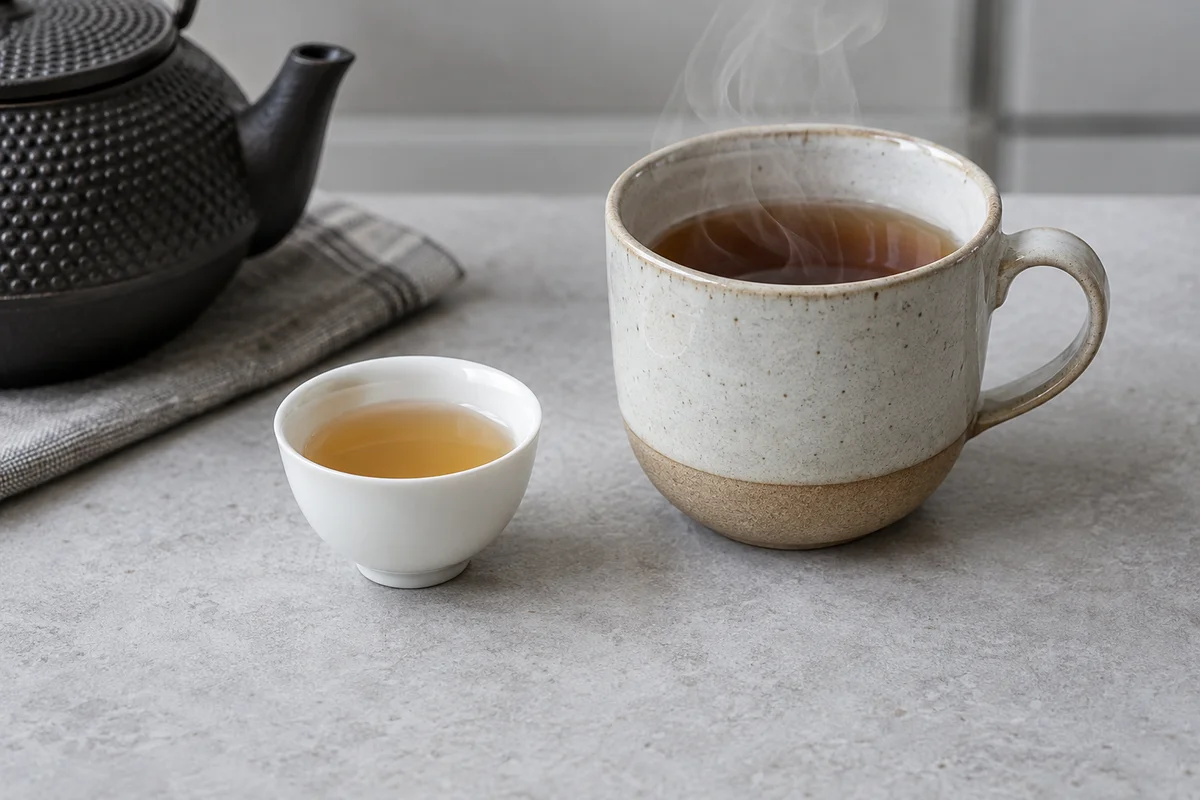
If the infusion is ready but still too hot to drink, separate it from the leaves first. Leaving the basket in until the liquid cools changes the recipe while you wait. You may then judge the tea at a much longer contact time than you intended. A small portion poured into a suitable cup can cool for tasting while the rest remains a finished, strained infusion.
Use a stable cup with enough space below the rim and give it time. There is no prize for tolerating a scalding first sip. If you cannot comfortably taste the drink, you are not in a useful position to decide whether its sweetness, aroma or finish is balanced. Keep hot tea out of the reach of children while it cools, particularly if small handleless cups are being used.
Keep cooling from becoming dilution
Adding water or ice will lower the temperature, but it also changes the concentration. That can be useful when you deliberately want a lighter or iced drink; it makes a less clear test of the original recipe. For an ordinary flavour comparison, cool a small portion without additions first. A broad tasting cup may lose heat more readily than a deep mug, so use similar vessels when comparing two teas.
Blowing across a personal cup is a familiar habit, but avoid handling shared tasting portions in a way that compromises cleanliness. Give each person their own cup and utensil. If you use a spoon to take a small sample, do not return a tasted spoon to the common pot. A relaxed tasting can still have straightforward, sensible hygiene without turning the table into a laboratory.
Take a second small sip later
The tea may present itself differently as it cools. A fragrance that was difficult to notice in the steam can become clearer, or a drying finish may stand out more. Write the observation in simple terms rather than assuming the first impression was wrong. For recipe adjustments, compare cups at reasonably similar drinking temperatures. Otherwise you may change leaf weight to solve a difference that came mainly from one sample being much hotter. A little patience at the tasting stage can save several unnecessary brewing experiments afterwards.