Shou pu-erh and a dark, earthy cup
Shou's dark colour comes with a distinct processing history. Earthy can be inviting, but it should not excuse every off smell.
The extra step behind the colour
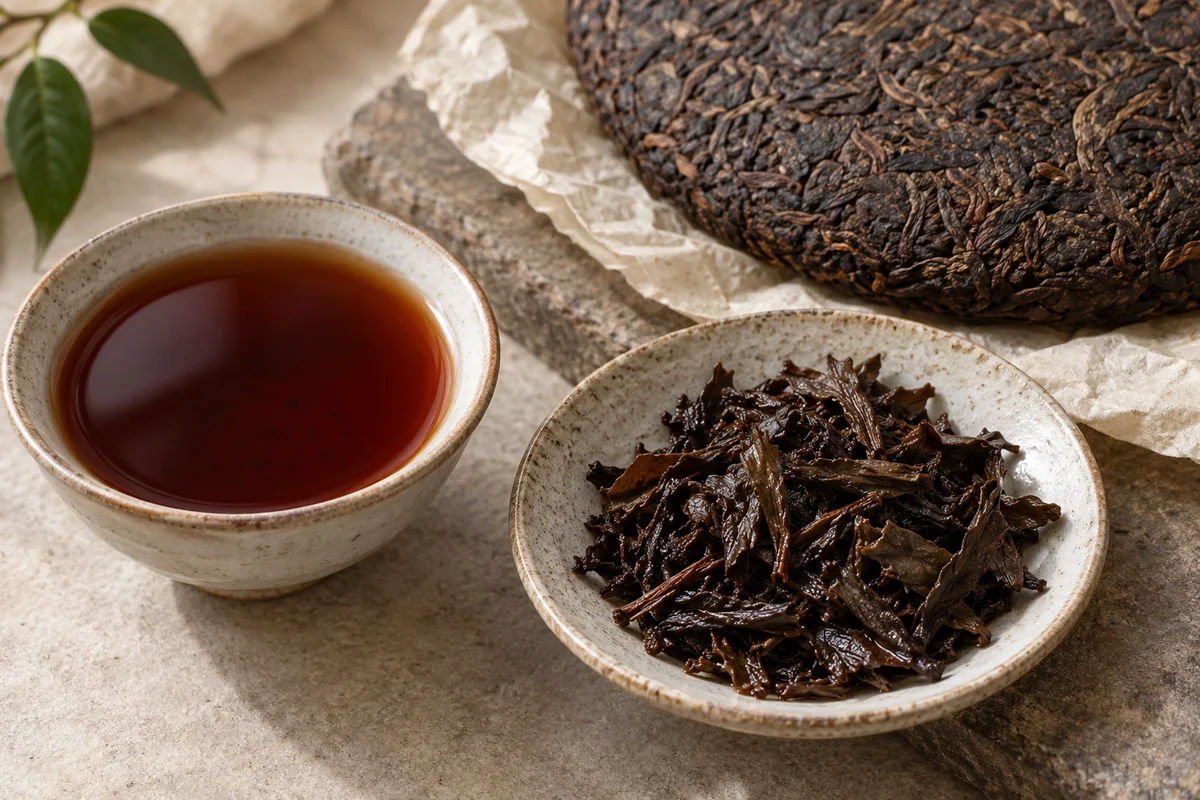
Shou, or ripe pu-erh, undergoes a controlled moist-piling process during manufacture. Microbial fermentation changes the tea, producing a character that is markedly different from young sheng. The method helps explain the dark leaf and deep reddish-brown liquor often associated with the category. Ripe is a processing description, not merely a claim that the tea has waited a long time.
A recently made shou and a much older sheng can therefore both be called pu-erh while having very different histories. A date on a cake does not replace the need to identify the type. Likewise, loose shou is still shou; compression is not the step responsible for its dark, earthy character.
Earthy is a family of impressions
A clean earthy note can suggest wood, a dry forest floor or a rounded, mellow depth. Some teas also invite cocoa-like or dried-fruit comparisons. These words are attempts to describe aroma, not literal ingredients or instructions to accept anything that smells damp. A musty, sour or otherwise suspicious smell should not be romanticised simply because pu-erh is fermented.
Texture is often as noticeable as fragrance. A cup may feel smooth and substantial without the sharp briskness of a breakfast black tea. That does not make it flavourless. The interest can lie in how the dark aroma, rounded body and finish fit together rather than in a bright floral opening.
Do not confuse dark with stronger in every way
The intense liquor colour is a poor universal strength scale. It cannot tell you a precise caffeine amount or guarantee bitterness. A dark shou may seem softer than a much paler young sheng. Looking at colour alone would miss that contrast entirely, which is why the category is easier to understand through both appearance and taste.
When describing a particular shou, say what its earthiness resembles and whether the finish feels clean. A simple note such as woody, rounded and gently sweet in aroma is more useful than declaring all dark pu-erh either muddy or smooth. There is enough variation within the type to reward a specific description, without needing to invent an age story for every cup.