Shincha is a seasonal description
Shincha points to a newly released harvest. It is not a separate plant or a guarantee that every packet tastes alike.
New tea is a timing description
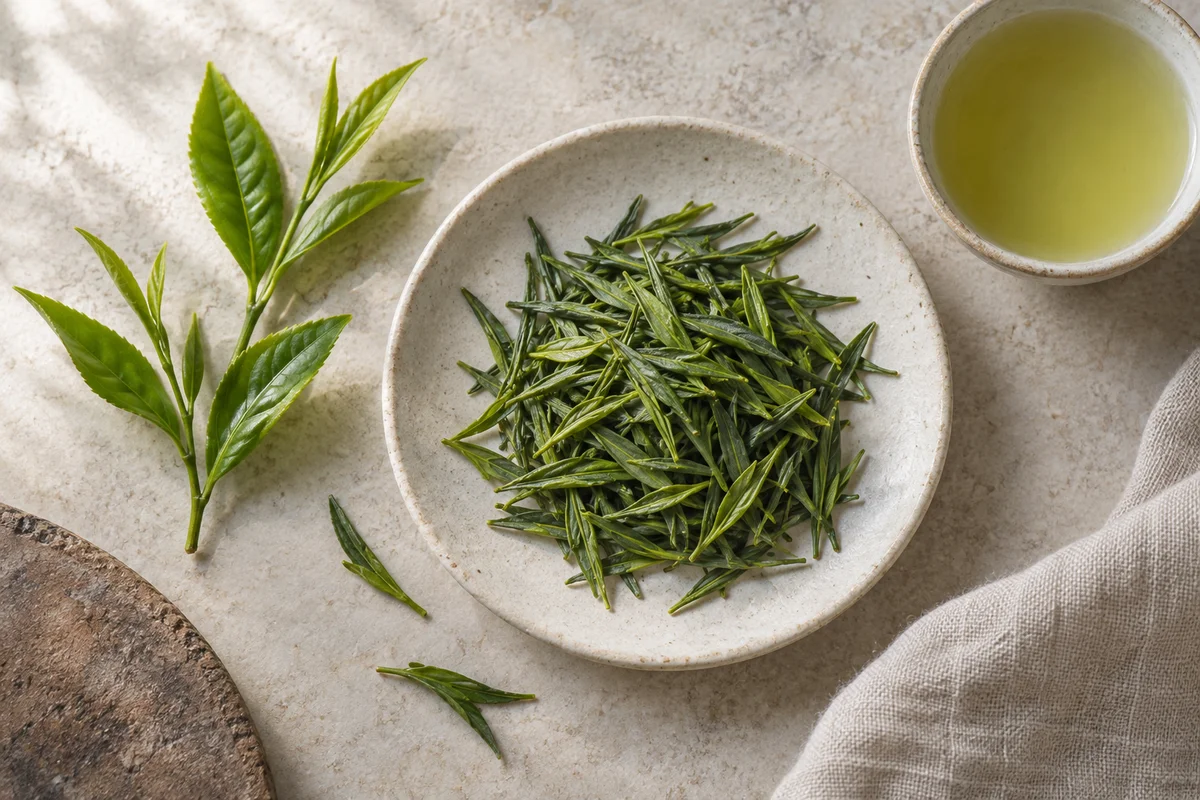
Shincha is commonly used for Japanese tea released soon after the new harvest, especially sencha. It tells you something about timing rather than introducing a seventh major tea category. The same tea plant does not become a different species in spring. What attracts drinkers is the chance to experience a newly made tea's lively aroma before it settles into a more familiar year-round character. The actual release period depends on where and how the tea is produced.
Not every fresh harvest goes straight to sale
A producer may reserve part of a harvest for a shincha release while allowing other material to rest or using it in established blends. That does not make the later tea stale. Blending and storage can be deliberate choices to create a consistent flavour. Ippodo, for example, distinguishes its immediate seasonal release from its regular blends. It is a useful reminder that newest and most suitable are not always the same question.
Descriptions of shincha often emphasise vivid green fragrance. Take that as an invitation to notice the aroma, not a promise that all examples will be gentle or sweet. A newly made tea can have a lively astringent side as well. Growing conditions and the producer's choices still show up in the cup.
A small seasonal comparison
If you already have a sencha you enjoy, buy a modest quantity of shincha and compare it while both are in good condition. Use the recommended methods for each and keep notes about aroma, texture and finish. Do not demand that the newer tea replace the familiar one. You may prefer the seasonal cup on some days and the steadiness of your regular blend on others.
Check the harvest year and the seller's description rather than relying on a bright spring illustration. Once opened, treat the tea as an aromatic food that benefits from careful storage and regular use. A seasonal name is most rewarding when it leads to a cup you actually drink, not a packet kept untouched until its moment has passed.