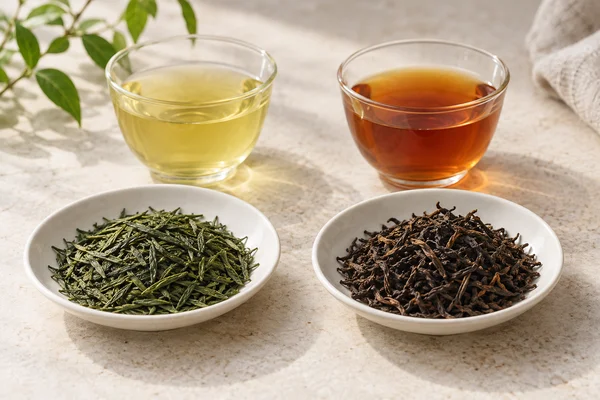
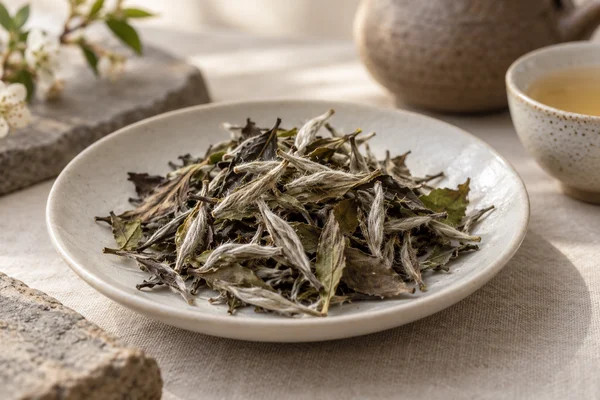
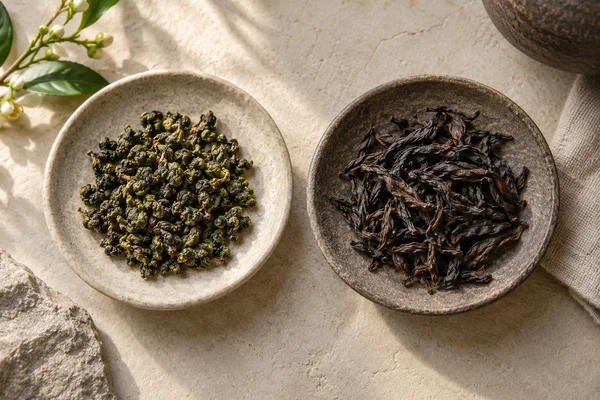
Young sheng pu-erh is not the same as ripe pu-erh
Young sheng can be bright and forceful. It should not be judged against the dark profile of pile-fermented shou.
Raw does not mean an unprocessed leaf
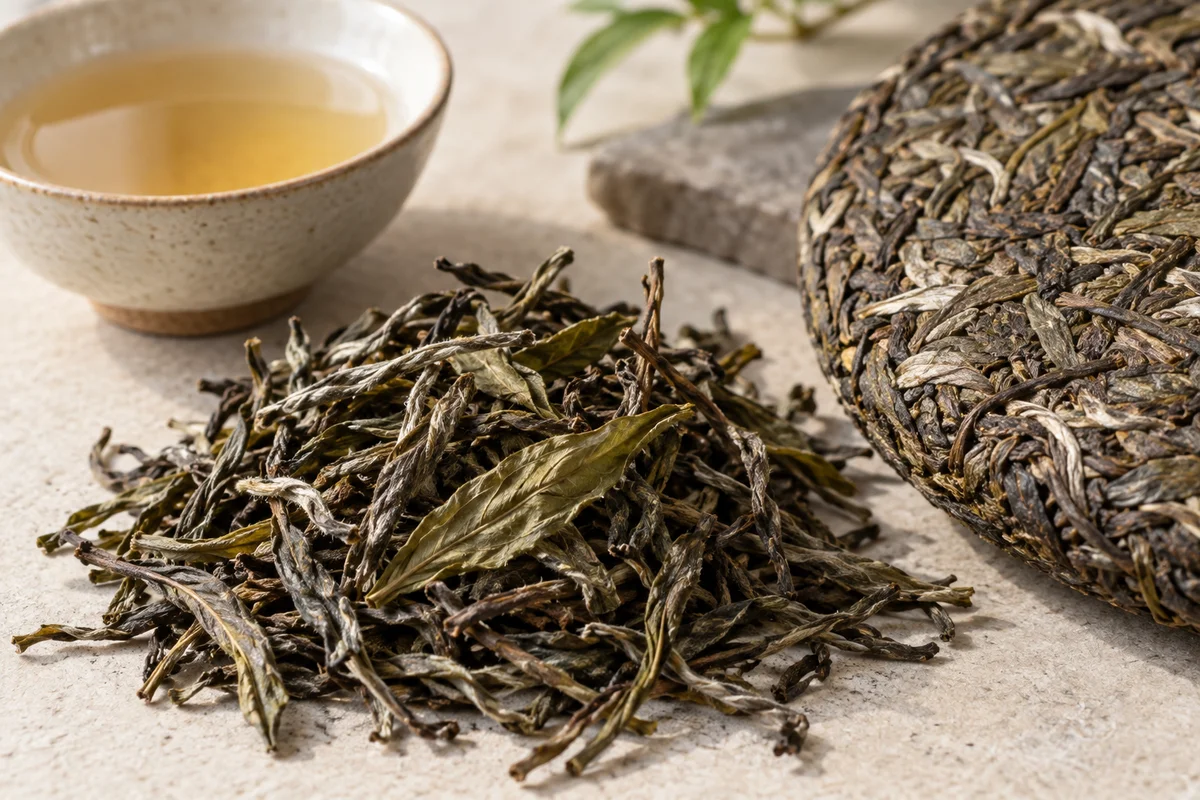
Sheng is often translated as raw pu-erh. The word can be misleading if it suggests freshly plucked leaves dropped straight into a bag. Sheng has undergone processing, including heat treatment, rolling and drying. It may remain loose or be pressed into a cake. Raw distinguishes its production route from the additional pile-fermentation used for shou, or ripe pu-erh.
A young sheng can therefore look relatively green or olive and make a yellow to amber cup. That appearance is quite different from the dark brown liquor many people first associate with pu-erh. The two are related categories, but they do not begin from the same finished character.
The lively end of the family
Young examples can show floral or leafy aromas, a marked bitterness and a drying edge. Those features vary considerably with the leaf and its manufacture. Bitterness alone is not a certificate of quality, and a gentler tea is not automatically uninteresting. The relationship between the opening taste, texture and finish is more useful than measuring how challenging the first sip feels.
Some drinkers notice a change toward a sweeter impression after the initial bitterness. That sequence is part of the sensory experience, not evidence that sugar has been added. It is also not something every tea must demonstrate with the same intensity. Describing what actually happens is better than borrowing an impressive tasting vocabulary that the cup does not support.
Age is a separate piece of information
Sheng can change during storage, but simply putting a year on a wrapper does not tell the whole story. Starting material and storage conditions matter. Nor does time convert sheng into shou: ripe pu-erh is defined by a particular processing step, not by being an old raw tea.
For an introduction to the type, keep three questions separate: is the tea sheng or shou, is it young or aged, and is it loose or compressed? They describe production, time and shape respectively. Once those jobs are clear, a pale, lively young sheng stops looking like a faulty version of a dark earthy tea and becomes understandable on its own terms.