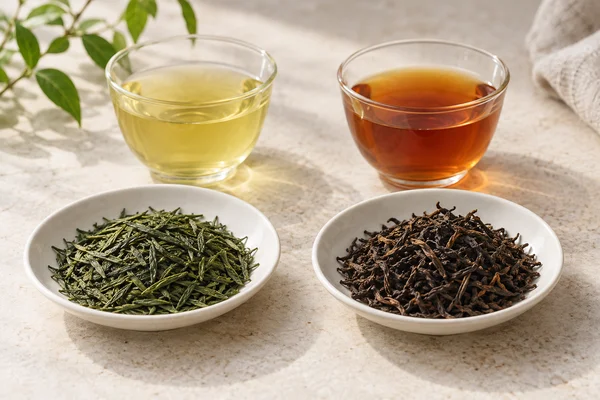
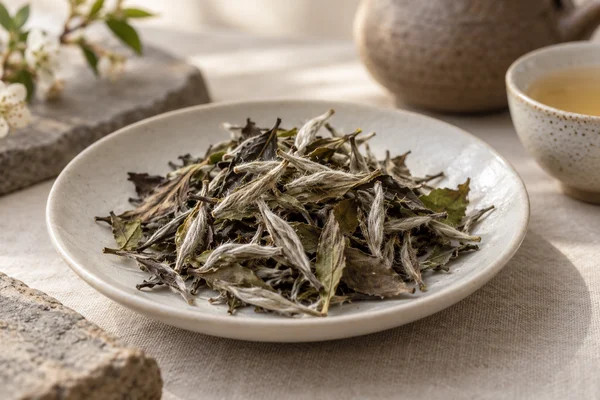
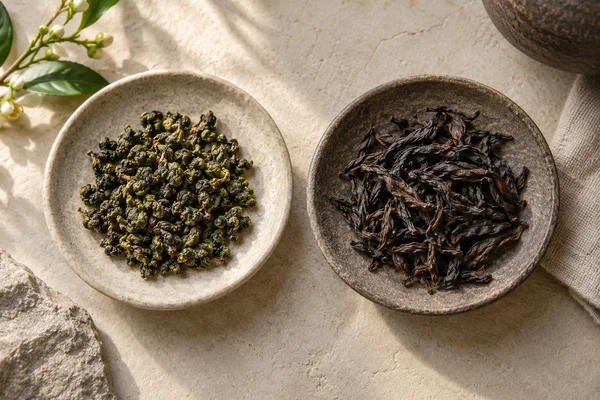
Lapsang Souchong with and without smoke
The name Lapsang Souchong covers smoked and unsmoked expressions, so the smoke level needs its own description.
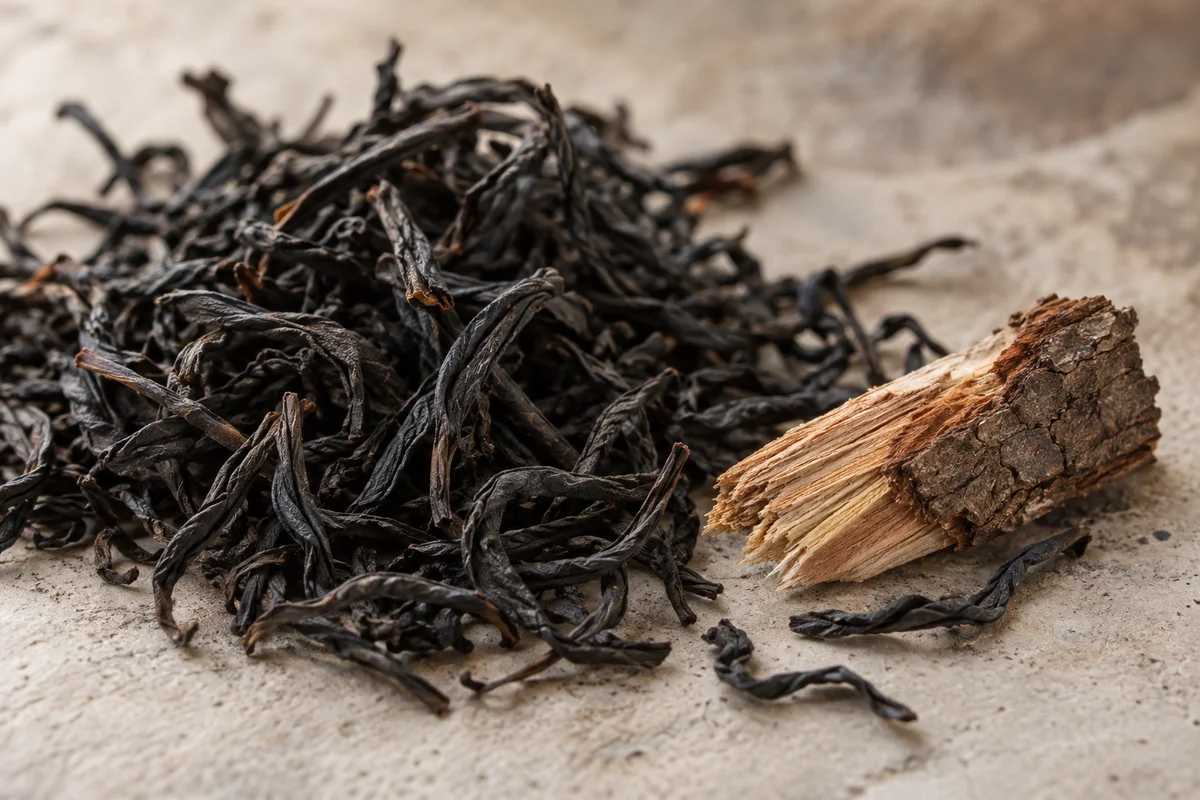
The campfire expectation
For many drinkers, Lapsang Souchong means an unmistakably smoky black tea. That association is understandable: pinewood smoke is part of the best-known export style. Yet the name, also encountered as Zheng Shan Xiao Zhong, belongs to a wider black-tea tradition associated with the Wuyi area of Fujian. Unsmoked examples are also made.
This distinction matters before the first sip. Someone expecting a campfire aroma may think an unsmoked tea is missing its defining feature, while someone seeking a soft Chinese black tea may be startled by a heavily smoked version. Neither experience is resolved by the name alone. A clear description should say whether smoke is present and how prominent it is.
Smoke can leave room for the leaf
A smoked tea is not necessarily one continuous wall of smoke. Depending on the selection, the cup can also suggest wood, fruit or a rounded sweetness of aroma. The interesting question is how those parts fit together. Is smoke an opening scent, a background edge, or the feature that occupies nearly every moment of drinking?
An unsmoked example may bring the underlying black-tea character forward, with fruitier or honey-like comparisons becoming easier to notice. Those tasting words do not mean fruit or honey was added. Equally, the absence of a powerful smoky smell does not by itself establish that a tea is more authentic or more expensive. Style and quality are separate questions.
Keep smoke apart from roast
A roasted tea can smell toasted or nutty without having been exposed to smoke. Lapsang's smoky association is therefore not interchangeable with the roast of hojicha or a roasted oolong. Both can feel warm and dark in aroma, but they arrive at that impression through different processing choices.
The most helpful tasting note is plain and specific: gentle pine-like smoke over a rounded black tea, for example, or an unsmoked cup with a fruity finish. There is no need to turn intensity into a badge of courage. A lighter smoke level is not a failure, and a forceful one is not automatically a finer tea. What matters is whether the balance makes sense to the person drinking it.