Keemun and its quiet aromatic depth
Keemun's fine dark leaf can give a quietly fragrant cup rather than the forceful strength its colour suggests.
A name from Anhui
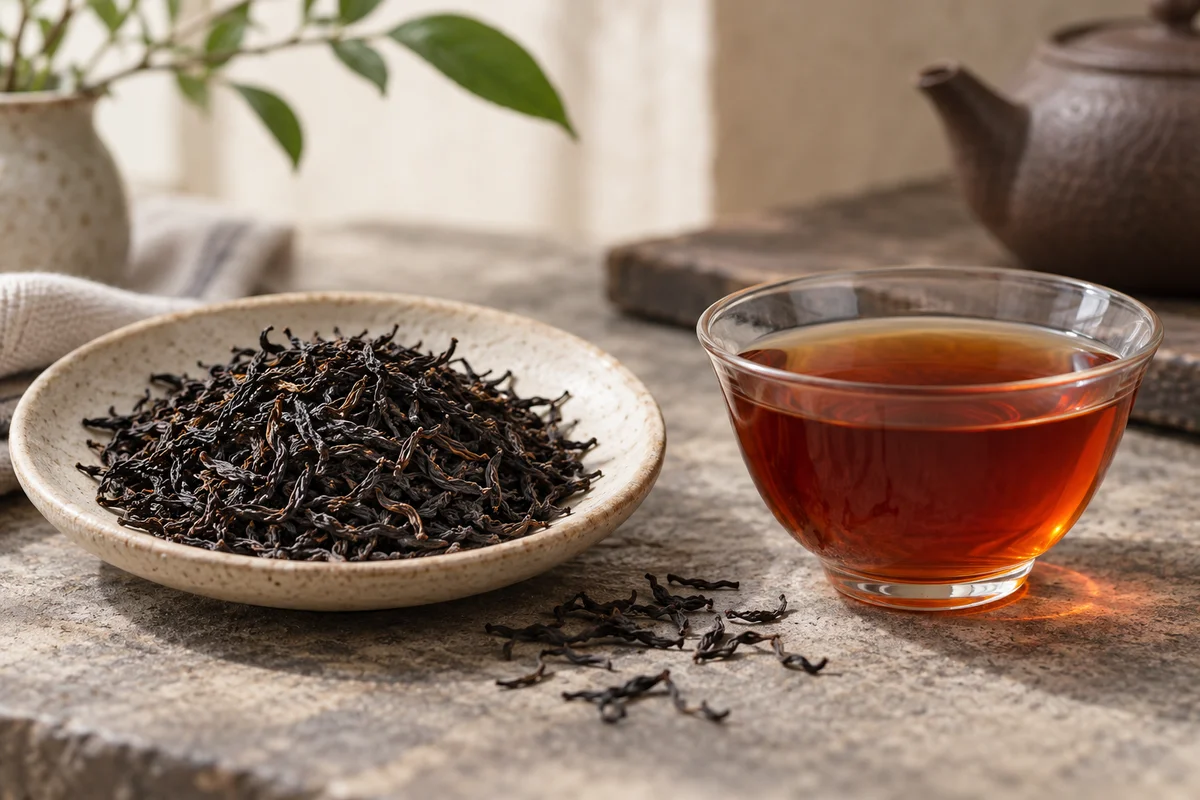
Keemun, also written Qimen, is a Chinese black tea associated with Anhui province. Its dry leaf is often fine, dark and neatly twisted. That appearance can make it look severe beside a green tea or a golden-bud black tea, yet the cup need not be aggressively strong. The fragrance is an important part of the appeal.
A nutty, woody or gently floral description can be more useful than the broad word rich. Some examples suggest a restrained smoky edge, but Keemun should not automatically be treated as a heavily smoked tea. A faint aromatic association and a deliberate smoke treatment are different things. Check the description of the particular leaf before expecting a campfire in the cup.
Listen for the quieter parts
Strong breakfast blends often make their presence felt immediately through body and briskness. Keemun can reward a different kind of attention: the scent above the cup, the rounded middle and the lingering aromatic finish. None of those requires the tea to be weak. It simply means that strength is not the only feature worth noticing.
An attractive dry-leaf smell also needs to survive into the infusion. If a tea smells complex in the packet but tastes flat, the label's regional reputation cannot fill the gap. Conversely, a modest-looking leaf may deliver a balanced cup without an elaborate list of tasting notes. Let the drinking experience do some of the descriptive work.
Keep the category clear
Keemun is black tea from the tea plant, not a herbal infusion or a separate botanical species. Different grades and selections can be sold under the name, so it is sensible to expect variation in leaf size and character. A finely made example and a blend component may have different purposes without requiring a contest between them.
When reading a blend label, remember that the presence of Keemun does not make the whole mixture taste exactly like a pure Keemun. Other teas can add body or brightness and shift the balance. The regional name is most helpful when it explains one contribution to the cup, rather than acting as a decorative promise of mystery or automatic superiority.