Fukamushi sencha and its cloudy green cup
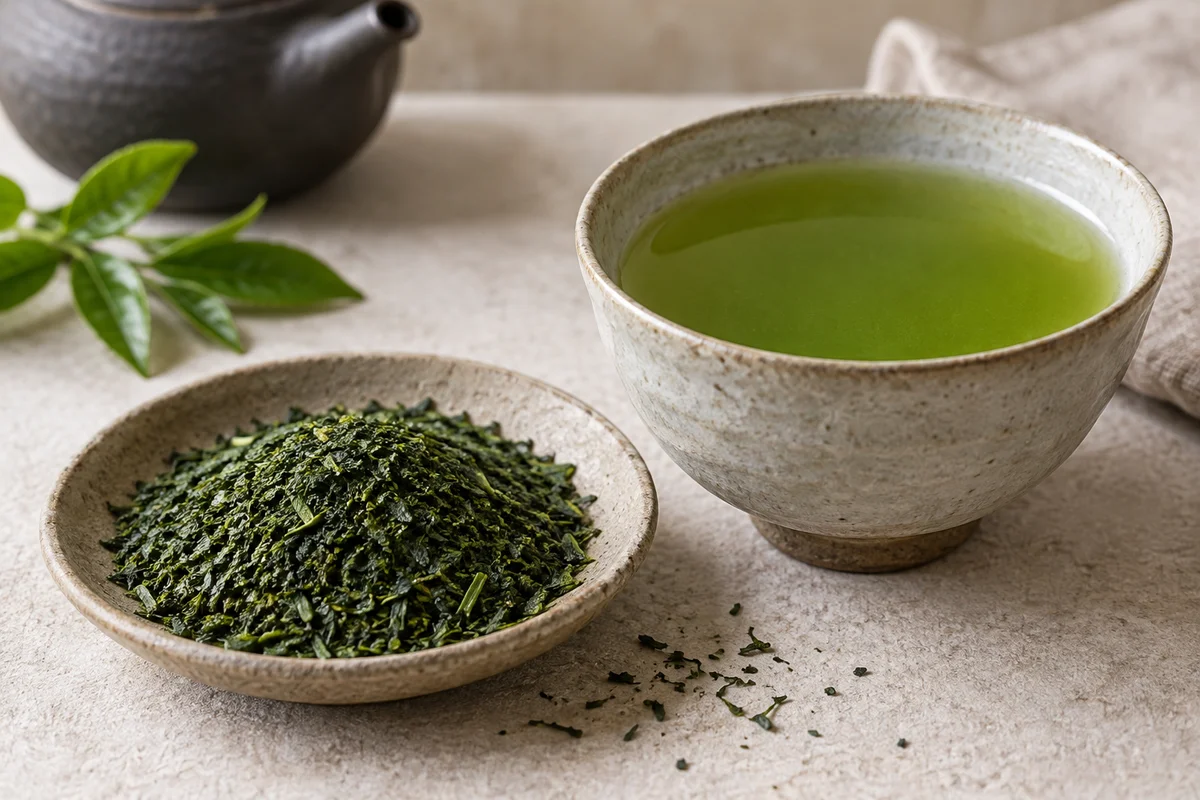
A cloudy green cup and fine leaf particles can be part of the intended style of deeply steamed sencha.
Do not judge it by intact needles
A new packet of fukamushi sencha can look surprisingly fragmented. If you have been told that good tea always consists of long, unbroken leaves, this is a useful exception to examine. Fukamushi means deeply steamed. The longer steaming treatment makes the leaf more fragile, so processing and handling can leave a mixture of short pieces and fine particles. That appearance is not, by itself, evidence of careless packing or inferior tea.
The cup may also be cloudier and more vividly green than an infusion from a more intact, lightly steamed sencha. Fine leaf material contributes to that appearance. Clear is not automatically better here, just as cloudiness alone is not a quality certificate. The question is whether the tea tastes and feels good when prepared for its particular structure.
A different relationship with the pot
Small particles can move through a coarse strainer or collect against a fine one. A suitable filter and an unhurried pour are therefore more useful than trying to force the last liquid out with a vigorous shake. Excessive agitation can make the tea harder to decant cleanly. Watch how your own pot behaves before blaming either the leaf or the equipment.
Because the leaf is broken into smaller pieces, a recipe intended for very intact needles may not transfer neatly. Begin with the producer's directions and pay attention to the time. If the first cup is heavier than you enjoy, change one variable on the next attempt rather than guessing at several changes at once.
Taste past the colour
A dense green appearance can make people expect an equally dense flavour. Sometimes the cup is rounded and full; sometimes it remains fresh and brisk. Look for the balance of vegetal aroma, savouriness and astringency rather than assuming that the brightest cup wins. Let a small amount cool and check whether the texture still feels pleasant.
Comparing fukamushi with another sencha is most useful when you note both the dry leaf and the finished drink. You are seeing a processing choice expressed in two places. The fine particles are part of that story, not something that needs to be hidden or apologised for.