Why first flush Darjeeling can look green
Pale liquor and greenish leaves do not disqualify a first flush Darjeeling from being a black tea.
A spring harvest, not a colour chart
First flush means the first main seasonal picking of new growth. In Darjeeling, the name is associated with the spring harvest after the slower winter period. It tells you something about when the leaf was gathered, while Darjeeling tells you where it comes from. Neither term alone is a complete classification of how the tea was made.
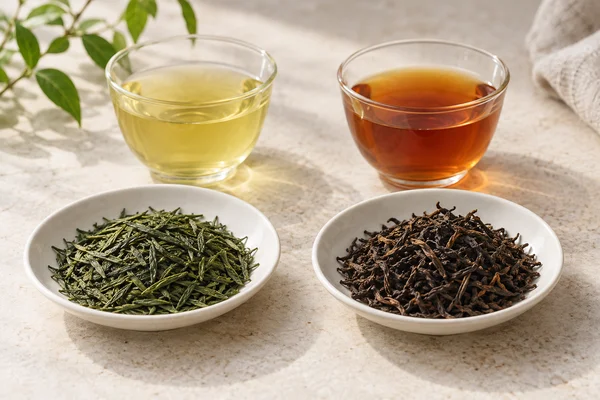
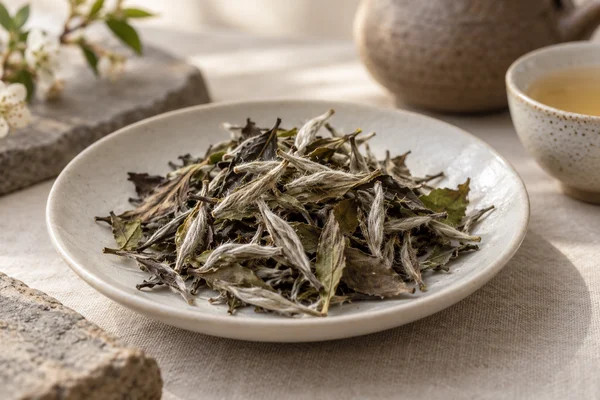
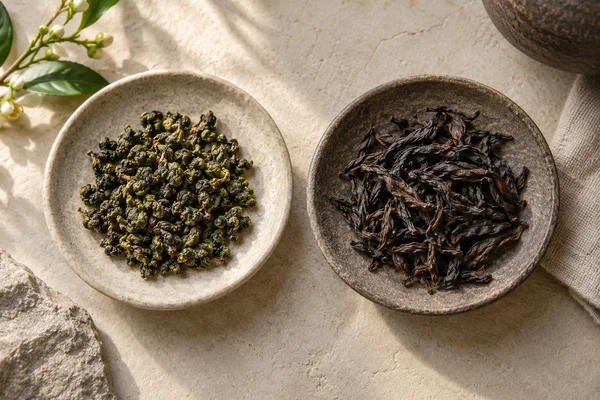
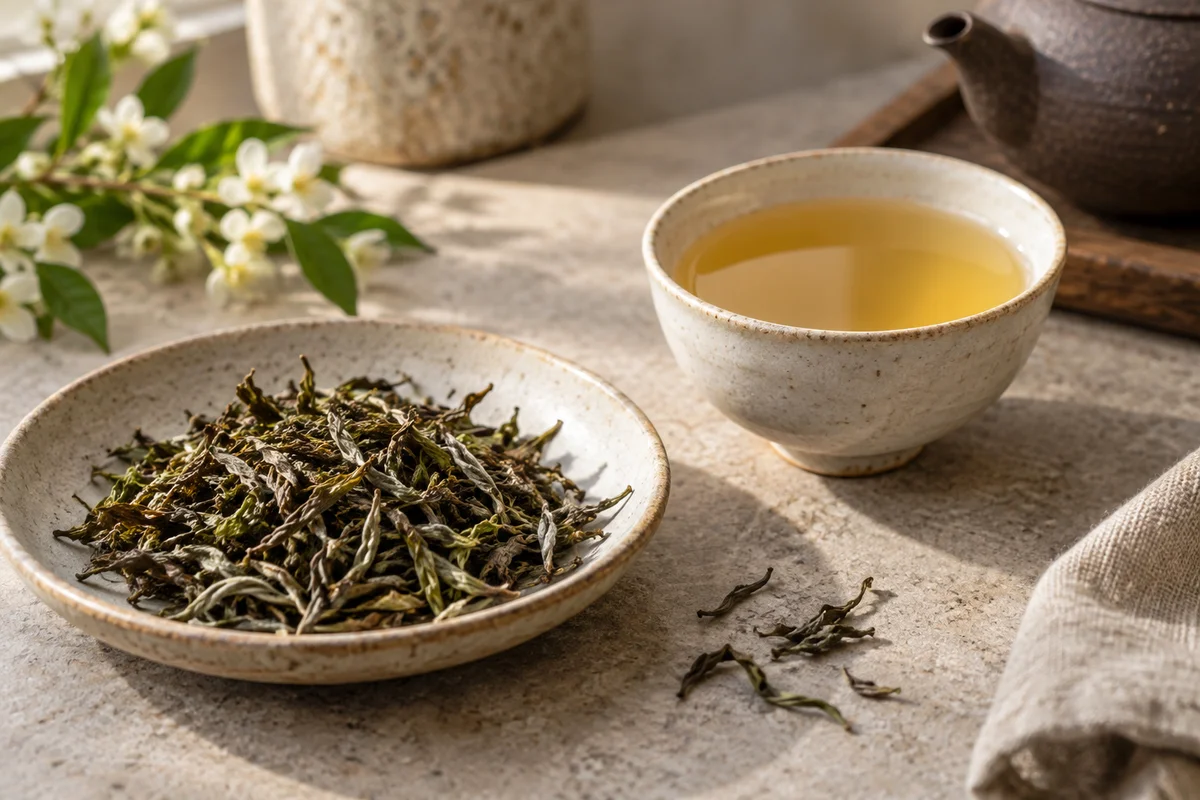
The familiar first flush black tea can look surprisingly green in the dry leaf and brew a pale gold rather than a deep brown. Modern processing styles often preserve a lively, fresh character. Colour is therefore a poor shortcut for deciding that a packet must contain green tea. The producer's description of the particular tea matters more than matching it to a mental picture of an English breakfast blend.
The delicacy has several forms
Floral, grassy and fresh-fruit comparisons appear frequently in descriptions, but these are not ingredients. One tea may suggest white flowers; another may seem brisker and more leafy. A restrained aroma is not necessarily a fault, and an intense perfume is not a requirement for authenticity. Even within a single garden, early and later spring lots can differ.
A lighter body also does not mean a flavourless tea. Pay attention to the movement from the first smell to the finish. A cup may start with a bright, airy scent, become slightly rounded on the tongue and leave a firm, clean dryness. That sequence is more informative than simply calling it weak because milk would overwhelm it.
Read the full name
An estate name, harvest year and a clear first flush description help identify what you are looking at. Long strings of leaf-grade letters need not become the centre of attention; they do not tell the whole sensory story. Darjeeling also produces other tea styles, so a spring harvest label should not be read as proof that every tea underneath it is black.
The useful expectation is freshness with individual variation. Avoid demanding the darker, fruitier profile often associated with later harvests. First flush is interesting precisely because it can occupy a lighter corner of the black-tea shelf, without needing to be relabelled as green tea to explain its appearance.