A tea cake describes a shape, not a single tea
Cakes, bricks and nests tell you how tea is formed. They do not identify its processing category by themselves.
Read the shape as packaging in leaf form
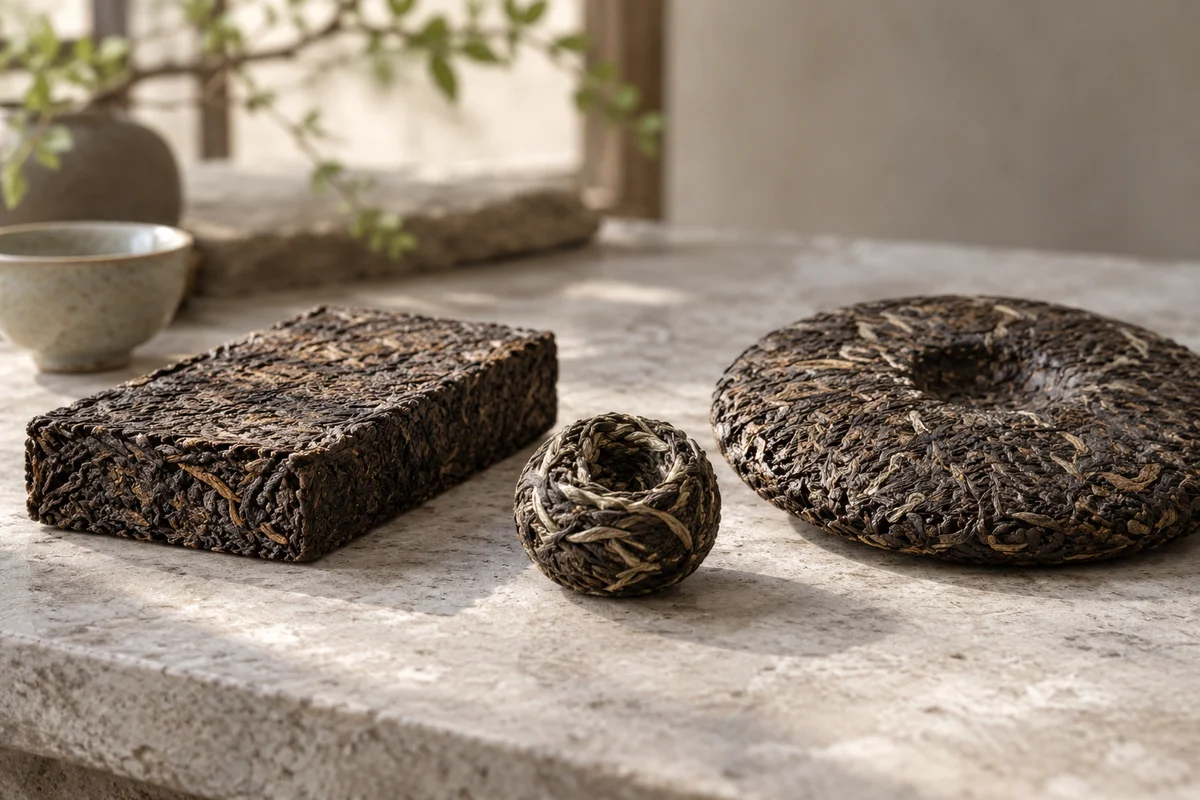
A round cake of tea looks so distinctive that it is easy to treat the shape as a tea type. Yet compression describes how the processed leaf is held together, not the complete identity of what is inside. Cakes are familiar in pu-erh, but a round outline cannot tell you whether a tea is raw or ripe, young or old.
Other forms include rectangular bricks and bowl-like nests, often called tuocha. Their shapes make the material recognisable on a shelf, but the same basic caution applies. A nest is not automatically a particular flavour, and a brick is not a separate botanical ingredient. The label still needs to explain the tea itself.
Look beneath the outline
The visible surface may contain buds, larger leaves, stems or a mixture of sizes. A tightly pressed piece can make those details difficult to read at first. The colour gives clues, but lighting and age complicate them; it should not replace a clear production description. Treat the wrapper's information and the leaf's appearance as complementary rather than competing evidence.
Compression also varies. Some cakes separate into relatively open layers, while others form a dense mass. That difference affects how easy it is to remove a portion, but it does not create a simple quality ranking. A beautifully neat shape can contain ordinary tea, and a less polished edge can surround interesting leaf.
Three labels that should stay separate
Tea type answers a manufacturing question. Age answers a time question. Shape answers a physical question. A young raw pu-erh cake, an older ripe pu-erh brick and a loose ripe pu-erh are not distinguished by only one of those dimensions. Reading all of them together avoids assumptions based on a familiar silhouette.
The same principle helps when a pressed tea appears in a category other than pu-erh. Do not force the material into the wrong family because it arrived as a cake. Ask what leaf was used and how it was made. Once the shape is allowed to be just a shape, it becomes a useful practical detail rather than a confusing shortcut for flavour, age or quality.