Keep dinner preparation from overbrewing tea
Put the tea on its own small schedule while dinner is underway. A clear counter space and an audible timer help prevent a forgotten infusion.
Choose a quiet moment in the cooking
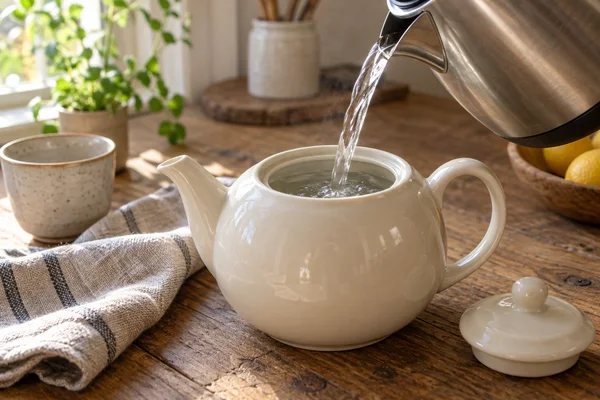
Starting tea at the same moment that a pan needs constant stirring is an invitation to forget one of them. Look for a brief pause in the recipe, when ingredients are prepared and you can give the kettle your full attention. Set the tea equipment on a clear part of the counter, away from raw food, splashing oil and the route used to carry hot pans.
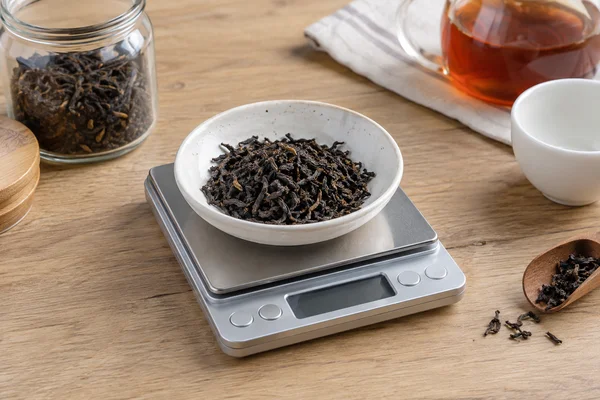
Keep the dry tea scoop separate from cooking spoons. A utensil recently used for sauce or raw ingredients should not go into the tea packet. Close the packet and put it away before continuing with the meal, rather than leaving it open beside steam and strong cooking smells. These small separations keep the tea preparation tidy without needing a different room or a large dedicated shelf.
Give the timer an unmistakable meaning
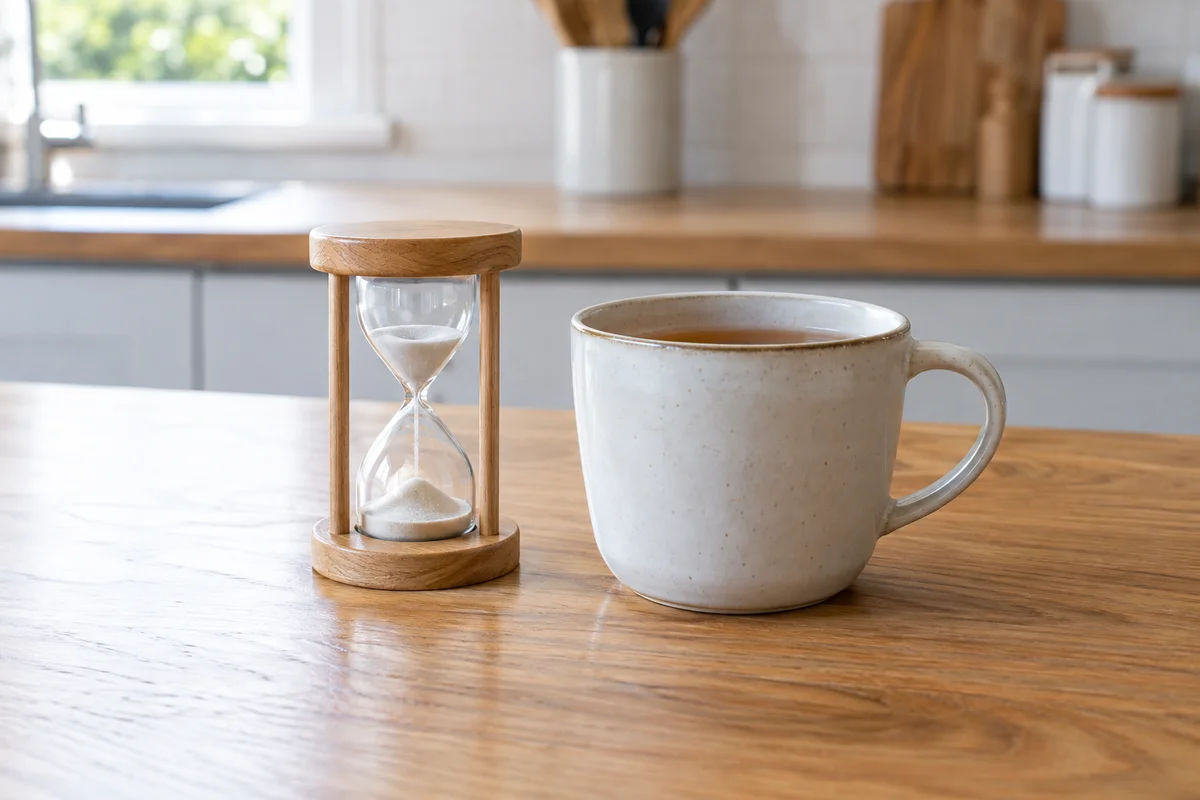
If several cooking timers are running, identify the tea reminder clearly. When it sounds, remove the leaves or decant the infusion immediately, using the dish or pitcher you already set out. Do not assume you will remember after turning the vegetables. A short interruption can become several minutes when another pan needs attention, and the tea will keep changing during all of them.
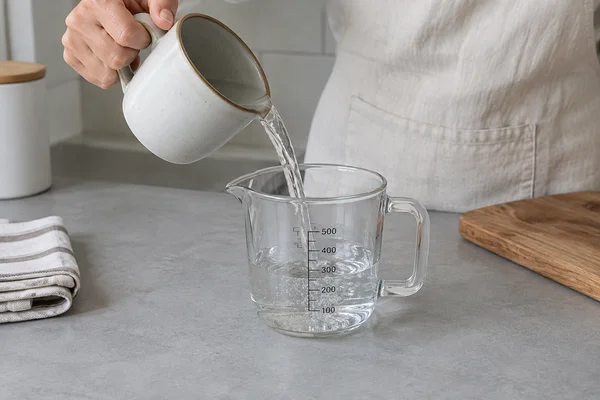
An alternative is to finish the tea before the busiest cooking stage begins. Brew a sensible quantity, strain it and place it in suitable serving equipment. This removes leaf contact from the list of things you must monitor. Avoid keeping an oversized pot warm for hours; making another fresh amount later may be both easier and more pleasant than trying to preserve the first one through an entire evening.
Serve it where it can be enjoyed
Carry the finished drink away from the active cooking zone and let it cool to a comfortable temperature. A cup balanced beside a cutting board or frying pan is easy to knock. If dinner is imminent, you may prefer small cups at the table rather than a full mug that gets abandoned midway through preparation. The tea does not need to compete with the meal. Choosing a manageable moment and amount makes it a welcome part of the evening instead of another task demanding attention at the stove.