Bancha and the value of a larger leaf
Larger leaves can make an appealing everyday tea. Bancha is a broad name, not a synonym for poor quality.
A name with local variation
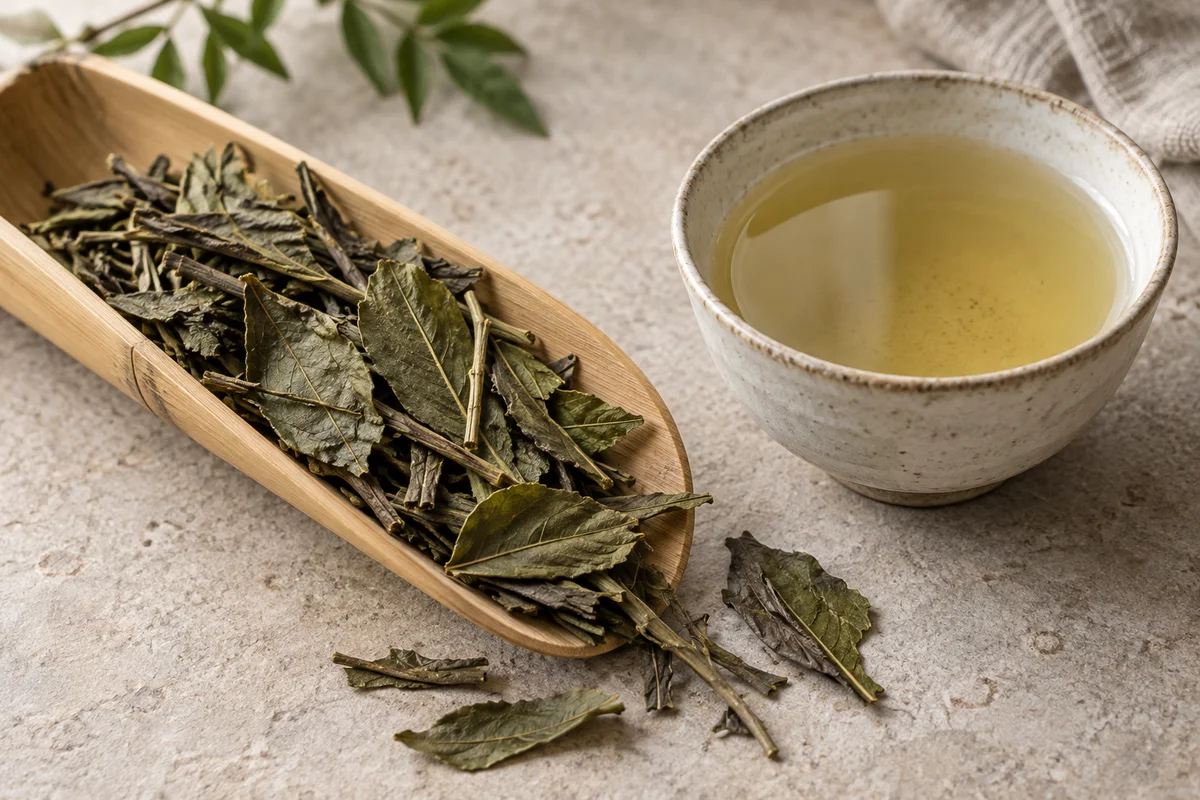
Bancha is often introduced as Japanese tea made from larger or more mature leaves than those selected for fine sencha. That is a useful starting point, but the word covers different local practices and products. It is worth reading the actual description rather than expecting one exact appearance from every packet. Some bancha is green and leafy; the term can also appear in discussions of roasted everyday teas. The name needs its context, especially when comparing sellers from different regions.
Larger does not mean careless
A bigger leaf has a different character from a tender bud. It can produce a straightforward cup with a lighter aromatic profile and less of the dense savouriness associated with some shaded teas. That is not automatically a defect. A tea intended to accompany lunch need not have the intensity of a small concentrated tasting. Thinking of bancha as a separate choice makes more sense than judging it only by how closely it imitates an expensive sencha.
Look beyond the price bracket
The practical attraction is often an easy, unshowy flavour. Depending on the tea, you might notice dry grass, a gentle woody impression or a clean green edge. Do not assume that every bancha is roasted, and do not assign it a fixed caffeine level simply because its leaves are larger. Processing and the way a drink is prepared both matter. If avoiding caffeine is essential to your choice, rely on relevant product information rather than a reassuring general reputation.
Make it part of a meal
Try the tea plain with a simple lunch and pay attention to whether it sits comfortably beside the food. Then taste a little on its own. A mild drink can be useful precisely because it does not compete with every bite. Follow the packet's preparation guidance, particularly if the name is attached to a regional style you have not met before. If the result feels thin, adjust the next preparation thoughtfully rather than leaving the same leaves indefinitely in the cup. The goal is a satisfying everyday drink, not an imitation of another category.