Assam: what a malty cup means
Malt is a useful clue to Assam, provided it does not become a rule for every tea from this large region.
What people mean by malty
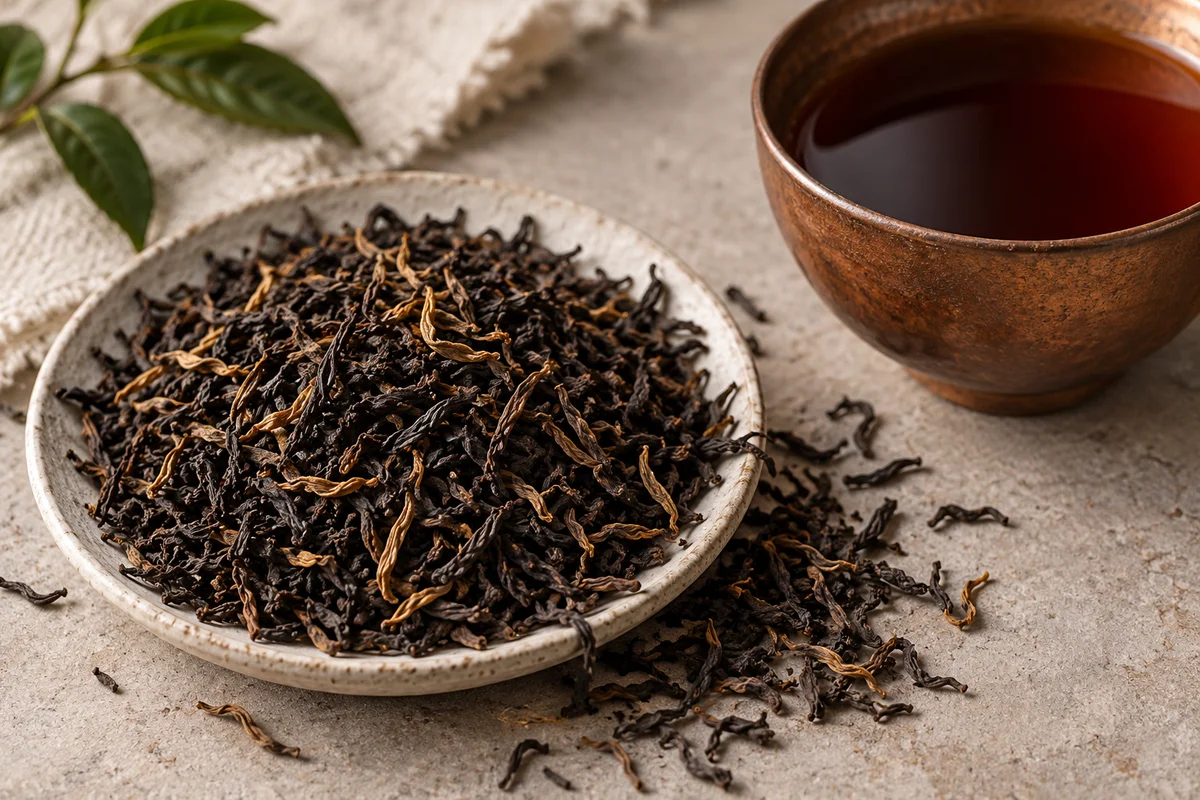
A malty Assam can suggest the rounded smell of cereal or the crust of a freshly baked loaf. It does not contain malt simply because that word appears in its description. The comparison is a way of describing an impression: warm, substantial and sometimes slightly sweet in aroma, even when the tea itself is not sweetened. Some cups lean more toward dried fruit or a firm woody finish.
Assam is a tea-growing region in northeastern India, around the Brahmaputra valley. Its name gives the tea an origin, not a single manufacturing recipe. Gardens, harvests and leaf handling all leave room for differences. A bright, brisk breakfast cup and a smoother tea with plenty of golden tips can both come from Assam.
Two very different-looking leaves
Orthodox Assam is processed into recognisable leaf shapes, although the finished pieces can vary considerably in size. CTC manufacture produces small, fairly even particles through crushing, tearing and curling. The latter is widely used when a strong, rapidly infusing cup is wanted. These are processing distinctions; neither form by itself settles whether you will enjoy a particular tea.
Golden tips are young buds whose appearance changes during processing. They can make a dry tea look striking, but counting them is not a complete tasting method. A black-and-gold mixture still needs balance in the cup. Likewise, the absence of conspicuous tips does not make a straightforward everyday Assam unsuitable for its intended job.
Body is different from harshness
A full-bodied tea feels substantial as you drink it. A harsh tea may instead leave an unpleasantly rough, drying finish. The two experiences are not interchangeable, and a very dark colour does not tell you which one to expect. Notice what remains after swallowing: cereal warmth, a clean briskness, or a persistent scratchy sensation.
Milk can soften the perception of strength, which is one reason Assam appears in many breakfast blends. Yet Assam is not exclusively a milk tea. When considering its character, taste the actual leaf in front of you before assuming that a strong regional reputation requires a heavy cup. The most useful description connects the familiar malty idea with the tea's particular balance of fragrance, texture and finish.