A tea landscape is also a workplace
Tea scenery is made and maintained by people. A more complete account notices their work without pretending a short visit reveals every condition.
Look at the landscape as a place of work
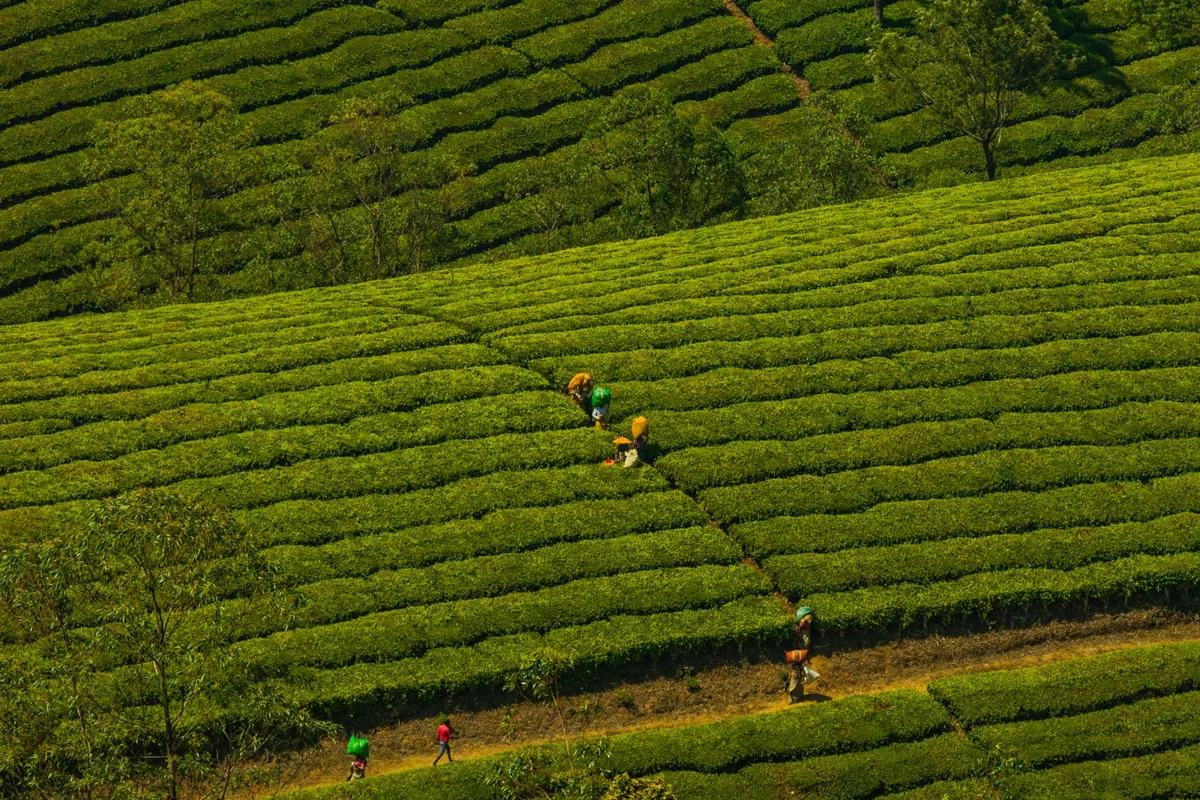
Neat rows of tea can make a powerful travel image. They are also the result of ongoing work: tending plants, moving leaves, maintaining paths, processing, sorting, and preparing products for sale. A photograph that shows only the green pattern can leave those activities out of the story. When writing or talking about a visit, include the work you actually saw. This does not require turning a pleasant afternoon into a report; it means recognising that the view did not arrange itself.
Be specific about what you know. If a guide explained a task, say that. If you watched someone carrying leaves, describe the action without inventing their life history, feelings, or working conditions. A smile in a photograph cannot establish whether a job is well paid, and a demanding-looking task does not give a visitor enough information to explain an entire labour system. Honest limits make an account more credible, not less thoughtful.
Respect people beyond the camera frame
Ask before close photographs and accept that a person may prefer to continue working. Do not ask for a repeated pose, borrow equipment without permission, or step into planted rows for a staged image. If a visit includes a demonstration, follow the organiser's boundaries and distinguish it from ordinary production in your description. That keeps the reader from assuming that an activity arranged for visitors represents the whole working day.
Questions about how a business sources tea or supports workers are reasonable when directed to someone responsible for answering them. Ask for concrete information rather than a reassuring adjective. What does a stated programme cover? Which part of the supply chain is included? Where can its details be read? A short shop conversation may not resolve everything. It can still help you separate a documented claim from a broad image of kindness used in marketing.
Give credit without making unsupported promises
When you buy tea after a visit, preserve the producer or business name on the label and mention it accurately if you discuss the purchase. Avoid announcing that the product is ethical solely because the setting was beautiful or the welcome friendly. You can appreciate hospitality and workmanship while leaving unanswered questions open. The result is a more balanced memory: a landscape enjoyed, work acknowledged, and claims kept within the evidence you actually have.