The teaspoon that quietly says enough
In a traditional East Frisian tea round, a spoon can communicate that you have had enough. Ask the host rather than guessing silently.
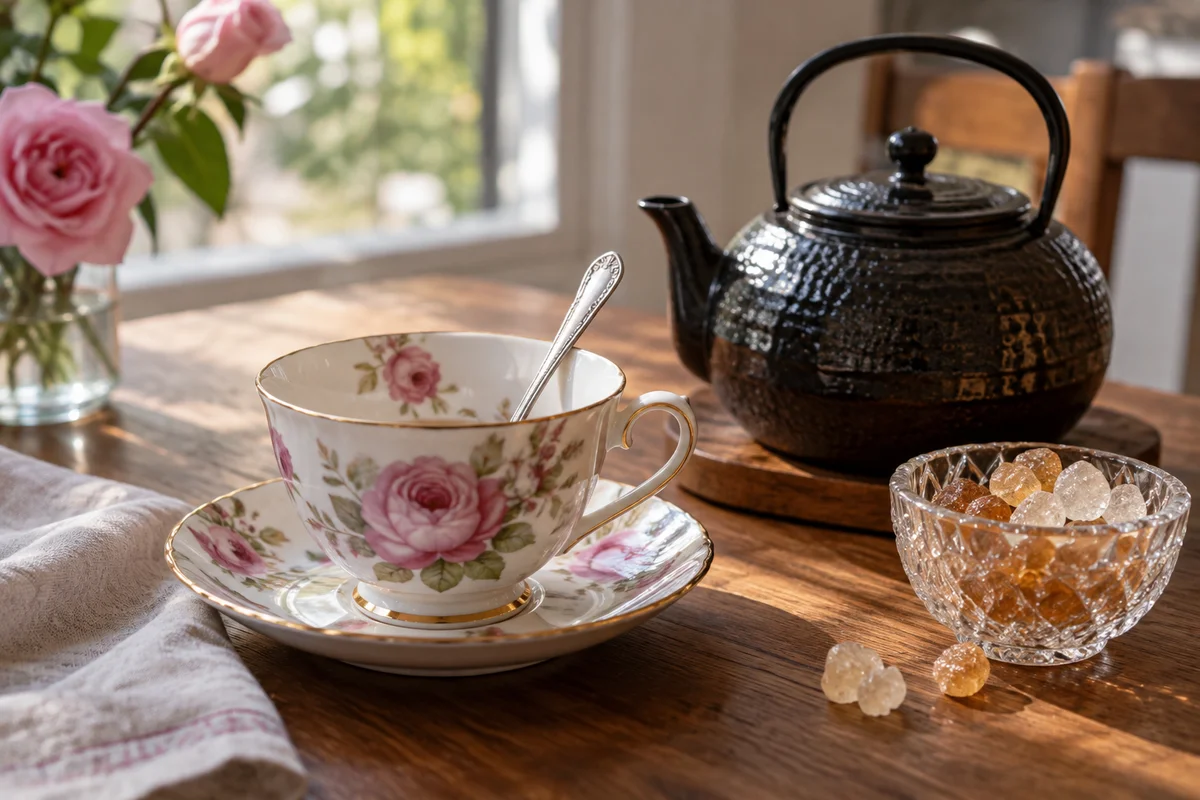
A small object can carry a social message
At a traditional East Frisian tea table, placing the spoon in the cup can signal that you do not want another serving. This can surprise visitors who assume the spoon is there mainly for stirring. It is a useful example of how an everyday object acquires a meaning within a particular setting. Learn it as part of that setting, not as a universal rule that every household or café must observe in exactly the same way.
If you are uncertain whether more tea is coming, words remain available. A quiet thank you, that was lovely, is more helpful than anxiously arranging the spoon and hoping somebody interprets it. The host may explain the custom or simply respond to your preference. There is no need to keep drinking because an online guide made the gathering sound like a rigid sequence you are not allowed to interrupt.
Watch how the table actually works
Notice where the spoon begins, how cups are refilled, and whether the host offers another round verbally. A formal demonstration, a busy tearoom, and a friend's kitchen can use different levels of explanation. Follow the people present rather than correcting them from memory. Traditions remain meaningful because people use them, and small practical variations do not necessarily mean that somebody has forgotten how their own tea table should operate.
For visitors with dietary needs or a limit on how much tea they want, say so early. The spoon should make hospitality easier, not prevent a straightforward conversation. You can enjoy learning the gesture without treating it as a substitute for consent to another drink. If a child or another guest is confused, explain quietly rather than making their unfamiliarity the entertainment of the table.
Bring the idea home without borrowing authority
At your own gathering, a simple signal can be useful, but tell guests what you mean by it. Do not assume that everyone knows the East Frisian reference, and avoid presenting a personal adaptation as an official ceremony. What travels well is the underlying care: hosts notice whether people want more, and guests can indicate that they are finished without discomfort. The small spoon is memorable because it serves that ordinary human purpose, not because it turns a cup of tea into a test of correct behaviour.