Bring home tea, not a borrowed stereotype
A small, clearly identified packet can preserve a travel memory better than a dramatic story attached to a tea you cannot name.
Bring home the information as well as the tea
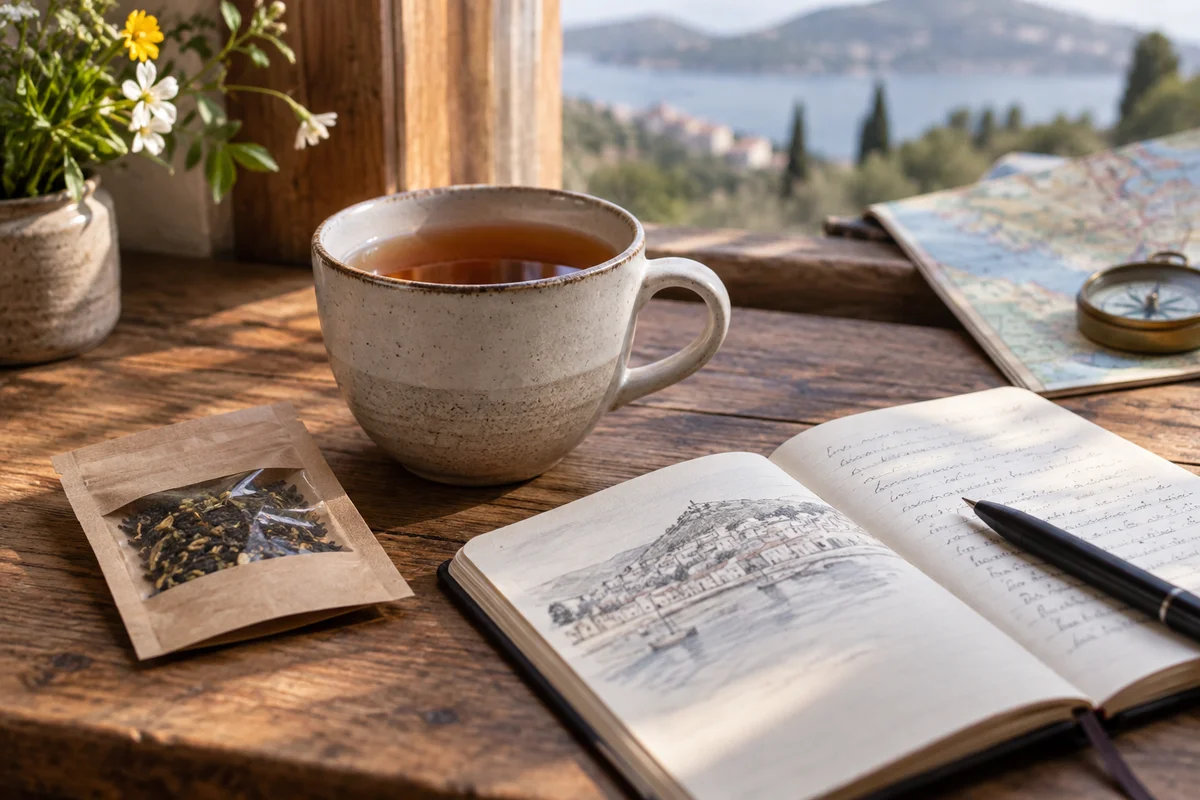
A tea bought while travelling can hold a strong memory of a place. To make that memory useful at home, keep the product name, the shop or producer, and the information on the packet. Photograph the label if the receipt is unclear. A description such as the lovely tea from the mountain shop may feel sufficient on the day, but it will not help you identify the product several months later or explain it to the person receiving it as a gift.
Choose an amount that matches your actual drinking habits. Travel can make a large package feel like a once-only opportunity, even when you have no routine for using it. A smaller quantity is easier to finish while the experience remains vivid. If buying several gifts, keep each product's information with its own packet. Similar-looking wrappers are easy to confuse, especially when the names are in a language you do not read comfortably.
Tell the story you really have
The most appealing description may be simple: you tried this tea at a shop, enjoyed its roasted aroma, and bought a little to share. That is a complete story. You do not need to call it a secret local ritual or claim that every household in the region drinks it. If the seller explained a specific origin or method, distinguish their explanation from what you observed yourself. This keeps a warm travel memory from becoming an unsupported claim.
Objects sold alongside tea deserve the same care. A decorative cup may be attractive without representing an entire national tradition. Buy it because you like it and understand its intended use, not because a dramatic label promises that it will reproduce somebody else's way of life. If an item is for decoration rather than drinking, keep that distinction clear when giving it away. The recipient should not have to guess what the object can safely do.
Give the souvenir a place in the present
Once home, share the tea on an ordinary day instead of waiting for an occasion that perfectly recreates the trip. The water, room, food, and company will be different, so the cup may feel different too. That does not mean the memory was false or the purchase a failure. A good souvenir connects a past experience with your current life. Its value can be a clear name, a particular flavour, and a conversation that remains grounded in the place you actually visited.