Useful questions during a tea factory visit
A handful of precise questions can turn a factory tour from a sequence of machines into an understandable story of a tea.
What is happening here today?
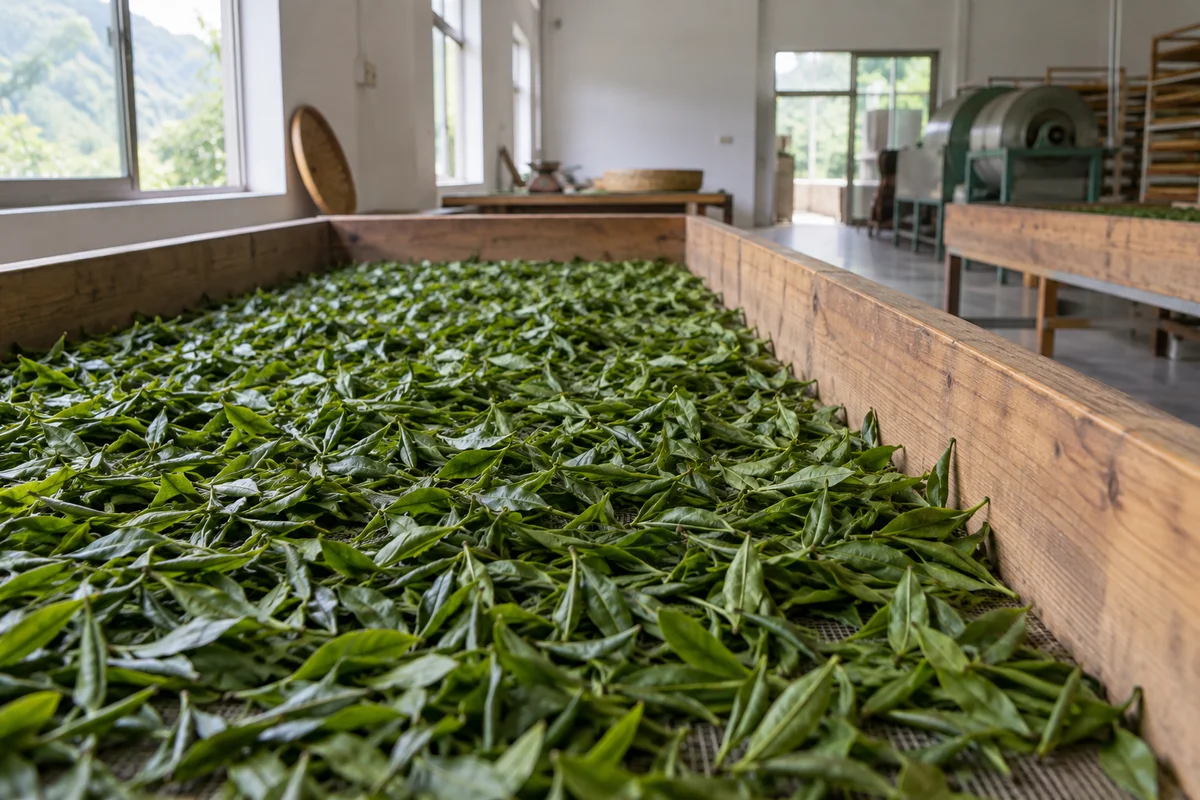
Start a tea factory visit with the present rather than with a memorised list of processing terms. Ask what tea is being made that day and which parts of the route are operating. A demonstration and a live production line can both be informative, but they show different things. Knowing which you are seeing helps you interpret the sounds, movement, and empty spaces without inventing an explanation for every machine that happens to be standing still.
Where did these leaves come from?
The leaves in a factory may have a more specific story than the broad region printed on a souvenir packet. Ask what the guide can tell you about their source and how incoming batches are identified. You do not need confidential business information to understand the principle. Even a simple explanation of how separate arrivals are recorded can connect the field outside with the decisions made inside the building and the product eventually offered for sale.
What tells you that this stage is ready?
Instead of asking only how long a stage takes, ask what the maker looks for before moving on. The answer may involve observation, measurement, or an explanation of the equipment. Let the guide choose the level of detail appropriate to the tour. This question draws attention to judgement as well as machinery. It also avoids the misleading impression that every tea can be produced by following one fixed timetable regardless of the leaves or conditions.
How is the finished tea kept identifiable?
Sorting, storage, and records are less dramatic than moving machinery, but they help explain how a finished product reaches the buyer. Ask how the tea you will taste relates to the production you have seen. It may be a different batch or a representative example, and that is useful information rather than a disappointment. If buying afterwards, use the label to establish which product is actually in the packet instead of relying on the tour's general atmosphere.
Which questions belong after the working area?
Save long discussions for a place where the guide and group can stop safely. Do not lean toward machinery, cross a marked boundary, or remove a sample to make a question easier to ask. If the room is noisy, wait rather than distracting a worker who needs to concentrate. A good tour leaves you with a few accurate connections between leaf, judgement, process, and product, not merely a collection of photographs taken as close as possible to equipment.