Pour a side handled pot without rushing
A side handle changes the movement of pouring. Learn the balance, lid support and final drain with water before brewing your tea.
Let the handle suggest a comfortable movement
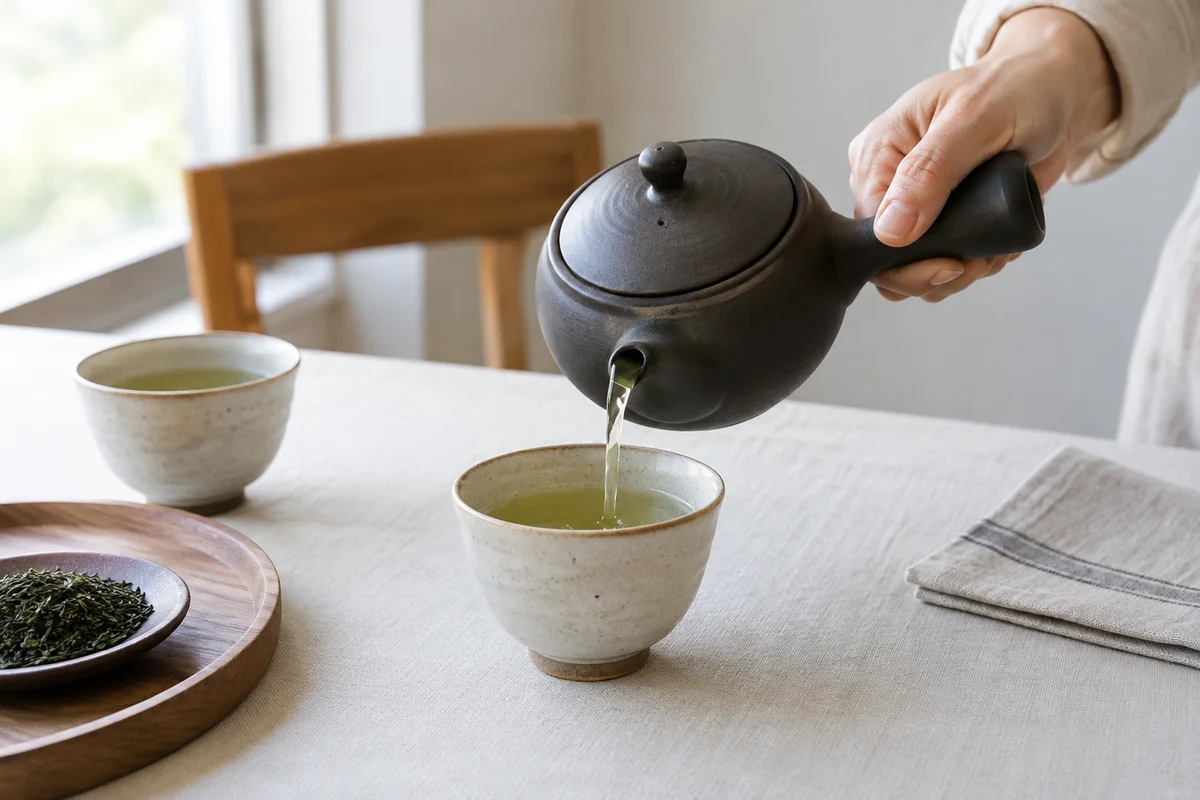
A side-handled kyusu can feel unfamiliar if you are used to a handle behind the spout. Start with cool water and the cups you normally use. Hold the handle securely without squeezing, and follow the maker's guidance for supporting the lid. Slowly rotate the vessel towards the receiver, then return it upright. The aim is a stable movement that suits your wrist, not a particular pose borrowed from a photograph.
Check that the handle orientation works for your preferred hand. Some designs are offered in different versions, and an awkward reach across the table is not something to solve by gripping harder. Move the receiving cup or pitcher closer. Test the practical fill level as well: a pot that pours neatly when half full may feel quite different when filled near its upper limit.
Keep the outlet clear without shaking
When brewing, give the leaves room to open and use the pot's filter as intended. Fine leaf pieces can collect near the outlet during the pour. If the flow slows, avoid a sudden shake or forceful wrist flick over the cups. Set the vessel down safely and reassess the leaf quantity, filter condition or pouring angle for the next round. A blocked outlet is easier to address before hot liquid is in motion.
Drain the finished infusion as completely as the vessel allows, rather than leaving a small pool around the leaves. That helps keep the pause before another infusion separate from the brewing time. For several people, a receiving pitcher makes it possible to finish this transfer first and divide the tea afterwards. If pouring directly into cups, organise their positions before the infusion is ready.
Allow time for the ordinary details
A good pour begins with a clear place to put the pot back down. Keep the lid support, receiving vessel and landing spot in mind before lifting. After the session, remove the leaves promptly and clean according to the exact pot's instructions; glazed porcelain and different clay interiors need not share the same care routine. Let the lid and body dry with air reaching the inside. Familiarity with these small movements makes a side-handled pot feel less like a special technique and more like a comfortable everyday tool.