Tea has a place at the dim sum table
At yum cha, tea is part of a meal shared over small dishes. Choose it with the table rather than treating it as an afterthought.
The tea order belongs near the beginning
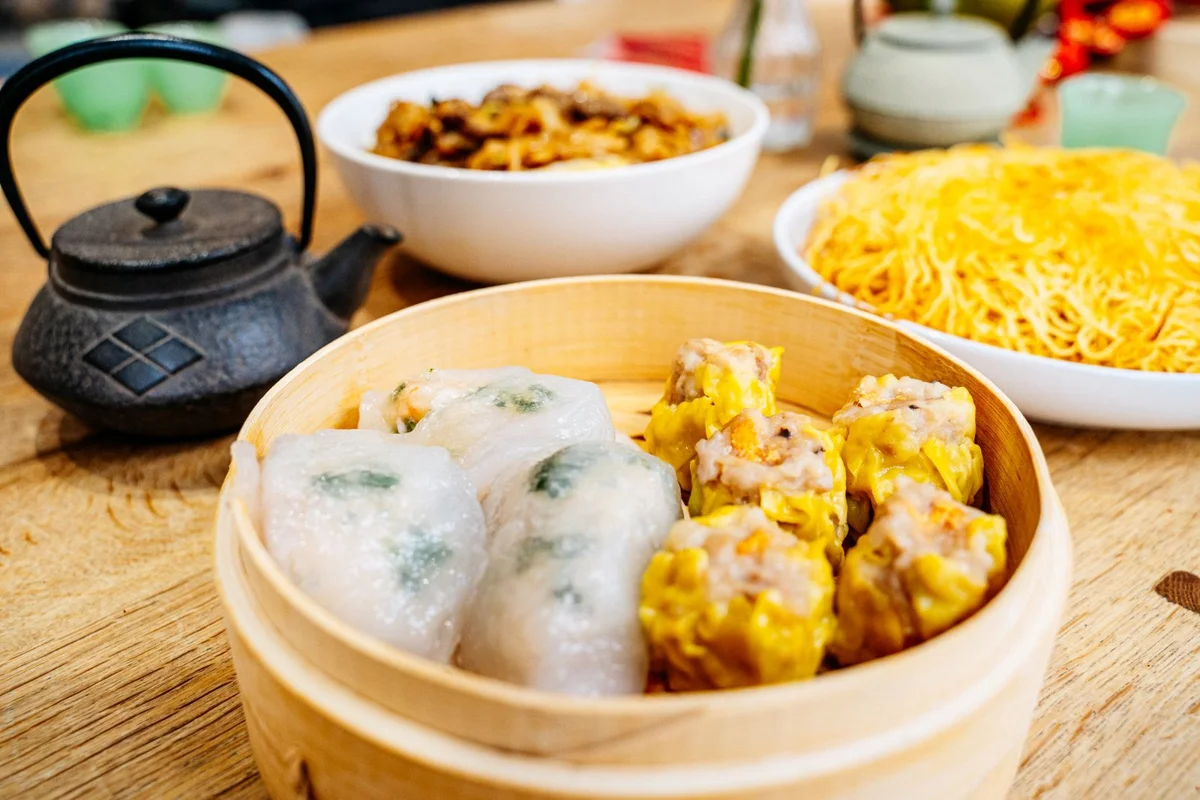
Yum cha in a Hong Kong restaurant brings tea and dim sum together, though the style of service varies from traditional dining rooms to contemporary venues. The small dishes may attract most of your attention, but ask about tea early. Find out which options are available and whether the table shares a pot. A choice that works for the group is more useful than selecting an unfamiliar tea simply because its name looks impressive on the menu.
If you have a preference, describe it in simple terms: light, roasted, floral, or a familiar plain tea. Let staff explain the actual options rather than assuming every restaurant carries the same list. Ask how tea is charged and how hot-water refills are handled if that matters to your order. Current venue information is more reliable than a travel guide's general account. A casual meal should not begin with a surprise about what was included.
Share space as well as food
Tea pots, cups, steamers, and plates can quickly fill the table. Leave a clear place for the pot and avoid reaching across someone else's hot cup to get a dish. If you pour for the group, notice who wants more and keep the spout clear of the cups. You do not need to demonstrate every etiquette gesture you have read about. A straightforward thank you and considerate handling work well while you learn the table's own habits.
Food restrictions need direct questions about the dishes, not assumptions based on appearance. A translucent dumpling or a vegetable-looking filling may contain ingredients you cannot identify visually. Tea blends deserve the same clarity if an ingredient matters. Ask before ordering, and let the restaurant explain what it can provide. Sharing is easier when people know which dishes are suitable for them rather than discovering uncertainty after everything has arrived.
Notice the drink between dishes
Take a moment to taste the tea on its own, then return to it after a savoury or sweet item. The contrast can be interesting without turning lunch into a formal tasting. If the tea is becoming too strong or needs more water, ask how the restaurant normally handles it. The cup is part of the meal's rhythm: a pause, another conversation, then the next small dish. It deserves attention without competing with the company at the table.