A cup of tea as an everyday welcome in China
Tea can be an ordinary welcome in China as well as part of a formal occasion. The setting tells you how to join in.
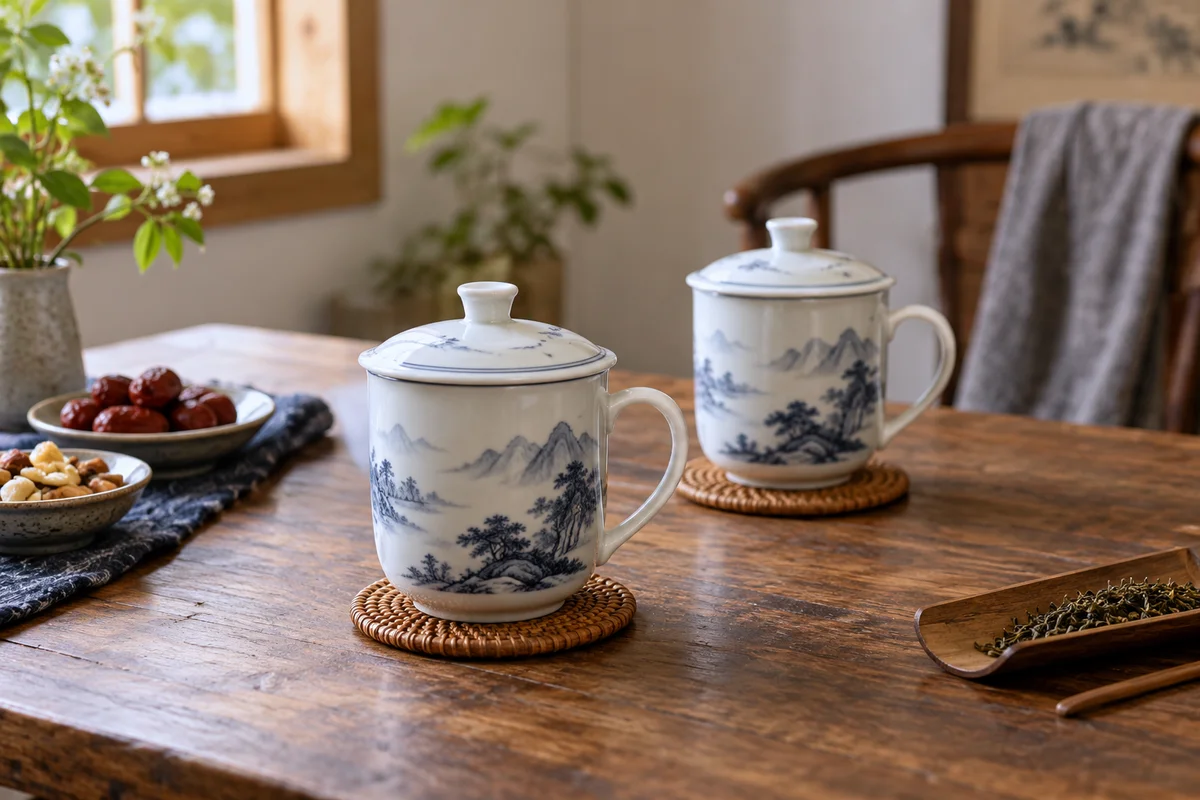
An ordinary cup can be enough
Tea in China appears in homes, workplaces, restaurants, and social occasions in many forms. A welcome may involve a simple lidded mug, a glass with leaves, or a carefully arranged small-pot service. These are not steps on a ladder from less authentic to more authentic. They are different ways people fit tea into their lives. Begin by noticing what is happening around the drink: a short visit, a business conversation, a meal, or an afternoon devoted to tea itself.
If leaves remain in the cup, ask how the host usually handles them rather than assuming a separate strainer is missing. If small cups are being filled repeatedly, take the portions as they come and leave the serving equipment to the person using it. The most useful behaviour is attentive and ordinary. Make room for the pour, avoid reaching across hot water, and say when you have had enough. You do not need to demonstrate unfamiliar gestures to show appreciation.
Ask about this tea, not all Chinese tea
A question such as what are we drinking can open a much richer conversation than requesting a summary of an entire national tea culture. The host may know a producer, favour a regional style, or simply buy a familiar daily product. All are valid contexts for the cup. If you are shown a packet, note its name only with permission and interest, rather than treating a hospitality moment as an opportunity to audit somebody's buying choices.
Tea can also carry meaning in family and ceremonial occasions, but a casual offer does not automatically signal a formal ritual. Follow the people present. If a particular practice is important, they can explain it. If you need to avoid an ingredient or prefer water, state that politely and early. A clear preference helps the host provide something suitable and avoids turning uncertainty into an awkward performance of silent compliance.
Notice the wider work behind the cup
UNESCO's recognition of Chinese tea practices includes processing knowledge and social sharing, not merely an elegant arrangement of utensils. Remembering that breadth can deepen an ordinary visit. There are growers, makers, sellers, and households behind the drink. You can leave with one specific new understanding—a tea name, a way of offering a refill, or an ingredient you enjoyed—without claiming that one table represents every Chinese tea experience.