The ordinary British cuppa
The everyday cuppa is shaped by personal habits, work breaks, and familiar mugs. It should not be confused with formal afternoon tea.
Begin with an ordinary offer
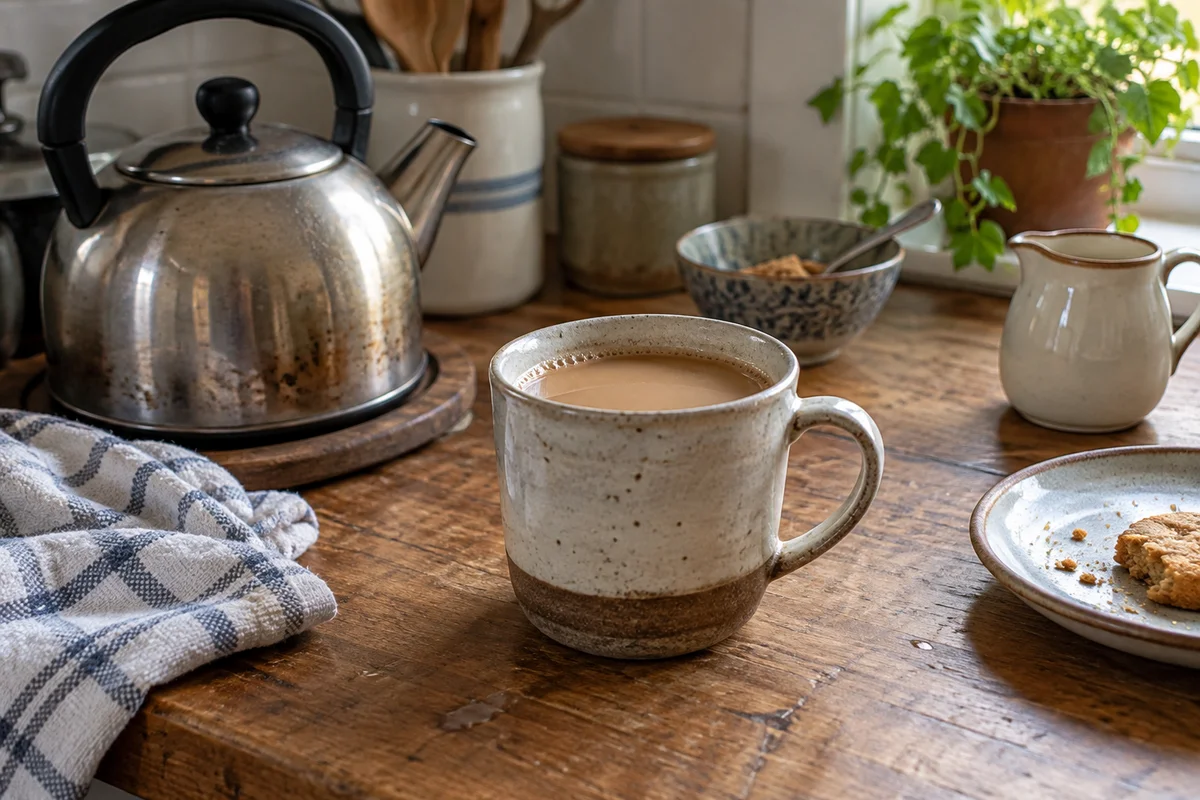
Would you like a tea can be a very simple question in a British home or workplace. It may mean a familiar bag in a mug, with milk or sugar offered according to preference. That ordinary exchange is different from booking an afternoon tea with a selection of food. Treating every cup as a formal ritual misses much of its practical role: a drink during a conversation, a pause between tasks, or something offered while a visitor settles in.
Preferences can be remarkably specific within an otherwise casual routine. One person wants a small amount of milk, another none; one uses a large sturdy mug, another a favourite small cup. Ask rather than assuming that a national stereotype predicts the answer. There is no single setting, strength, or brand that represents every household. Familiarity is part of the pleasure, but it belongs to the person drinking the tea.
Be useful when making a round
If you offer to make tea for several people, collect the preferences before you begin. A simple spoken check is usually enough, though a short note can help with a larger round. Keep essential ingredient needs clear and do not guess about a plant drink or sweetener. Use clean cups and leave room for additions. These unglamorous details matter more to a successful shared break than demonstrating an opinion about the only correct order of pouring.
If you are the guest, answer plainly and say if you do not want tea. An alternative drink or a polite refusal does not require a lengthy explanation. Likewise, do not turn another person's preferred cup into a joke about bad taste. A casual offer is an act of accommodation, not an invitation to judge whether somebody's mug, bag, or milk ratio meets a specialist standard. You can discuss tea enthusiastically when the conversation actually welcomes it.
Keep the scale of the occasion
A daily cuppa does not need a rare ingredient or a carefully staged photograph to matter. Its value may be the dependable taste and the few minutes in which people stop doing something else. If you want to try a new tea within that routine, change one familiar choice and see whether it remains easy to enjoy. A successful everyday drink earns its place through repeated use, not through looking sufficiently ceremonial from the outside.