Use temperature settings as a starting point
Temperature settings are useful when they fit your tea and your routine. They do not remove the need to understand what happens after pouring.
Start with the temperatures you use
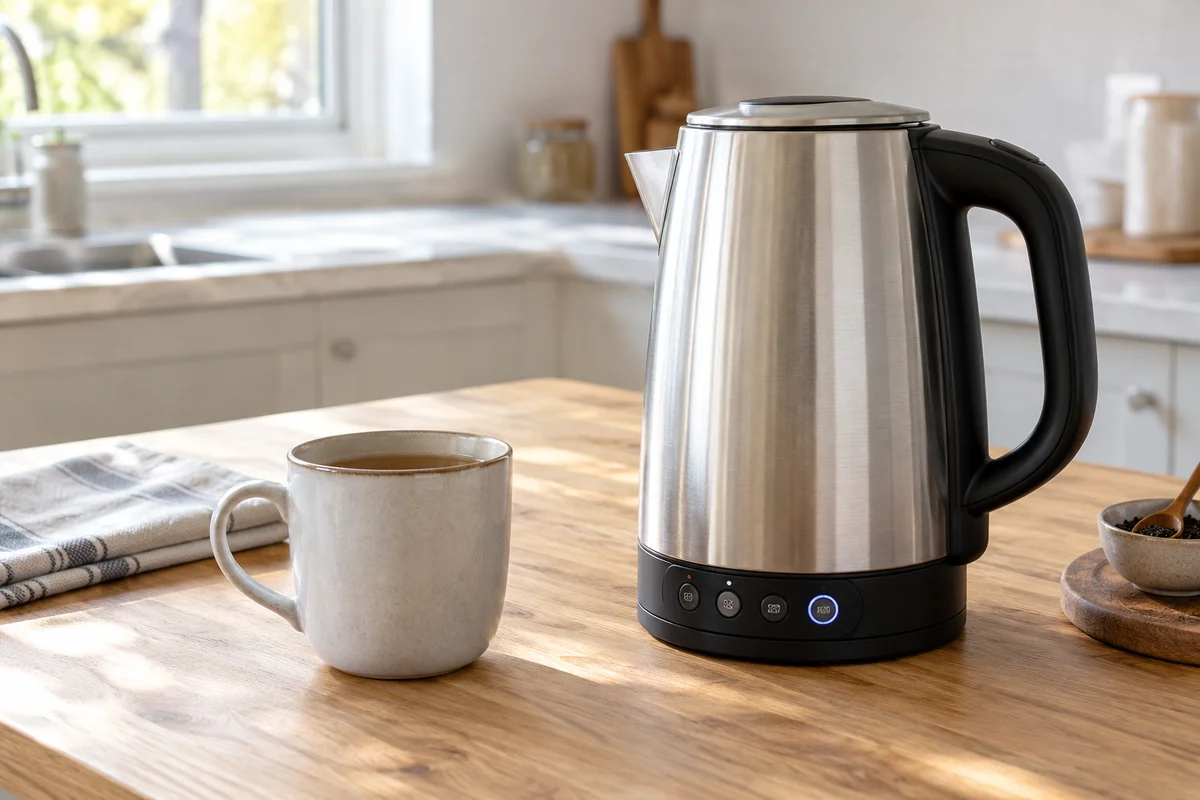
A long menu of settings is only useful if you actually need them. If your household mostly prepares drinks with freshly boiled water, a straightforward kettle may already do the job. If you regularly brew a tea whose instructions call for cooler water, choosing a lower setting can make the routine easier to repeat. Check which settings are available and how they are selected. A model with a few fixed buttons behaves differently from one offering small adjustable steps. Neither is automatically better. The important point is whether you can reach the temperatures you use without working through a confusing sequence every time.
Do not treat the temperature menu as a universal chart for all teas. Follow the particular tea's instructions, then adjust for taste where appropriate. Herbal or fruit infusions with a boiling-water safety instruction should not be moved to a cooler preset simply because the kettle labels that button for tea. The appliance provides a control; it does not know which ingredients are in your cup.
The display describes one part of the process
The selected or displayed temperature concerns the water in the kettle, under the conditions described by its manufacturer. Water can lose heat during the pour and on contact with a cooler vessel. A heavy pot, a small water quantity and a cold room can all change the conditions the leaves experience. You do not have to measure every transfer, but keep your normal vessel and routine consistent when comparing results. Otherwise a new setting may receive credit for a difference caused elsewhere.
Look beyond the display when evaluating the appliance. Check minimum fill, comfortable pouring, lid access for cleaning and how clearly it indicates that heating is finished. If it has a keep-warm mode, learn its duration and whether you genuinely want it running. Follow the manufacturer's operating and cleaning instructions, and keep the electrical base dry. A useful temperature kettle makes a repeated task easier. If its controls or minimum capacity do not suit the way you make one cup, more settings alone will not make it the right choice.