Thyme and the flavour of tiny leaves
Thyme's tiny leaves bring a firm culinary-herb aroma, with a dry edge that differs from mint or soft flowers.
The scale of the leaf can be deceptive
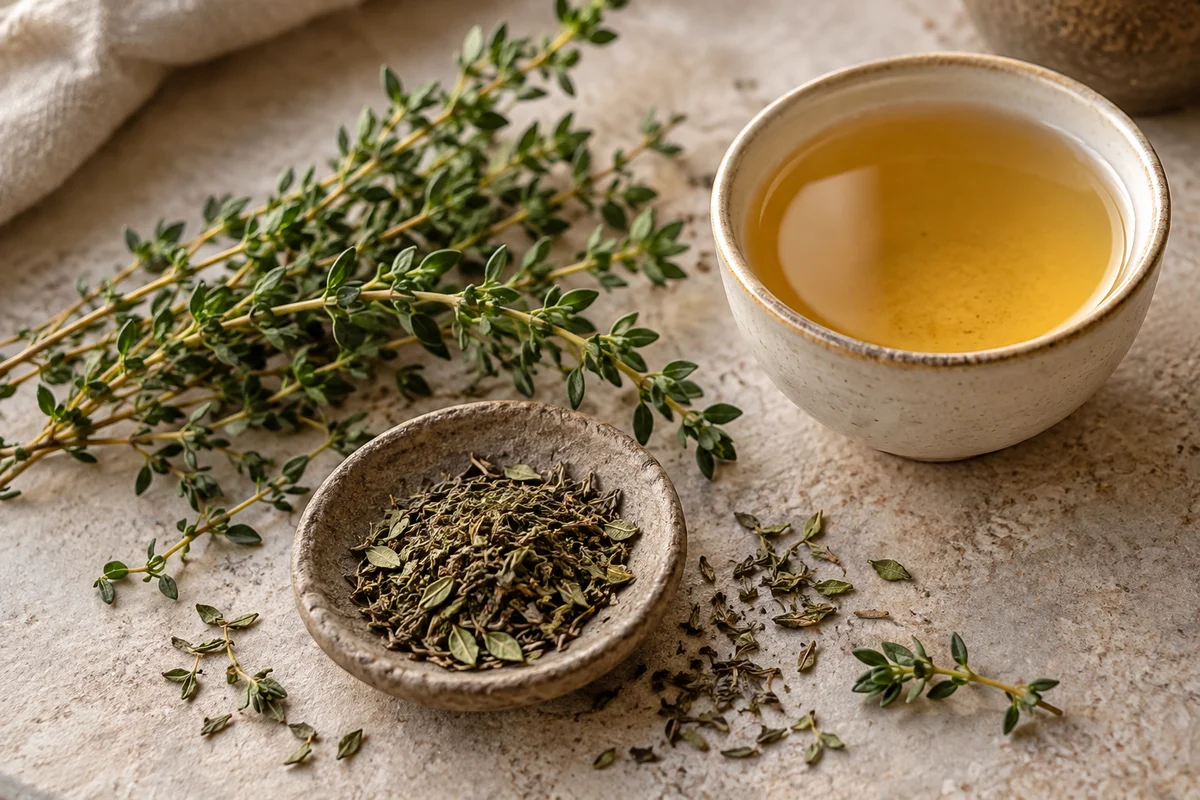
Thyme's leaves are small enough to disappear visually in a cut herbal mixture. Their aroma is much easier to notice. A plain infusion can feel decidedly savoury, aromatic and dry, recalling the herb's place in cooking rather than a sweet flower drink. Tiny leaves do not necessarily make a timid cup, and a large photograph of a thyme sprig should not be read as a guide to the amount needed in a finished blend.
Dried material may include fine stem fragments alongside the leaves. Its appearance is therefore different from a pile of broad mint leaves or whole chamomile heads. Recognising that structure helps keep the ingredient concrete rather than treating it as an anonymous brown-green herb.
The dry edge belongs in the description
A thyme cup can have a firm herbal bitterness or a slightly sharp aromatic edge. Calling it only Mediterranean or warming may leave a new drinker unprepared for that part of the experience. More useful words describe what happens: a clear kitchen-herb scent, a lean middle and a dry finish, for instance.
The same flavour memory can be pleasant in one setting and unexpected in another. If you associate thyme with roasted vegetables or soup, an unsalted infusion may initially seem unusual. The herb has not become savoury broth; it simply carries an aroma that your memory connects with food. Giving the cup a moment on its own terms can clarify that difference.
A named thyme is more useful than a generic promise
Lemon thyme and ordinary culinary thyme do not present exactly the same aromatic balance. A citrus-like note in a blend may come from a named thyme variety or from a separate ingredient. The wording on the packet should explain which, rather than relying on a general image of fresh herbs.
Choose material intended for food or infusion use and follow its preparation instructions. There is no need to make a throat or cold remedy the centre of this ingredient's identity. Its tiny leaves, firm fragrance and dry culinary character already distinguish it clearly from the mint, fruit and flower families on the same shelf.