Do not forget the inside of the spout
The pot can look spotless while a narrow spout still holds leaf fragments. Clean the route the tea takes on its way out.
Look from both ends
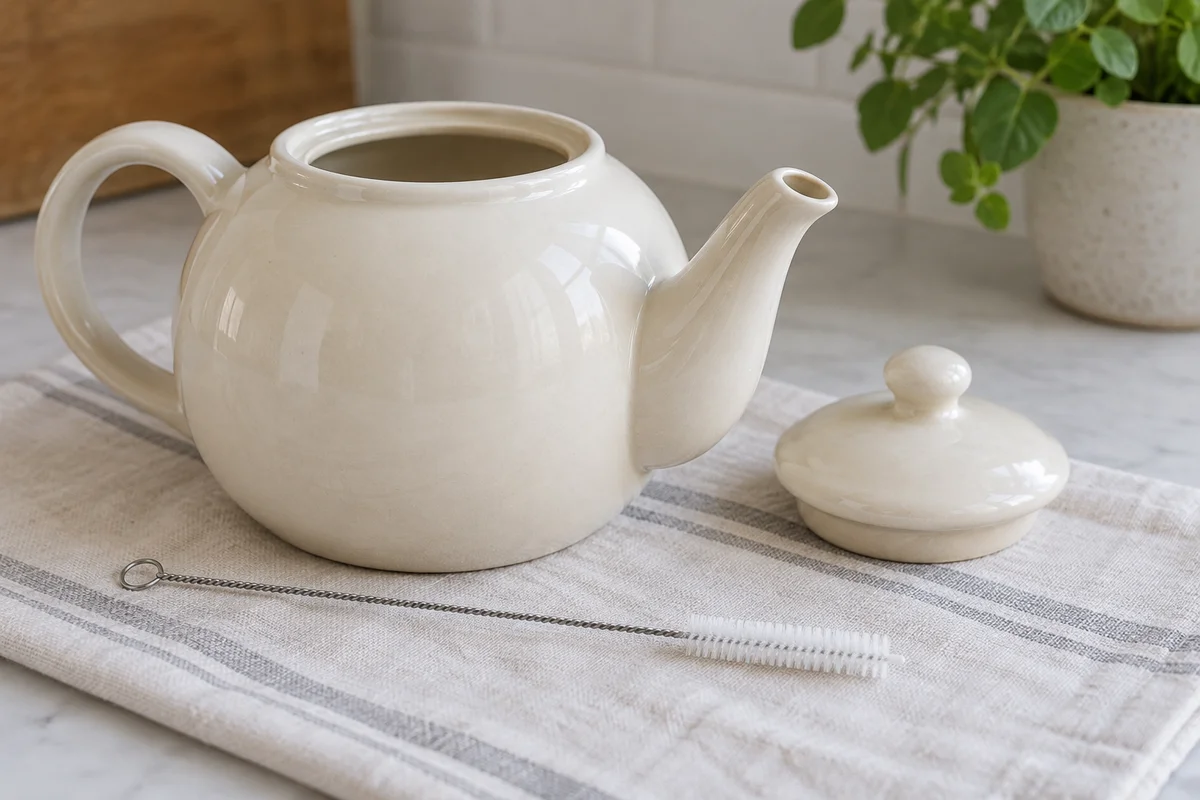
A teapot's broad body is easy to inspect, while the channel through its spout can disappear from view. After the pot has cooled and the leaves have been removed, look at the spout opening and, where possible, the inside entrance. Some pots have a built-in screen that changes how you can reach that area. Do not assume it can be detached. Check the maker's instructions before trying to remove a mesh or ceramic insert. If you notice fragments caught at the entrance, deal with them gently rather than forcing them farther down the narrow passage with a spoon.
Use a tool that fits without pressure
For a washable pot whose instructions permit it, a suitably soft, narrow brush can help reach the channel. The brush should move without wedging or scraping, and its wire core should not strike the ceramic or glass. Do not substitute a rigid metal skewer for a cleaning brush. Curved spouts are especially poor places to force a tool that cannot follow the shape. Rinse through the permitted route, then inspect again in good light. If a deposit remains inaccessible, seek the manufacturer's recommended method instead of improvising a stronger chemical treatment inside a passage that is also difficult to rinse.
Unglazed clay, decorated ceramics and glass may require different care. A method for an ordinary glazed pot is not automatically appropriate for all three. The spout deserves the same material-specific approach as the body, even though it is smaller and less visible.
Let the last water leave
After washing, empty the pot fully and place it so it can dry safely, following its care guidance. Leave the lid off and avoid balancing the vessel precariously just to point the spout downward. A clean draining surface with space around the pot is more useful than a risky arrangement. Check the tip for chips before the next use, since that is an area easily knocked against taps and other dishes. If water flow has changed suddenly, inspect for trapped material rather than simply tilting the pot more aggressively. A clear spout should make an ordinary pour predictable; persistent blockage or damage is a reason to stop and assess the pot before filling it with hot tea.