A tea tin needs more than a handsome lid
Before choosing a tea tin by colour or shape, check the lid, the interior, and whether the size suits the amount you will store.
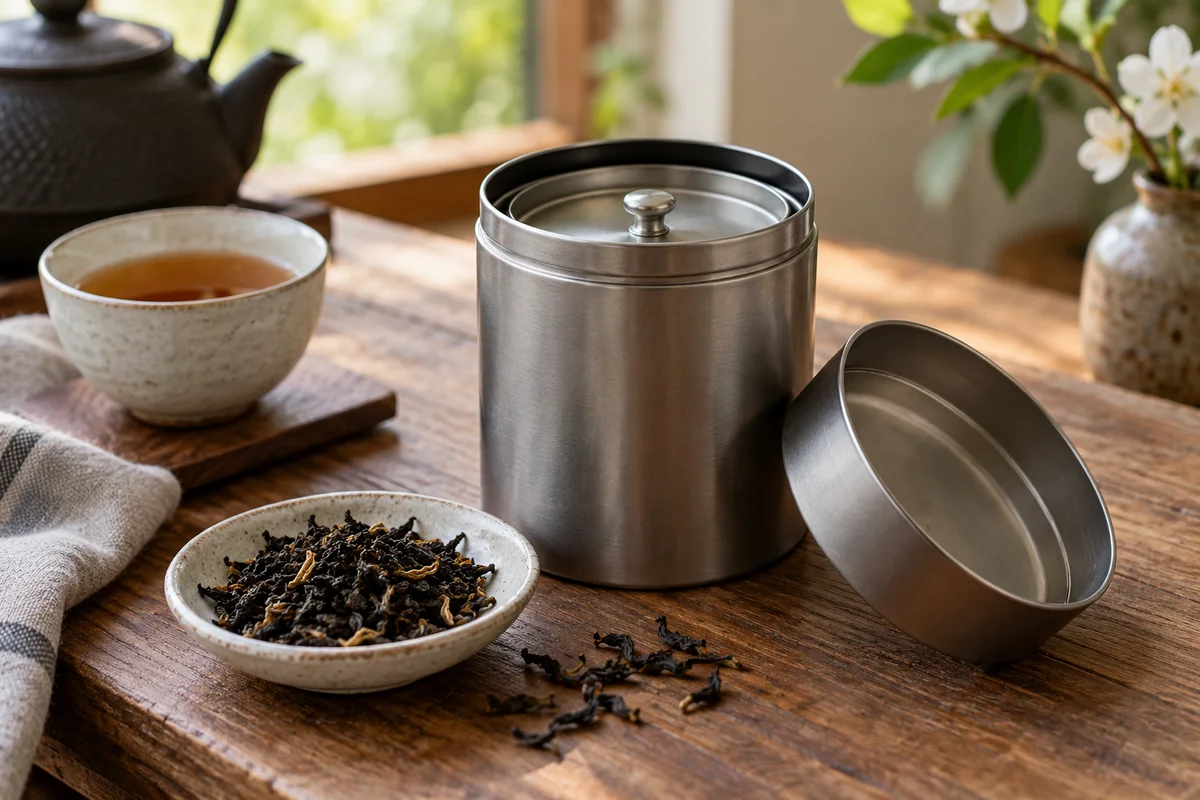
Try the closure, not just the lid
A lid can sit neatly on a tin without making a close seal. Open and close the container several times if you can inspect it before buying. It should fit consistently without needing to be forced or balanced in a particular position. A loose decorative outer lid may be paired with a useful inner lid, but the presence of two lids is not itself proof of perfect protection. Look at the actual construction and the maker's intended use.
Check that the container is suitable for food and that the inside is clean, dry, and neutral-smelling. A tin that once held strongly scented sweets, coffee, or a flavoured tea may retain an aroma. Do not assume that a quick wipe will remove it. If you reuse a container, clean it according to its material and let it dry completely. A trace of moisture introduced during enthusiastic cleaning can undermine the purpose of the new storage arrangement.
Match the capacity to the tea
Tea leaves vary greatly in bulk. A packet of long, wiry leaves may require far more space than the same weight of compact particles. Do not buy a tin solely because a shop says it holds a certain number of grams without explaining the tea used for that estimate. Leave enough room to handle the contents gently, but avoid choosing a huge container for a tiny daily quantity just because it looks more substantial.
The original packet may still be useful inside the tin. Keeping it preserves the product details and can reduce repeated exposure of the whole supply. Follow the producer's advice where supplied. If you pour the tea directly into the tin, retain the label and opening date elsewhere on the container. A handsome row of anonymous tins becomes frustrating when you want to buy one tea again or need to check a blend's ingredients.
Test the routine at home
Put the tin in a dry, shaded place away from heat and strong smells, then notice whether you close it properly every time. A difficult lid may encourage you to leave it ajar. An easy, dependable closure is often more valuable than an elaborate design. Inspect the rim occasionally for trapped leaf fragments or damage. The tin should make a good habit effortless, rather than becoming a decorative object that protects the tea only when someone remembers to use it carefully.