Scented, flavoured, and naturally aromatic tea
Aromatic tea can reach the cup in several ways. Separate the production description from the flavour words before choosing.
The same word can point to different things
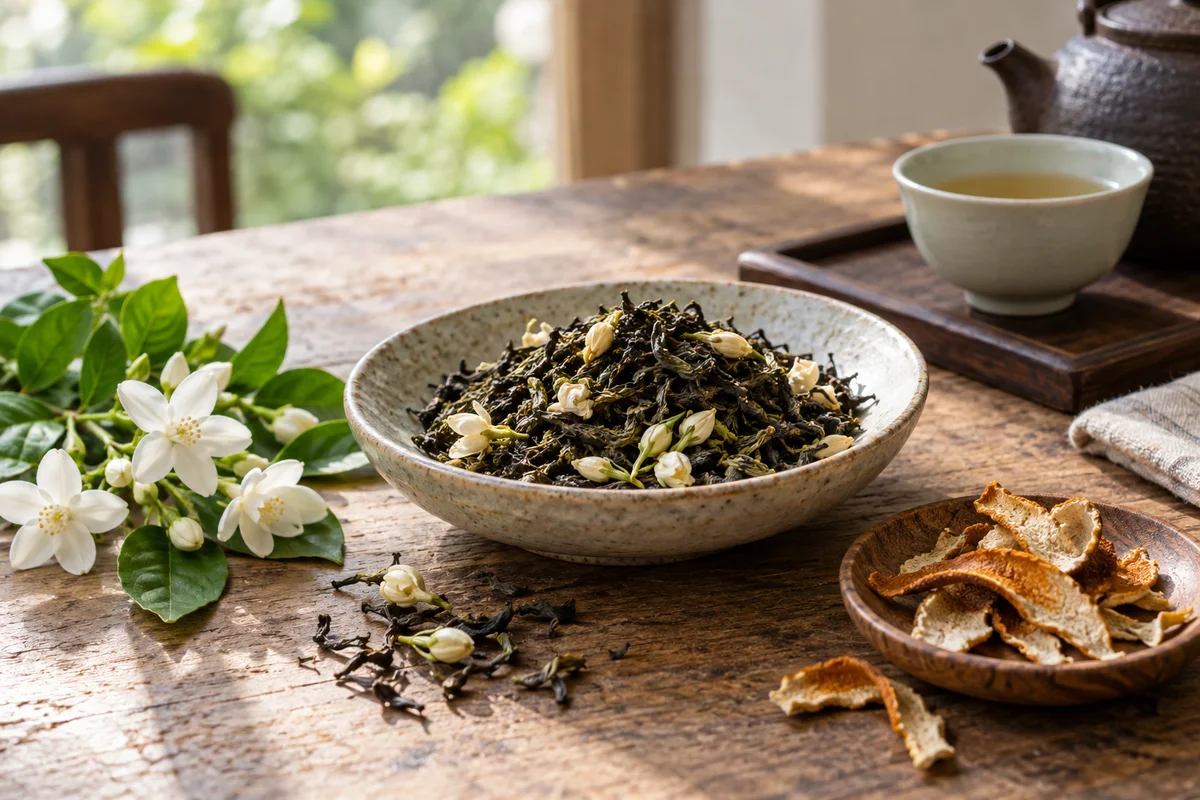
A packet described as floral might contain plain tea whose aroma recalls flowers, tea scented through contact with blossoms, or a blend with added flavouring. Those are different descriptions of how the product is made. None automatically tells you whether the cup will be delicate or overpowering. Start with the ingredient list and the seller's account of the process, then use the tasting notes to decide whether that particular result sounds appealing.
Traditional jasmine scenting provides a useful example. Tea can absorb fragrance from flowers used during processing, and the finished product need not contain a large visible scattering of petals. Conversely, visible flowers in a packet do not prove that a traditional scenting process was used. Ask about the actual tea if this distinction matters to you. A photograph is useful for showing appearance, but it cannot explain every step that created the aroma.
Added flavouring is information, not a personality test
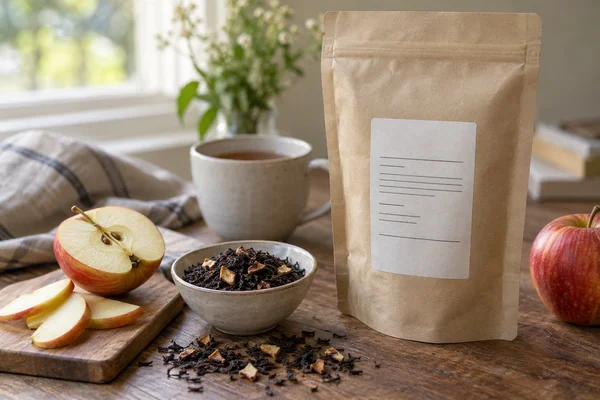
Some drinkers prefer plain tea; others enjoy citrus, vanilla, or fruit-flavoured blends. You can make either choice without declaring the other group mistaken. What matters is that the description lets you choose knowingly. Do not assume that a word such as natural answers every question about the source, strength, or composition of a flavouring. If you need a particular detail, request it for the exact product rather than supplying your own interpretation.
A tea's tasting notes should be read separately. Honey-like does not necessarily mean honey was added, and nutty does not automatically identify nuts as an ingredient. Equally, a dessert blend may contain actual food additions that deserve attention. Keep the full ingredient and allergen information when sharing or gifting a tea. A short homemade label that says floral black tea can remove distinctions another person may need to understand.
Compare what you actually drink
Try one clearly identified plain aromatic tea and one scented or flavoured tea if you want to explore the difference. Notice the brewed cup, not only the intense smell of an open packet. Does the fragrance remain pleasant as you drink? Can you still enjoy the underlying tea? These observations lead to a more useful preference than a blanket rule based on one word. Save the label of the product that works, because similar names can describe quite different compositions.