A tiny opening-date note prevents old tea queues
A small date on a packet can explain more than a perfectly arranged shelf. Record when you opened it, not a guessed deadline.
Write the event, not a prediction
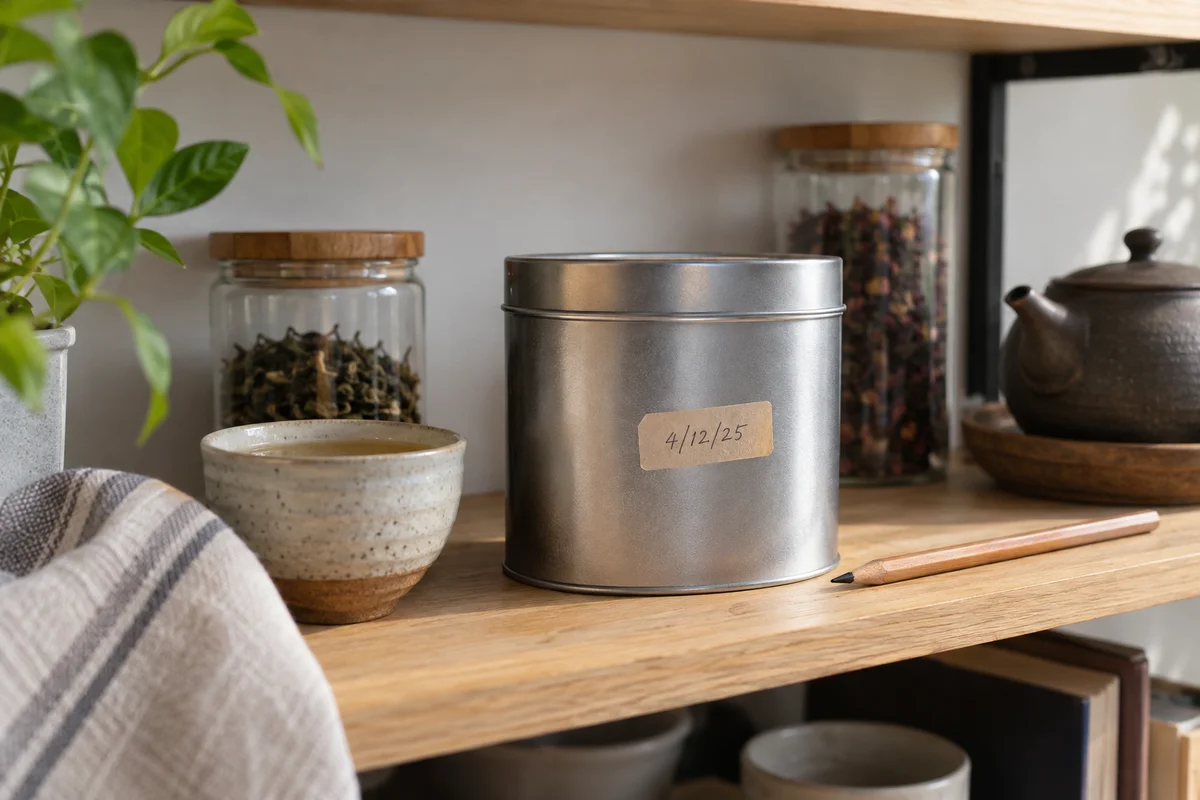
When you open a packet, add the date with a small removable label or a note on the outer packaging. Make clear that it is the opening date so that nobody confuses it with the printed best-before date. You do not need to calculate a universal expiry day. Different teas and packaging have different guidance, and actual handling matters. The note simply preserves a fact that becomes surprisingly hard to remember once several packets are in use.
Keep the producer's instructions visible. If a particular tea is best used relatively soon after opening for its intended flavour, the date helps you act on that advice. Do not copy a timetable from one delicate green tea onto every black tea or herbal blend in the cupboard. Nor should a date label override signs of moisture, damage, or spoilage. It is a memory aid, not a certificate that the contents remain suitable until a chosen day.
Let the note change the next small decision
Before opening a duplicate, check whether a suitable packet of the same tea is already in use. Before placing another order, look at how long the current supply has lasted. If a favourite hundred-gram bag takes much longer to finish than you expected, a smaller size may fit better. The opening date turns that decision into something based on your household's habits rather than a vague feeling that you drink a lot of tea.
For samples, add one short reaction beside the date once you have tried them. It might say buy again or not for mornings. Keep the full product label with that note. This prevents a row of tiny bags from becoming a queue of forgotten intentions. You can choose the next cup with a little context instead of reopening every packet to remember why you bought it. There is no need for an app unless you genuinely enjoy maintaining one.
Review without making tea a task list
An occasional glance is enough. Move older suitable packets into view and avoid opening three similar replacements at once. If a tea has faded but appears sound, decide whether you still enjoy it rather than keeping it indefinitely out of guilt. If its condition is questionable, do not use the date as reassurance. A useful label supports better choices; it should not turn every cup into an administrative exercise.