Grown in one place, packed in another
A business address, packing location, and growing origin can all be different. Read each statement for what it actually identifies.
Follow the words, not the flag
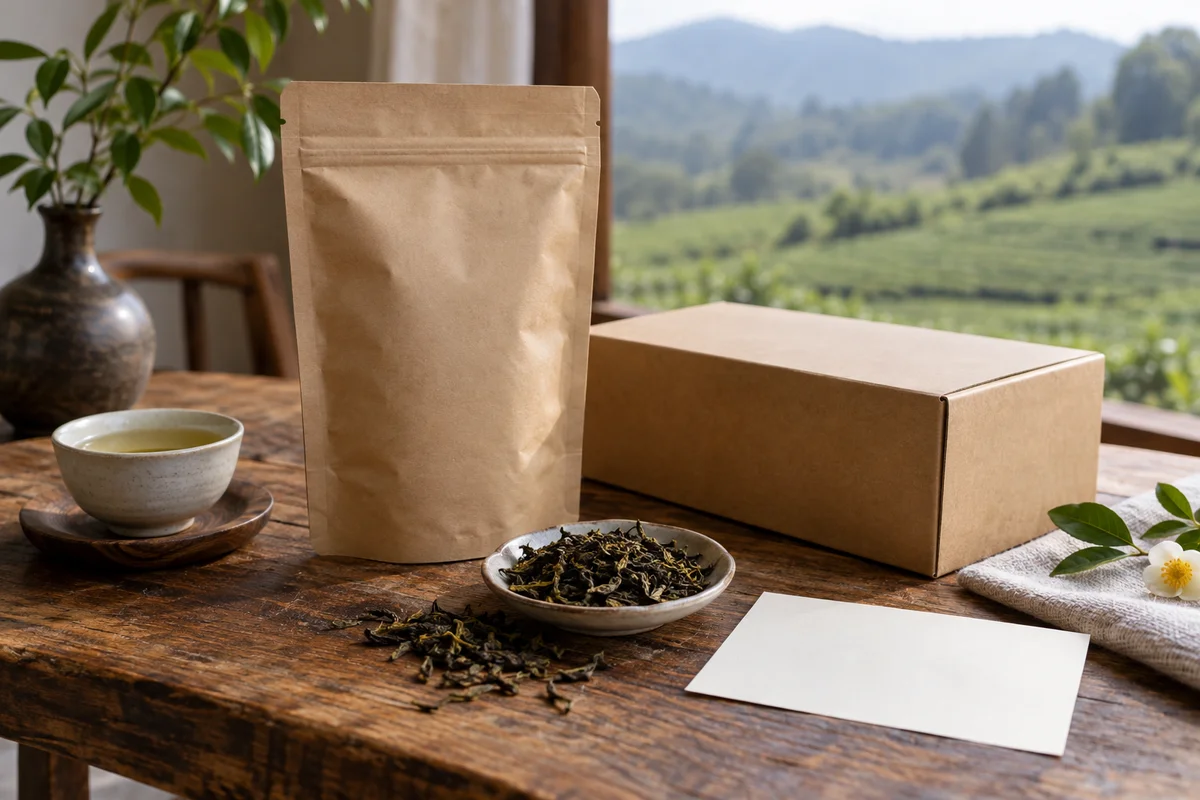
A tea packet can be designed in one country, filled in another, and contain leaves grown somewhere else. That is not inherently suspicious; tea travels through a supply chain. The confusion begins when a prominent address or national-looking design is taken as proof of where the leaves grew. Look for the actual origin wording. Packed in, blended in, and product of are not phrases you should casually substitute for one another.
A retailer's address tells you who is associated with the product, not necessarily the location of a tea garden. Likewise, a familiar regional style may describe an intended blend rather than a single source. Read the complete description before imagining one farm behind the packet. If the seller names a country but not a district or estate, keep your understanding at that level. More detail may be available, but it should come from information rather than expectation.
Decide which detail matters to you
You might care about buying from a local packer, following a particular growing region, or knowing the identity of a producer. These are different preferences, and a product can satisfy one without satisfying all three. State the question clearly when contacting a shop. Where were the leaves grown is more precise than is this local, which can be answered in several perfectly different ways.
For blends, origins may include more than one place or change as the maker maintains a flavour profile. Ask how the product is described and whether detailed origin information applies to the lot currently being sold. Do not treat an old photograph or an earlier review as a complete account of today's packet. At the same time, avoid assuming that a blend with several origins is inferior to a named single-origin tea. Taste and transparency are separate dimensions.
Keep the label through the last cup
Retain the original information if you move tea into a plain tin. It can help you find the same product, understand a later change, or explain a genuine mismatch to the seller. If precise traceability is a priority, choose a tea whose documentation actually supports it and begin with a small purchase. A clear modest claim is more useful than a grand landscape story that leaves the basic growing and packing facts uncertain.