Turn tasting notes into useful shopping clues
Use flavour words as directions, then translate them into comparisons that mean something to you.
A tasting note is a comparison
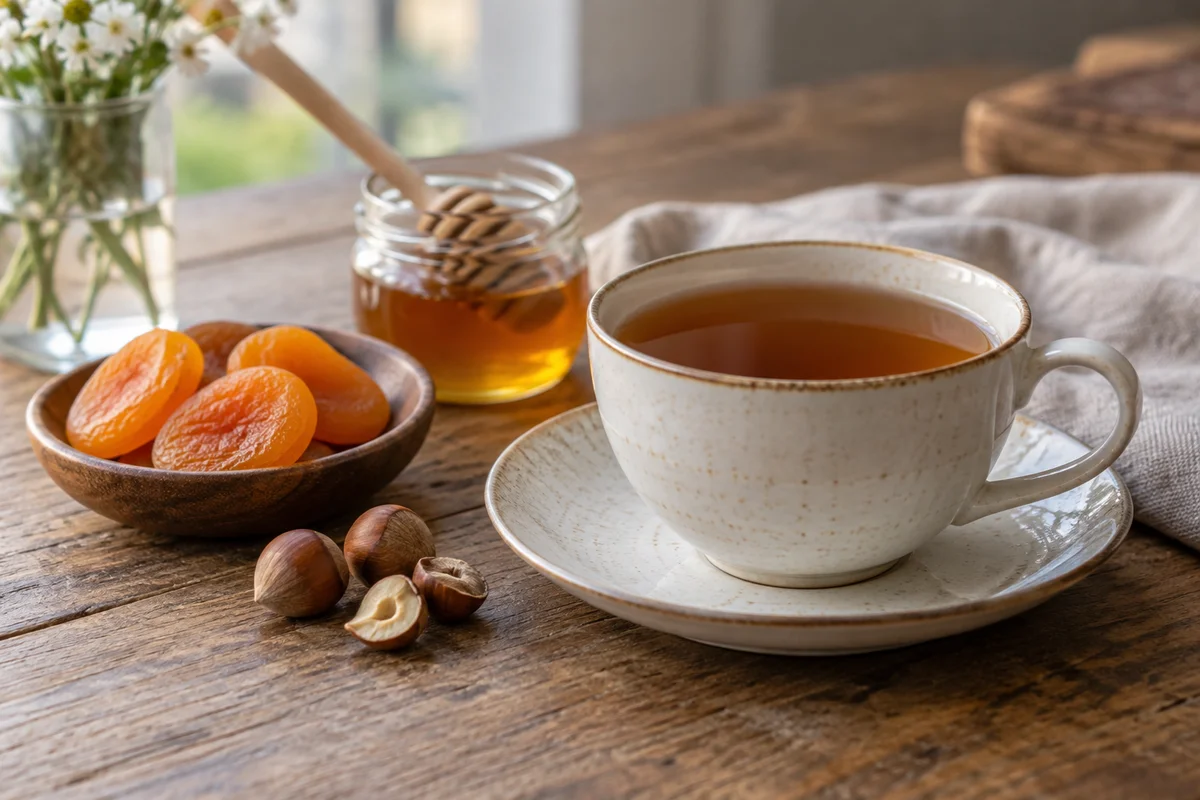
Apricot, honey, meadow, biscuit: tea descriptions borrow familiar things to describe an aroma that is difficult to name directly. In a plain tea, these words do not necessarily identify ingredients. They suggest a resemblance. That resemblance may be obvious to one person and faint to another, especially when the reference food is unfamiliar. You do not have to find every note on the packet for the tea to be enjoyable or for your own impression to be legitimate.
Start with broad distinctions that affect your choice. Is the cup floral or roasted, light or substantial, brisk or soft? Those questions are often more useful than deciding whether a fruit note is specifically white peach rather than nectarine. Once you know the broad direction, a detailed note can help you choose between two similar teas. Used too early, it can make a simple purchase feel like a vocabulary test you were never asked to take.
Separate smell, taste, and texture
A tea can smell sweet without tasting sugary. It can have a rich aroma while feeling light in the mouth. Dryness after swallowing is another observation again. If a description says smooth, ask what that means in practical terms: less drying, less bitter, or a rounded texture? Sellers do not always use these words identically. A short clarification can prevent buying a tea that answers a different question from the one you had in mind.
When tasting at home, write your own note before rereading the seller's. A phrase such as warm toast or fresh green beans is perfectly useful if it helps you recognise the cup later. Do not add ingredients to force the advertised note to appear. The purpose is to understand the tea you bought, not to reconstruct a promotional photograph. If you want to compare with a familiar food, smell it separately and return to the tea after a pause.
Make the words useful next time
Keep two or three words from teas you genuinely enjoyed, plus one feature you prefer to avoid. Bring those to a shop instead of asking for the best tea. A seller can work with roasted, not smoky, or floral but not heavily perfumed. Your vocabulary can remain small. What matters is that it points towards a cup you want to drink again.