Rose petals: fragrance without perfume overload
Rose petals can add a clear floral note, but their colour and visual abundance do not predict the strength of the cup.
A floral ingredient, not rosehip
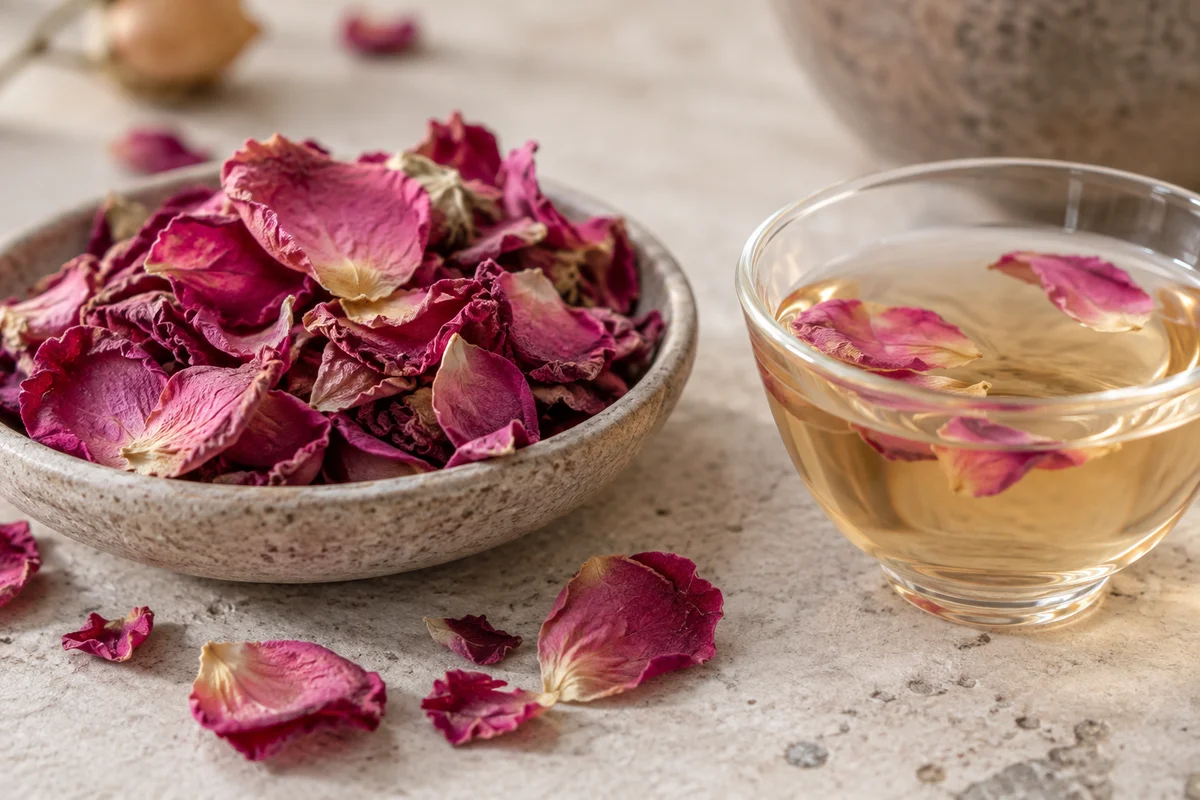
Rose petals and rosehips come from different parts of the plant and make different contributions to an infusion. Petals are associated with floral fragrance; rosehip supplies a fruitier character. A packet decorated with a rose does not resolve which one is inside. The ingredient wording needs to identify the actual material, especially in a blend that includes both.
Loose petals can be pink, red or faded toward brown after drying. Their appearance is attractive, but a vivid colour is not a reliable fragrance scale. Some dry petals make a delicate contribution that is easy to overlook beside a stronger base.
When fragrance feels like perfume
Rose is a familiar scent outside food, so personal associations can arrive before the first sip. A balanced floral note may seem graceful to one drinker and too cosmetic to another. That reaction is worth describing specifically: is the aroma simply strong, or does it cover the tea and leave the cup one-dimensional? The distinction helps explain the preference.
More petals do not always solve a faint cup, and a more powerful rose scent may come from added flavouring rather than visible flowers alone. Neither possibility can be established from the dry mixture's beauty. Read the ingredients and then assess whether the floral element fits the body underneath it.
Give the base a chance to remain visible
In a black-tea blend, rose can sit above a firm, rounded foundation. In a light herbal mixture, it may become the main aromatic feature. Citrus, mint or other flowers can change the impression again. A successful description names the relationship rather than treating rose as a complete flavour that erases everything around it.
Use petals sold for culinary or infusion use, not a florist's bouquet or scented decorative potpourri. They are different products even when the flowers look similar. Once the ingredient is clear, the tasting task is simple: notice the floral opening, the middle of the drink and the finish. A rose infusion does not need to resemble pink syrup, and its colour need not match the petals to express a recognisable rose character.