Rooibos: a red cup without tea leaves
Rooibos comes from a South African shrub, giving a reddish cup with a character distinct from black tea.
A different plant on the tea shelf
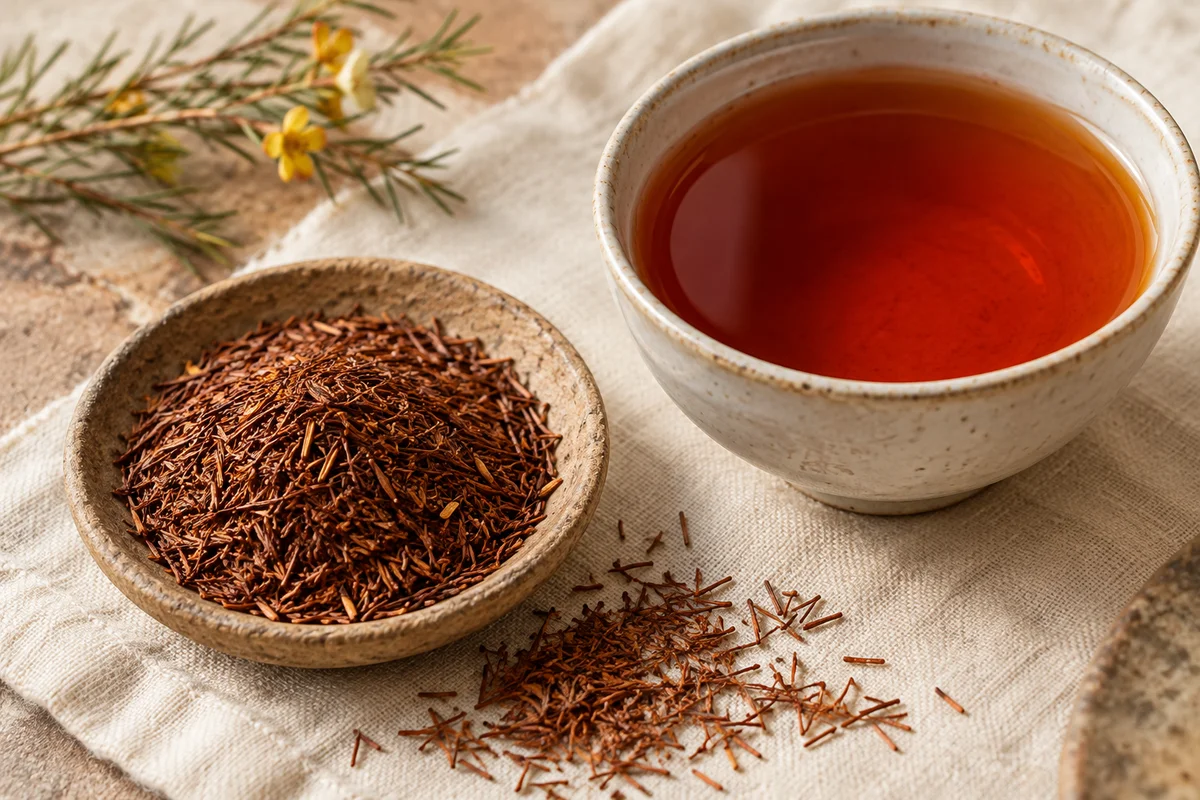
Rooibos is made from Aspalathus linearis, a shrub associated with South Africa's Cederberg region. It is not a red-leaf version of Camellia sinensis. The familiar red-brown material has undergone oxidation during processing, which helps develop its colour and characteristic flavour. The small, needle-like pieces look quite different from a rolled oolong or a broad white-tea leaf.
Calling the drink red tea can be confusing because that phrase is also used in other tea traditions. Rooibos is the clearer ingredient name. In a plain product it identifies a herbal infusion rather than a black tea whose liquor happens to look red.
Wood, fruit and aromatic sweetness
A rooibos cup may suggest dry wood, soft fruit or a caramel-like aroma. These are flavour comparisons, not a requirement for added caramel or sweetener. The impression can feel rounded while remaining distinctly plant-like. Some drinkers find that woody edge immediately appealing; others notice it more than the softer notes.
It is worth giving those parts separate attention. Does the scent suggest dried fruit while the taste stays mild? Does a woody finish linger? Is the body comfortable or rather flat? A precise answer describes the actual product better than assuming all rooibos has one uniform sweet taste. Processing and raw material leave room for meaningful variation.
Plain rooibos and rooibos blends
Plain rooibos is naturally caffeine-free. A mixture containing tea leaf or another caffeinated ingredient needs to be considered according to its full composition, however. The large word rooibos on the front does not erase the other ingredients. Vanilla, citrus and spice versions also change the flavour picture, sometimes quite substantially.
When learning its character, distinguish the red base from whatever has been added around it. Vanilla may amplify the impression of sweetness, while citrus can lift the aroma and spices can obscure the quieter woody part. The unflavoured ingredient has its own identity without those additions. Recognising it makes both plain cups and more elaborate blends easier to describe, without turning rooibos into an imitation of a different tea.