Linden blossom includes more than flowers
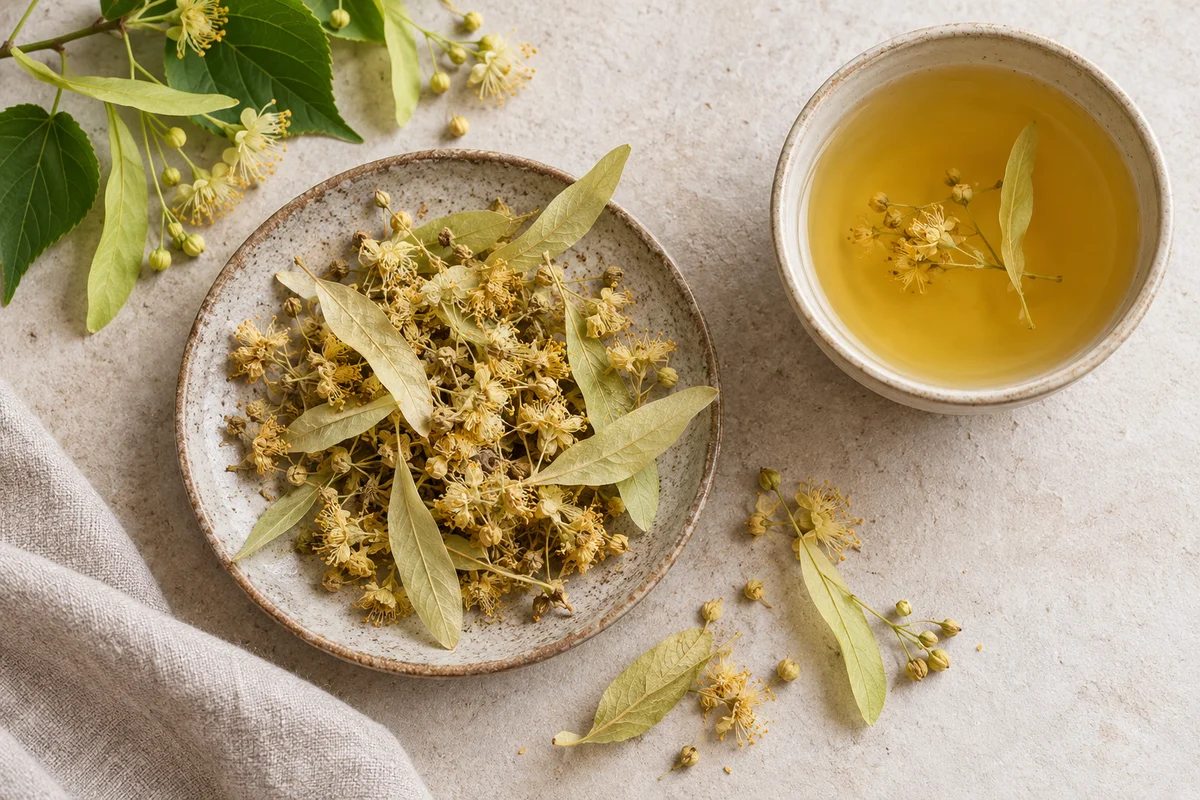
The pale leaf-like pieces in linden blossom are often bracts belonging to the flower cluster, not stray tea leaves.
The extra-looking piece belongs there
A loose linden-blossom product may contain small flowers attached to long, pale, leaf-like structures. These are bracts associated with the flower clusters. Their presence can surprise someone expecting a packet made only of tiny petals, but they are part of the recognisable appearance of the material. Linden blossom does not look like chamomile heads, rose petals or a chopped green herb, and it should not be illustrated as though all floral infusions were visually interchangeable. The long bract and the much smaller flowers can remain distinguishable even when the dry material is slightly broken.
Lime blossom is not a citrus flower
In British usage, the tree may be called lime, while linden is common in other contexts. This is not the citrus tree that produces green lime fruit. A lime-blossom infusion from Tilia therefore should not be expected to taste like lime juice or citrus peel. The name is a language difference around a tree, not evidence of an added sour ingredient. Keeping that distinction clear prevents a surprisingly common misunderstanding before the cup is even brewed.
A soft floral profile
Linden blossom is often described as floral, gently sweet and honey-like in aroma. A dry, leafy background can sit beneath that softness. The drink does not need added honey to suggest it, and a mild cup can still have a clearly defined fragrance. Rather than searching for dramatic strength, notice whether the scent has a clean outline and whether the finish remains pleasant. An understated character is different from a stale or empty one, even when both cups look pale.
Let the material explain the name
A close look at the flowers and their bracts gives this infusion a useful identity beyond the generic label herbal tea. In blends, stronger ingredients may hide that gentle profile, so a flower name on the front is not enough to establish the dominant taste. Prepared food-grade material and its own instructions are the practical starting point. From there, a simple description of floral scent, light body and a softly dry finish does more work than a collection of folklore or promises about what the drink will do for the body.