Respect the kettle minimum fill line
A small cup does not cancel the kettle's minimum-fill mark. Match the appliance to the amount you regularly need.
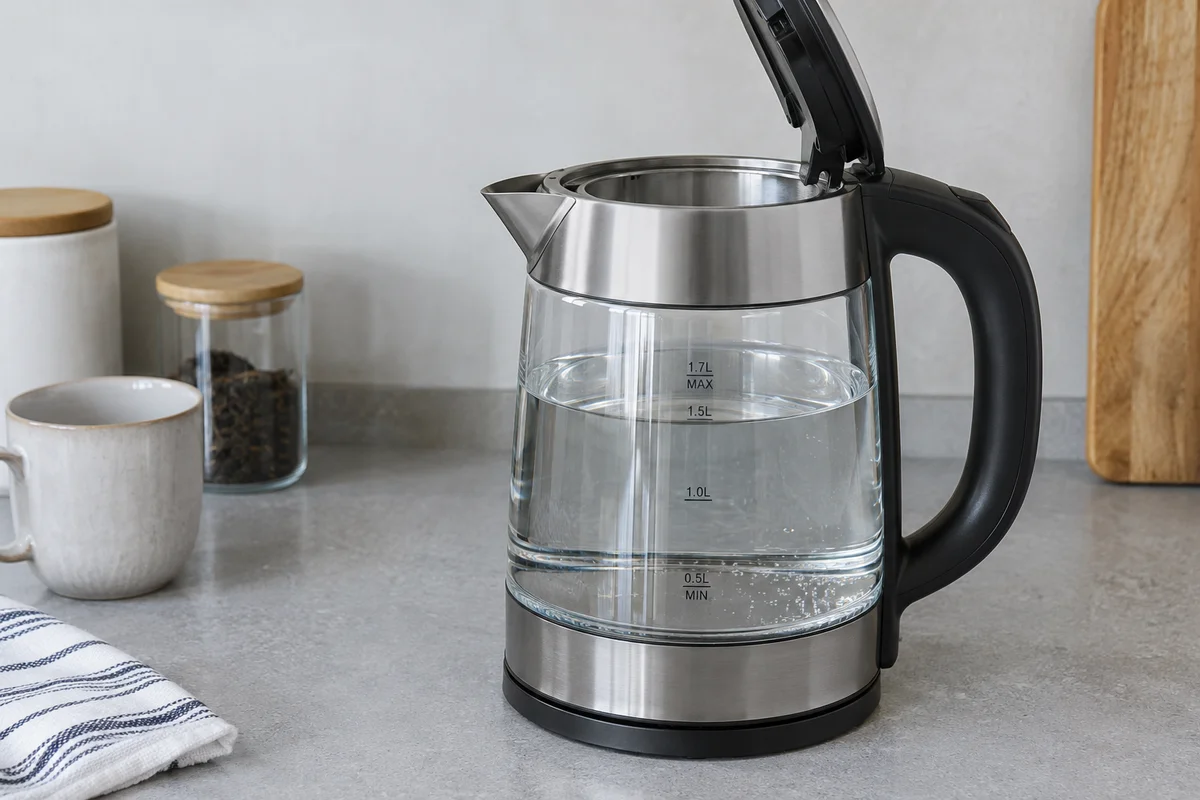
Read both ends of the scale
The maximum line gets attention because overflowing hot water is easy to imagine. The minimum mark matters too. It describes the lowest operating quantity specified for that appliance, not a suggestion to ignore when you are making a small drink. Check the manual if the mark is unclear or hidden inside the body. Designs differ, so a rule learned from another kettle may not apply. Never assume that an automatic shut-off makes deliberate underfilling acceptable. Protective features are not a replacement for using the appliance within its stated conditions.
The printed capacity is also not necessarily the amount you should heat for every use. If you need less, you can normally fill to an appropriate level between the stated limits. What matters is respecting both limits and the intended way of checking them. Put the kettle on a stable surface and assess the level as the manufacturer describes, rather than guessing from an angled view while water is still pouring in.
Think in cups before shopping
Measure how much water your usual mug actually needs, allowing space below the rim. Compare that working volume with the minimum fill of a kettle you are considering. If the kettle requires more than your normal serving, you will have a mismatch to manage repeatedly. A smaller model may suit you, but verify its actual minimum rather than assuming a compact exterior guarantees a low one. Consider other regular uses too: a household making several cups together has different needs from one person preparing a small afternoon tea.
For an appliance you already own, use it according to its instructions even when the serving is smaller. Avoid heating a full kettle out of habit when a lower permitted amount would cover the task. Equally, do not run it below the minimum to eliminate every leftover spoonful. Fill and pour carefully, keep the electrical parts dry, and do not reach into a recently heated vessel to inspect markings. The practical aim is equipment that fits your routine safely, with a level you can see and an amount you can handle comfortably.