Keep jasmine, mint, and plain tea apart
An orderly tea cupboard should separate aromas as well as packets. Strongly scented blends deserve their own closed space.
The cupboard can become an accidental blend
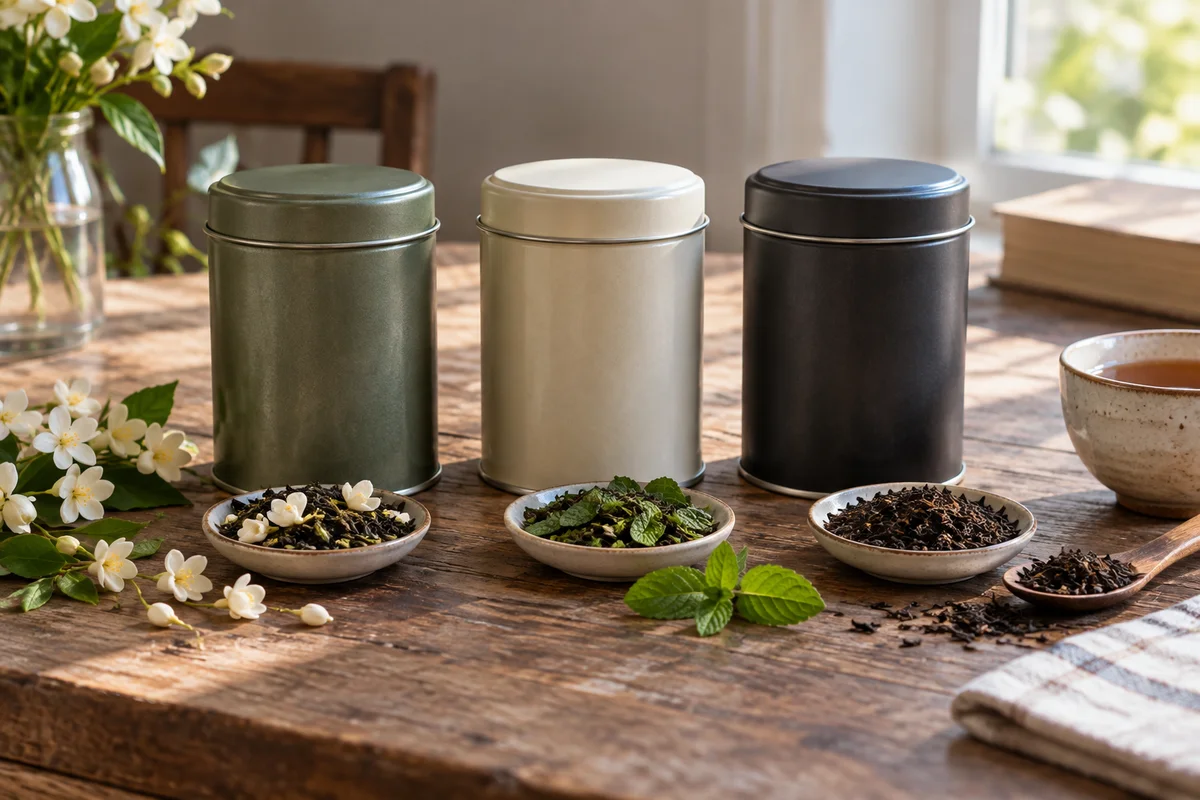
Plain tea stored beside an open mint blend may gradually acquire a smell you never intended to buy. Jasmine, bergamot, spices, and smoked teas can also make their presence known beyond the packet. The problem is not that these teas are unsuitable to keep at home. It is that loosely closed neighbours can blur the identity of a delicate tea. When a familiar cup suddenly tastes different, the storage arrangement is worth inspecting before you change the brewing routine.
Begin by closing every packet properly. Then separate the most strongly fragrant teas from plain ones, ideally with individual well-closing containers or distinct storage areas. Putting several open pouches into one large decorative box does not keep their aromas independent. It merely gives them a shared room. A small collection can be managed simply: plain teas in one dry section, strong scented or smoked products in another, and no household fragrances nearby.
The scoop matters too
A shared dry scoop can carry small fragments from one blend to another. That may be enough to explain an unexpected mint leaf or spice note in a plain tea. Use separate clean utensils where needed, or clean and dry the scoop thoroughly between products. Do not return unused leaves from a tasting dish to the main packet if they have been sitting among other teas or handled with uncertain tools.
Reused tins deserve the same attention. A container that held a strongly scented blend may still smell of it after the leaves are gone. Follow the container's cleaning instructions and check it when fully dry. If the odour remains, reserve it for a compatible tea rather than asking a delicate new purchase to absorb the history. Keeping the original inner packet can help, but it is not a reason to ignore an obviously fragrant container.
Keep the system easy to repeat
Label the teas clearly and leave enough space to return each one to the correct place. A cramped shelf encourages lids left ajar and packets squeezed into whichever gap is available. You do not need a separate cupboard for every aroma. You need dependable closures and a little distance between the strongest personalities. When tasting a new tea, give it neutral storage first so that the cup reflects the tea itself rather than the collection around it.