Green rooibos has a lighter character
Green rooibos is a less-oxidised expression of the same plant, with a lighter colour and a fresher herbal direction.
Same shrub, another processing choice
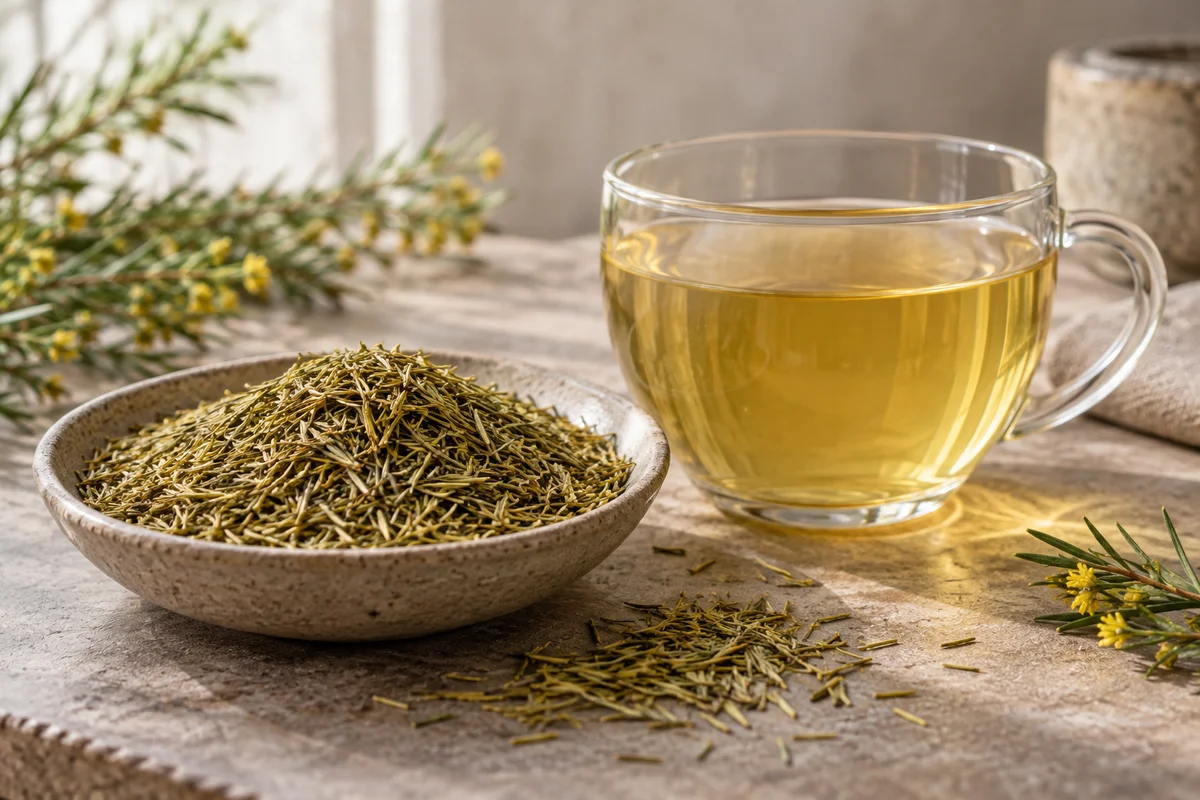
Green rooibos and red rooibos come from the same plant, Aspalathus linearis. Their difference is principally in processing: the oxidation that produces the familiar red-brown character is limited in green rooibos. The dry material consequently retains a greener appearance, and the infusion is generally lighter. Green here does not mean that Camellia sinensis green tea has been mixed into the packet. It describes a version of rooibos, so the full ingredient name matters. The small needle-like pieces remain a helpful visual link between the two styles.
A lighter cup has its own direction
Where red rooibos often suggests rounded wood and caramel-like warmth, green rooibos can lean toward a fresher, more herbal or grassy impression. The comparison is a broad guide, not a rule that every sample must taste like freshly cut grass. The cup can still feel soft and carry a mild sweet impression. A pale yellow-gold colour should not be mistaken for a failed version of the darker product; it belongs to this processing style.
What the colour cannot prove
The lighter appearance does not establish that one version is healthier, cleaner or more natural than the other. Both are processed plant materials, and colour alone cannot rank their value. Plain green rooibos, like plain red rooibos, is naturally caffeine-free, but that fact should not be extended automatically to every blend bearing its name. If other plants are included, their contribution needs to be considered separately. A green package design is no substitute for the actual ingredient list.
Notice the space around the aroma
A plain green rooibos may seem quieter at first than a strongly flavoured red blend. Give that difference a fair description. Is the aroma fresh and defined, or merely faint? Does the finish remain pleasant after the first herbal note? Those questions separate delicacy from dullness. In a mixture, green rooibos can support citrus or floral ingredients without the same dark background as red rooibos. Understanding that role makes the two versions useful alternatives, rather than treating one as an unfinished stage that must eventually become the other.