When the tea flask still smells of coffee
Before blaming the steel body, check the stopper and seals. They may be carrying the flavour into your next tea.
Find where the smell remains
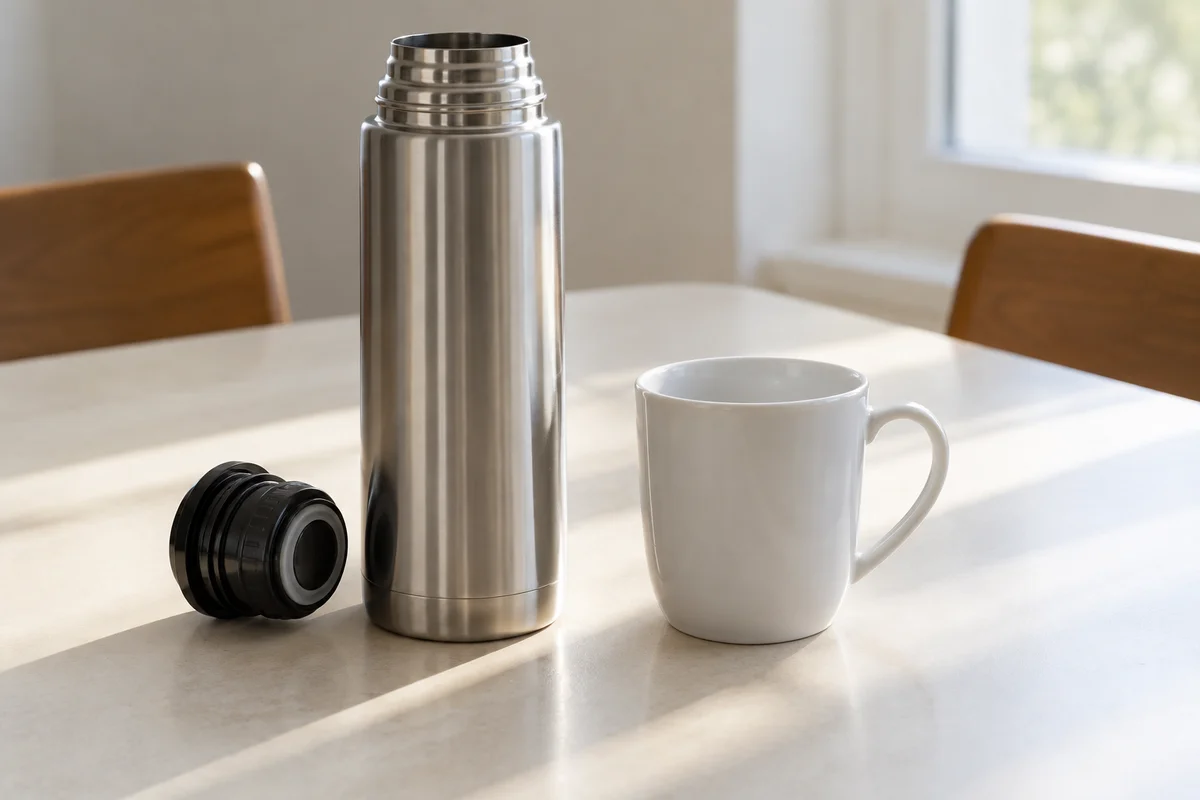
You rinse a flask, fill it with a delicate tea and taste yesterday's coffee. The next step is not necessarily a stronger cleaning chemical. Empty and clean the flask as instructed, then inspect the body and removable lid parts separately after they have dried. A stopper with narrow passages or a silicone ring can be harder to clean thoroughly than the smooth metal interior. Smell each part without putting your face near hot liquid. This simple separation can show whether the problem is concentrated in a component rather than spread throughout the vessel. Do not put another drink into a flask that still contains old liquid or visible residue.
Use the care method for that material
Follow the manufacturer's cleaning guidance for the actual flask, including any special treatment allowed for stains or odours. A method suitable for bare stainless steel may be unsuitable for a coated interior, plastic valve or seal. Avoid mixing cleaners, guessing soaking strengths or leaving a chemical solution longer than instructed. Abrasive tools can damage surfaces and make later cleaning more difficult. Remove only parts intended to be removed, clean the channels you can access safely, and rinse all pieces thoroughly. A bottle brush should reach the bottom without forcing its metal core against the walls. Allow the body and lid to dry apart before assessing the result.
Decide when separation is the easier answer
If the smell remains after appropriate cleaning, ask the maker about compatible replacement seals or stoppers. A worn or damaged part should not be kept simply because the flask body looks new. For a household that regularly alternates strong coffee and subtle tea, separate vessels may be more convenient than repeated deep cleaning. That is a practical preference, not a rule that every tea drinker needs a second flask. You might keep one vessel for robust breakfast tea and coffee while using an ordinary cup for delicate tea at home. Whatever arrangement you choose, empty the flask promptly and avoid storing it closed while damp. The aim is a neutral, clean container and a routine you will keep using, not an escalating collection of cleaning experiments.