Choosing tea when you enjoy malty flavours
Malty can mean a warm, grain-like depth rather than sweetness. Find out which part of that character you actually enjoy.
Describe the part you like
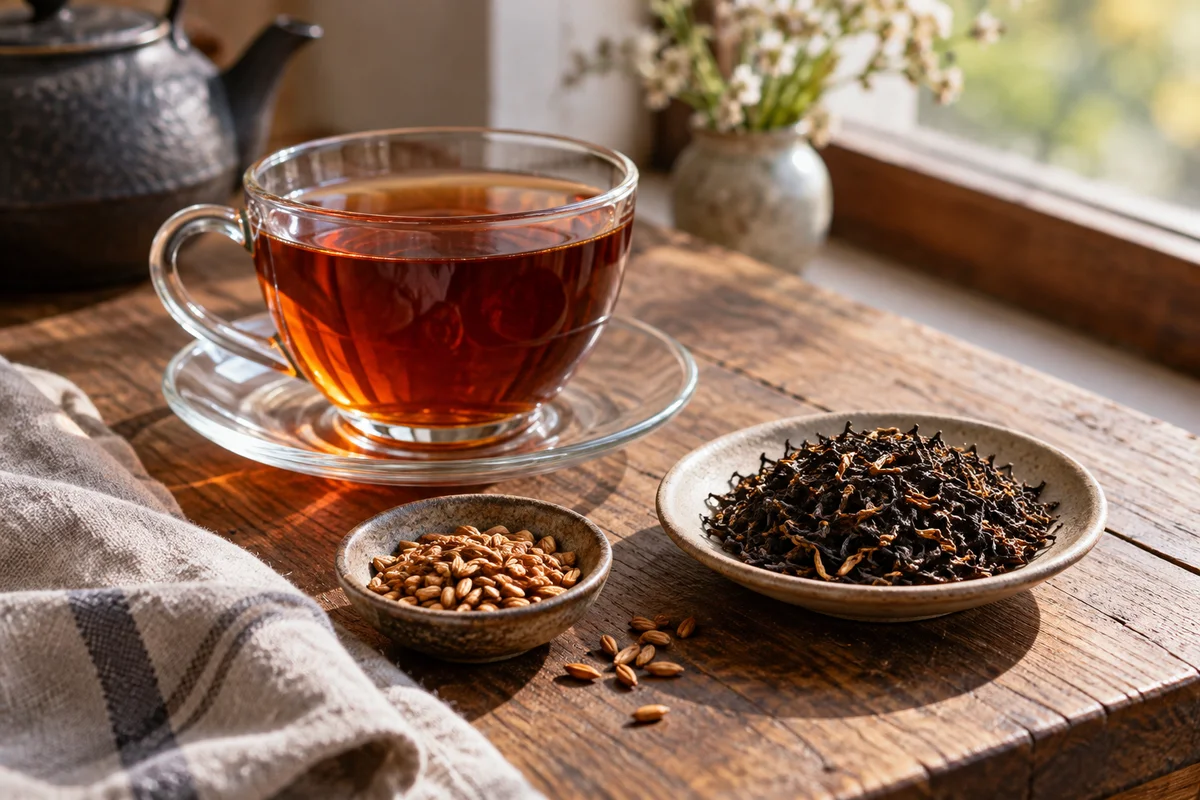
Someone asking for a malty tea may want the smell of a warm cereal loaf, a substantial breakfast cup, or a tea that remains noticeable after milk is added. Those wishes overlap, but they are not identical. Tell the seller which one matters most. If you are replacing a favourite packet, bring its name or a photograph. That gives the conversation a firmer starting point than the word strong, which can describe both an appealing body and an unpleasantly harsh cup.
Assam black teas are a useful place to begin looking for a malty character, but the regional name does not make every lot taste alike. Leaf style, season, processing, and blending all affect the cup. Ask for a small sample described as malty and compare it with your current tea. If the shop offers both a whole-leaf version and a broken-leaf breakfast style, explain whether you will drink it plain or with milk before choosing between them.
Do not confuse malt with sugar
A malty aroma need not mean added malt, grain, or sweetener. In a plain tea it is usually a tasting comparison. Check the ingredients if the distinction matters to you, especially in a flavoured blend. Equally, a tea that smells warmly sweet can still have a brisk or drying finish. Read the texture description as well as the aroma note. If you dislike that finish, ask for a rounder cup rather than simply asking for more malt.
Try the sample in the setting you intend to use it. A breakfast tea should be enjoyable beside your actual breakfast, not only in an isolated tasting. If you take milk, compare before and after a modest addition so that you can hear what remains of the tea. Avoid using an excessive dose just to prove that it is strong. That can conceal the balance you were hoping to buy and make otherwise suitable leaves seem rough.
Keep the next purchase specific
When you find a tea you like, save the full name and note what worked: warm grain aroma, satisfying body, or clear flavour with milk. Those details help when a harvest changes or the product is unavailable. They also leave room to enjoy another origin or blend with a similar character, rather than turning one regional label into a rule.