What dried apple contributes to fruit tea
Dried apple often supplies the quiet middle of a fruit infusion, even when a more colourful ingredient leads the label.
The ingredient that does not shout
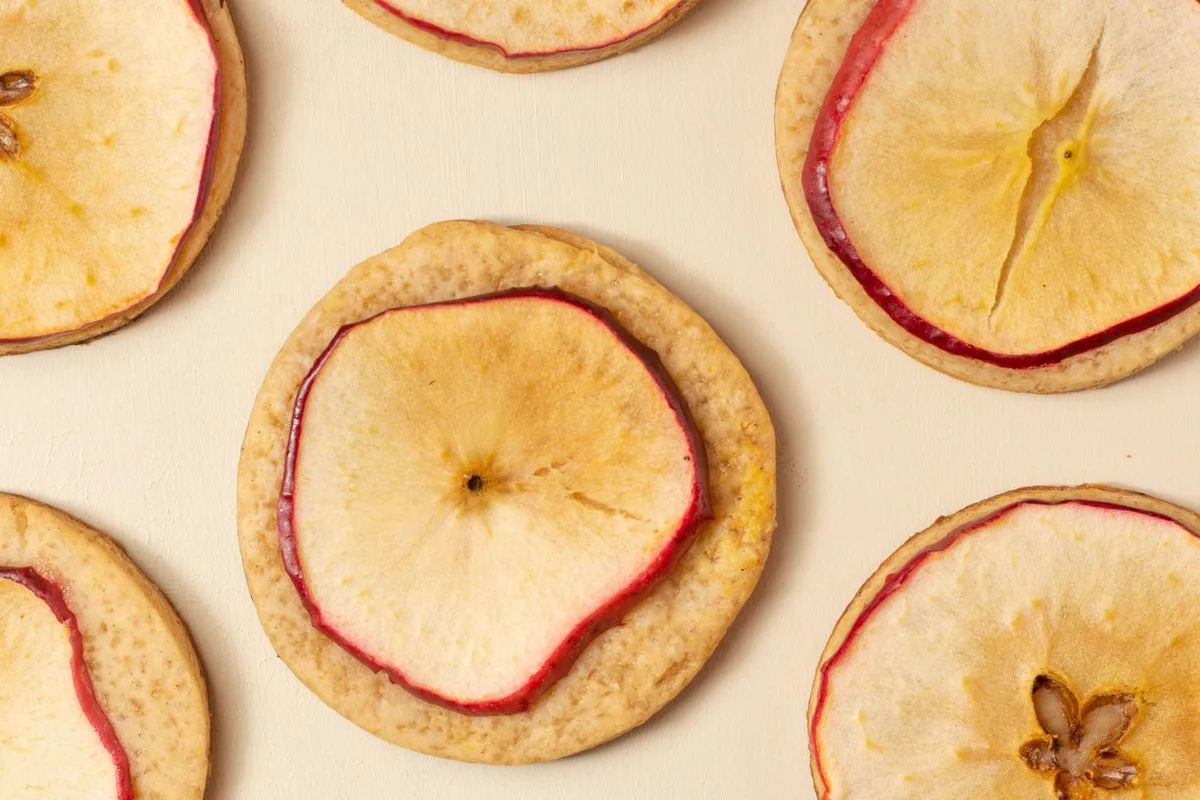
Apple pieces appear in many fruit infusions without becoming the headline flavour. Their role can be a mild fruit base beneath brighter, sharper or more perfumed ingredients. A packet named for berries or citrus may therefore contain a noticeable proportion of apple. That is not something to infer from the front photograph; the ingredient list tells you whether apple is part of the structure.
The dry pieces are often pale, wrinkled and far less dramatic than red hibiscus or dark berries. Their modest appearance fits their quieter role, but it does not make them irrelevant. The middle of a drink can depend on an ingredient that contributes little visual excitement.
Dried fruit does not become juice again
An apple infusion is not reconstituted apple juice. Water takes flavour from dried pieces, but the resulting drink can remain light and only gently sweet in impression. The apple variety and processing affect the material, while the blend around it changes how recognisable the fruit becomes. Expecting the richness of fresh juice sets up an unhelpful comparison.
A cinnamon-containing blend may suggest baked apple through the combination, even if neither ingredient alone creates that full association. Vanilla-like flavouring can push the impression toward dessert, while hibiscus can make it much sharper and redder. Those changes belong to the partnership rather than to a mysterious ability of apple to taste like everything at once.
Find the middle between scent and finish
When a fruit tea smells vivid but feels hollow, the missing quality may be body or continuity rather than aroma. Apple is one ingredient that can help build a softer middle in a mixture. It does not guarantee that result; the actual proportion and other components still matter.
For a useful description, separate the first scent from the fruit base and the final acidity. You might notice a berry aroma, a mild apple-like middle and a tart hibiscus finish. That is a more informative account than calling the whole cup berry tea and leaving the supporting ingredients invisible. It also explains why two blends with the same fruit on their labels can offer quite different drinking experiences.