Anise and star anise are different ingredients
Anise and star anise share a sweet aromatic resemblance, but they come from different plants and have different forms.
The star is not a larger seed
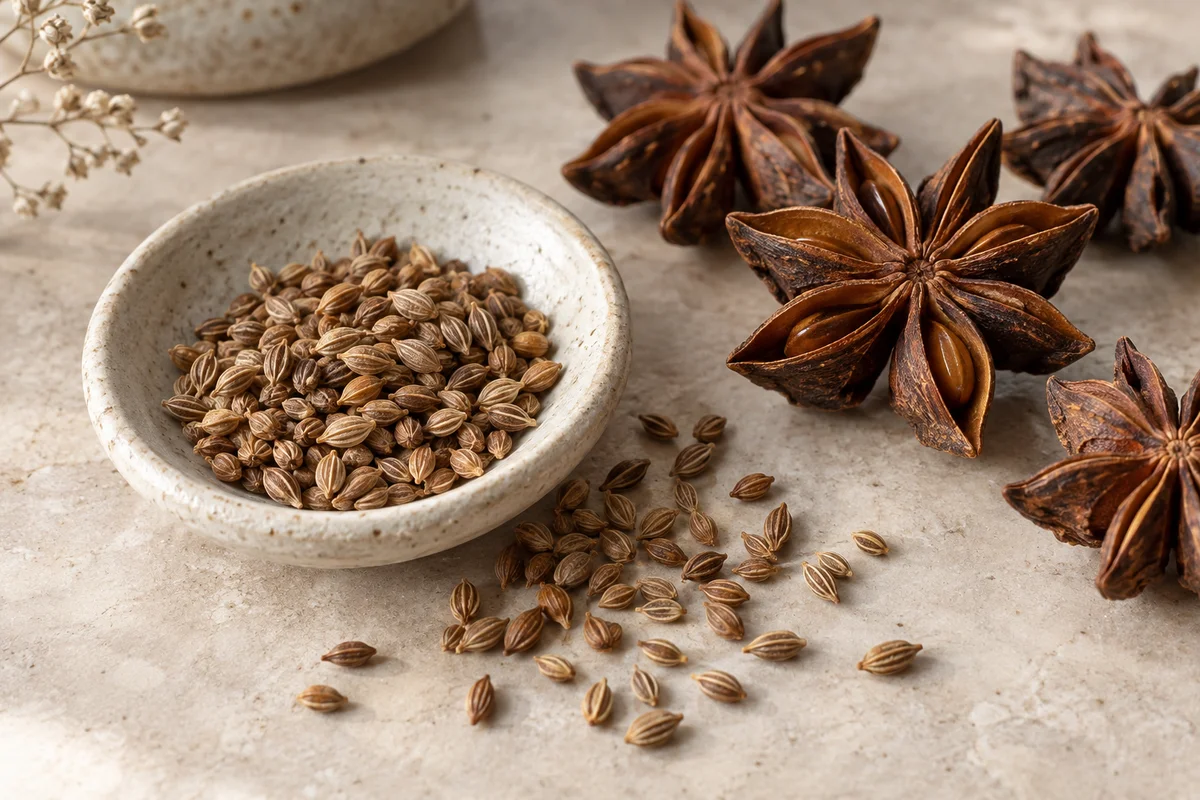
Anise is usually sold as small dried fruits that are casually called seeds. Star anise is the conspicuous star-shaped fruit of a different plant. The two are not simply small and large versions of the same spice. Their shared name points toward a similar aromatic impression, while their botanical origins and physical forms remain distinct.
That distinction is immediately visible when the whole ingredients are placed side by side. It becomes much harder to see in a finely cut infusion blend or a ground spice powder. Once appearance no longer helps, the ingredient list needs to do the identifying work.
A family resemblance in the nose
Both can suggest a sweet, liquorice-like aroma. Anise often feels softer and more delicately sweet, whereas star anise can be more forceful, spicy and penetrating. These are useful comparisons rather than fixed intensity scores. The amount used and the other ingredients in a blend can easily change which note dominates.
The word sweet does not mean either spice is sugar. Their aromatic association with baking and confectionery can make a plain infusion seem sweeter than its actual taste. Likewise, a liquorice-like description does not establish the presence of liquorice root, which is a separate ingredient with its own identity.
Why substitution changes the cup
Replacing one with the other in equal-looking amounts can shift the balance sharply. A single star is not equivalent to a single tiny anise fruit, and volume does not make a reliable flavour comparison between their shapes. In a prepared tea blend, the maker's proportions determine how much of that aromatic family reaches the cup.
Use clearly identified food-grade spice rather than ornamental or unidentified star-shaped material. For everyday understanding, no complicated taxonomy is needed beyond keeping the two ingredients separate. Describe whether the cup is softly anise-scented or driven by a more assertive star-anise note, then notice what remains around it. That approach makes familiar winter-spice mixtures easier to read without treating every sweet aromatic seed or fruit as interchangeable.